We loved our Easter stay in Hermanus and returned in whale season in October / Early November 2026 and started running through all our favourite spots (in chronological order: Fick’s pool x 2 (a pinchos place, but better), Perlemoen Restaurant x 2, Off the Record lounge x 2, Spookfontein, Grotto beach, die Plaat and the extraordinary Walker’s Bay, the whale nursery.
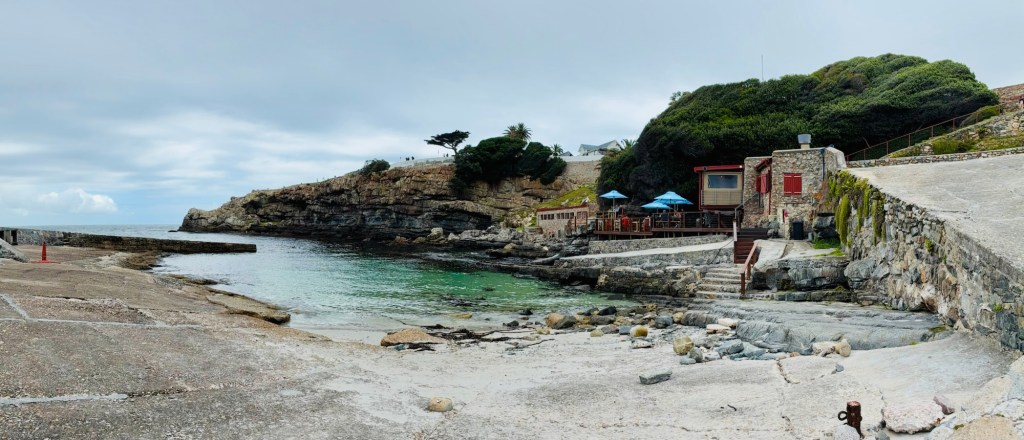
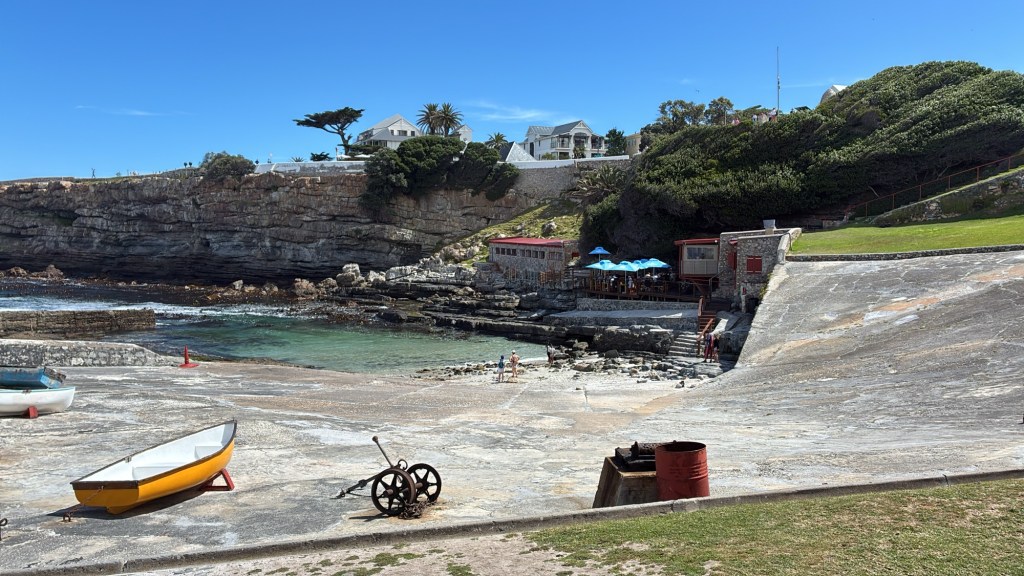
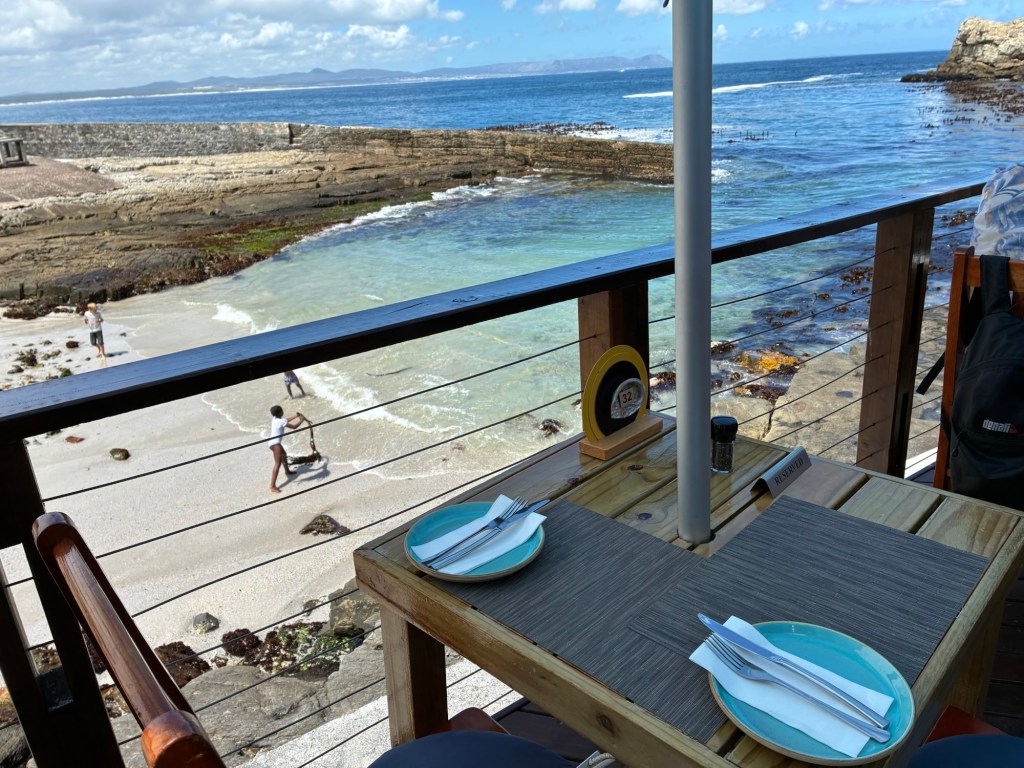
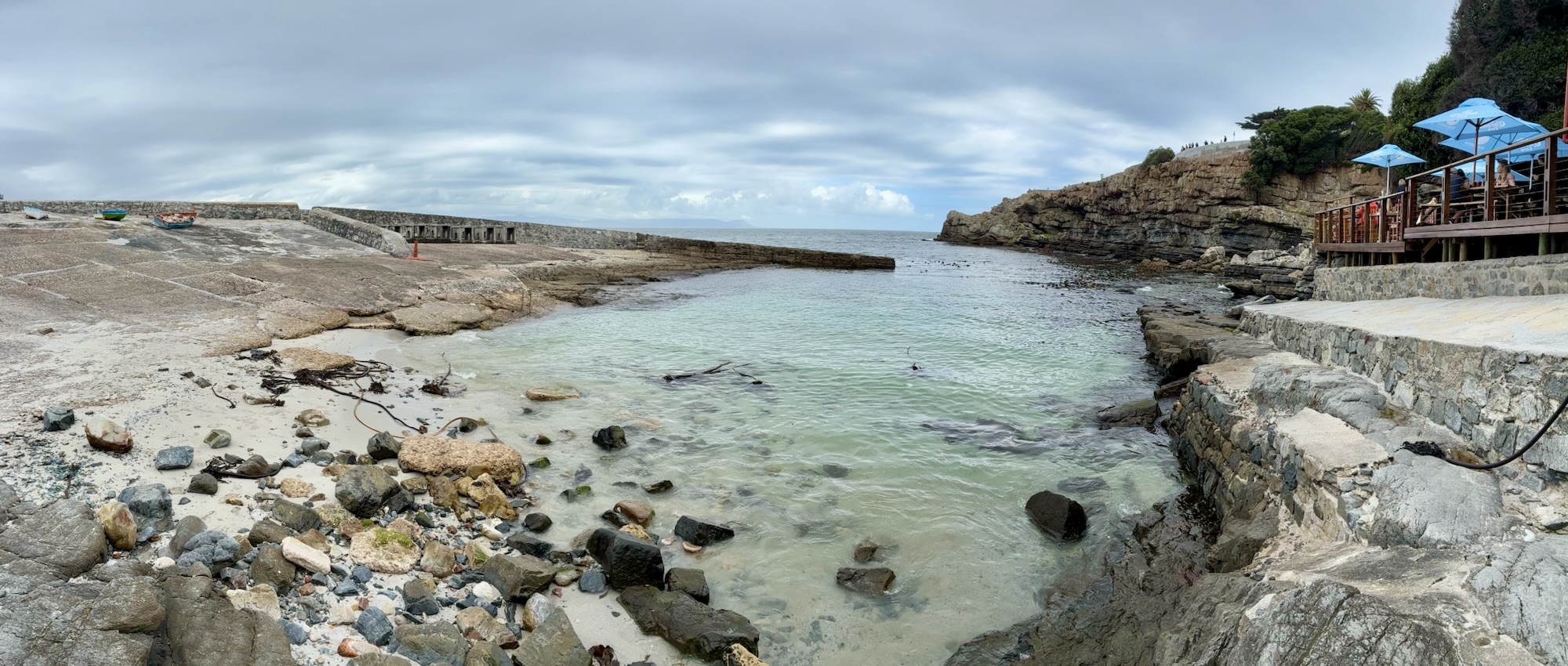
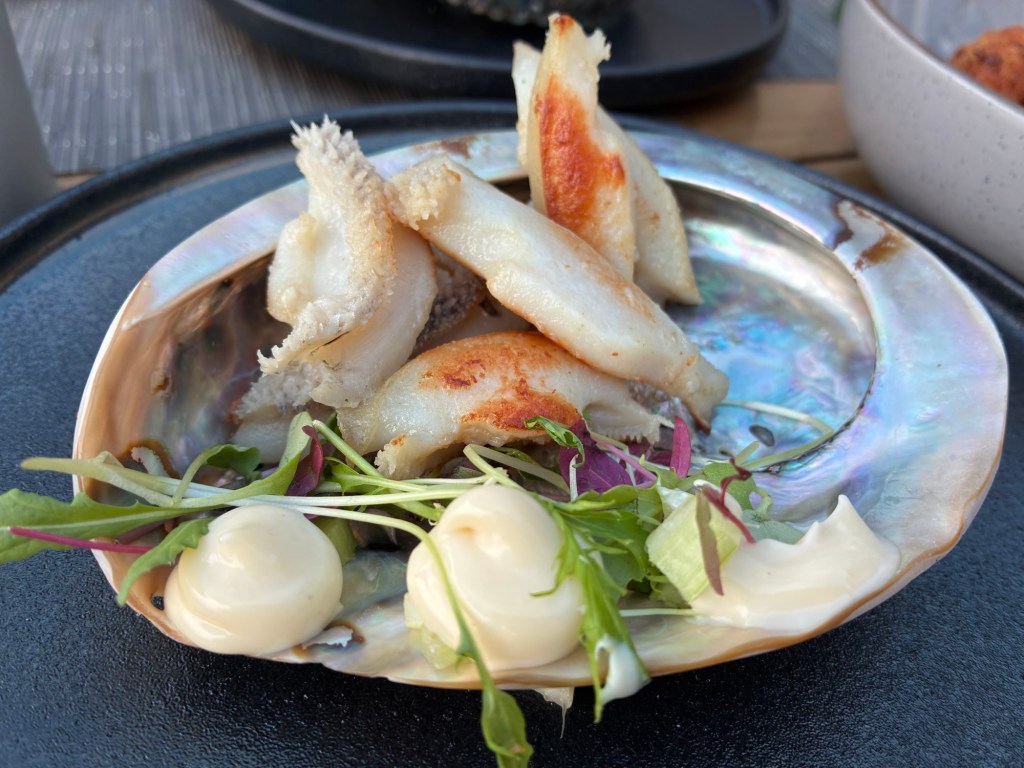
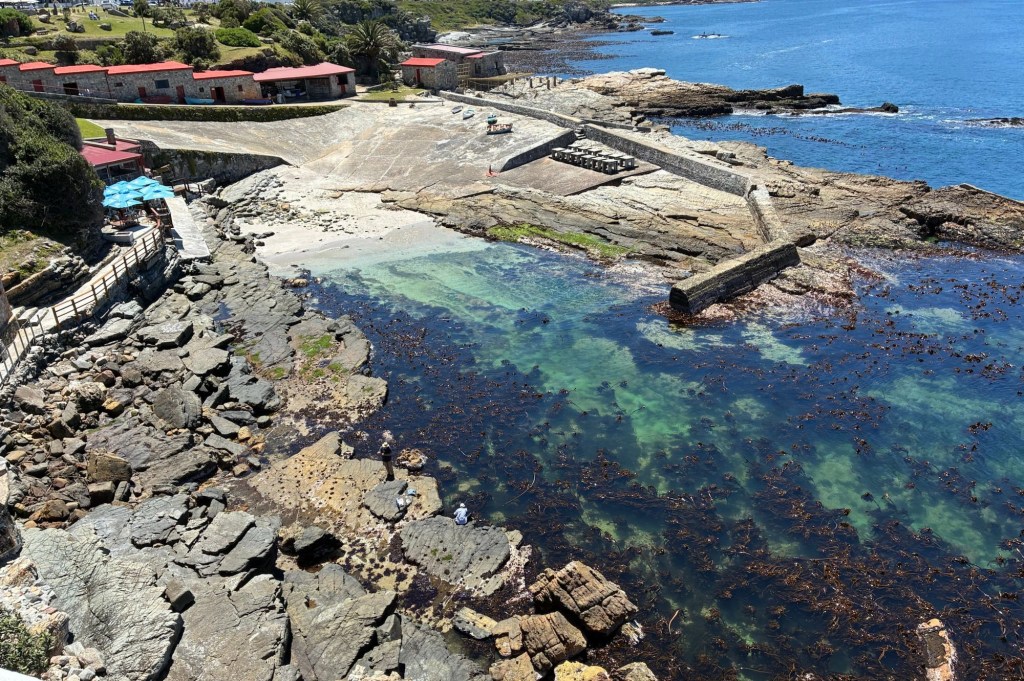
The building hosting Perlemoen restaurant has a fascinating history. In 1984, local veterinarian Dr Pierre Hugo began experimenting with abalone cultivation here. It was Hermanus’s first abalone hatchery, and the restaurant now celebrates that heritage through its menu.
1. Whale watching at Sievers point
The best spot for watching the wales, much quieter than Gearing’s point is Sievers point – a beautiful spot with interesting rock formations and dramatic, weathered sandstone cliffs and rocky outcrops with waves crashing below!
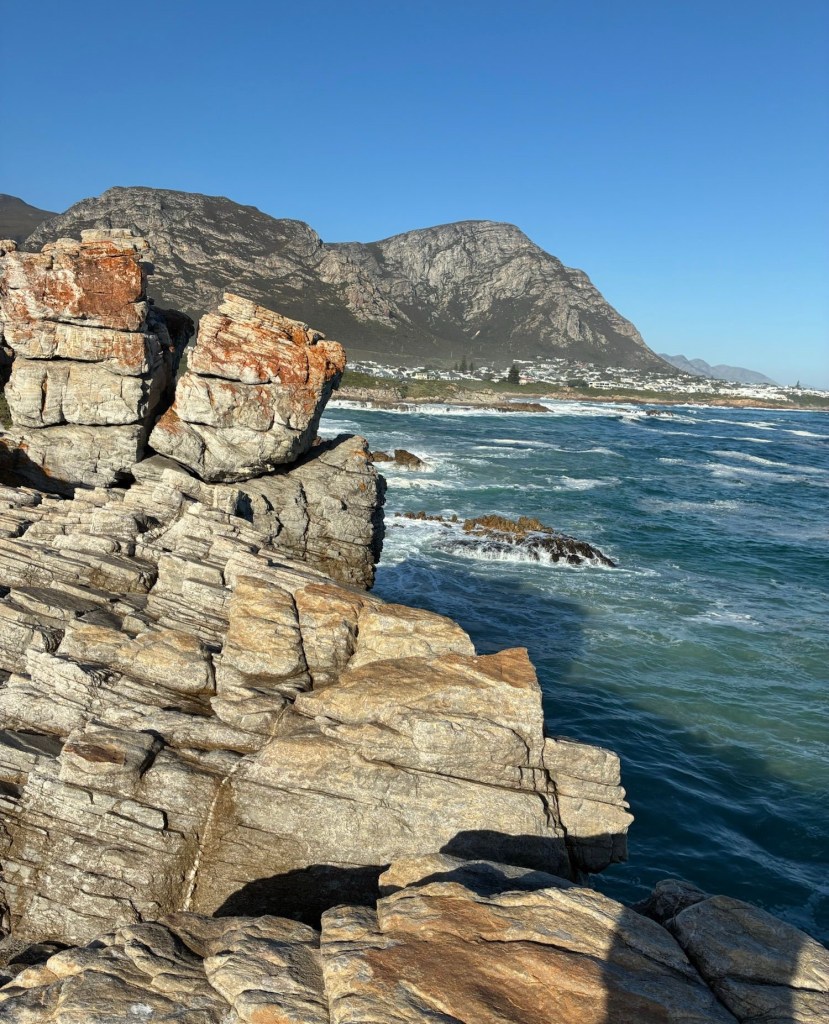
Beautiful view from Sievers Point in Hermanus, looking across the rocky coastline towards the mountains of Walker Bay.
From Sievers point we spotted Southern Right whales (they come remarkably close to the shore), Cape fur seals, dolphins and seagulls. It’s a spectacular encounter with very few people around so we felt immensely fortunate to have the chance to experience nature so close.
At Sievers point you find yourself looking at an ancient sedimentary landscape that has been sculpted by the Atlantic Ocean over immense periods of time (roughly 450 million years)
How these rock formations developed
1. Ancient sand became stone
Around 440–500 million years ago, the region was accumulating sand in ancient river and coastal environments. Over time, burial and pressure transformed these deposits into hard, quartz-rich sandstone.
2. Continental forces fractured the rocks
Roughly 280–230 million years ago, tectonic forces folded and fractured the rock layers, creating the Cape Fold Belt. The mountains behind Hermanus are part of this geological system.
3. Water exploited the cracks
Rainwater, salt crystallisation, wind and waves progressively widened natural fractures. Softer or more fractured sections eroded faster, leaving large, resistant blocks standing.
The geology of Hermanus is fascinating – the coastal cliffs around this part of town include the Skurweberg Formation, a hard, fractured sandstone that is highly resistant to erosion.
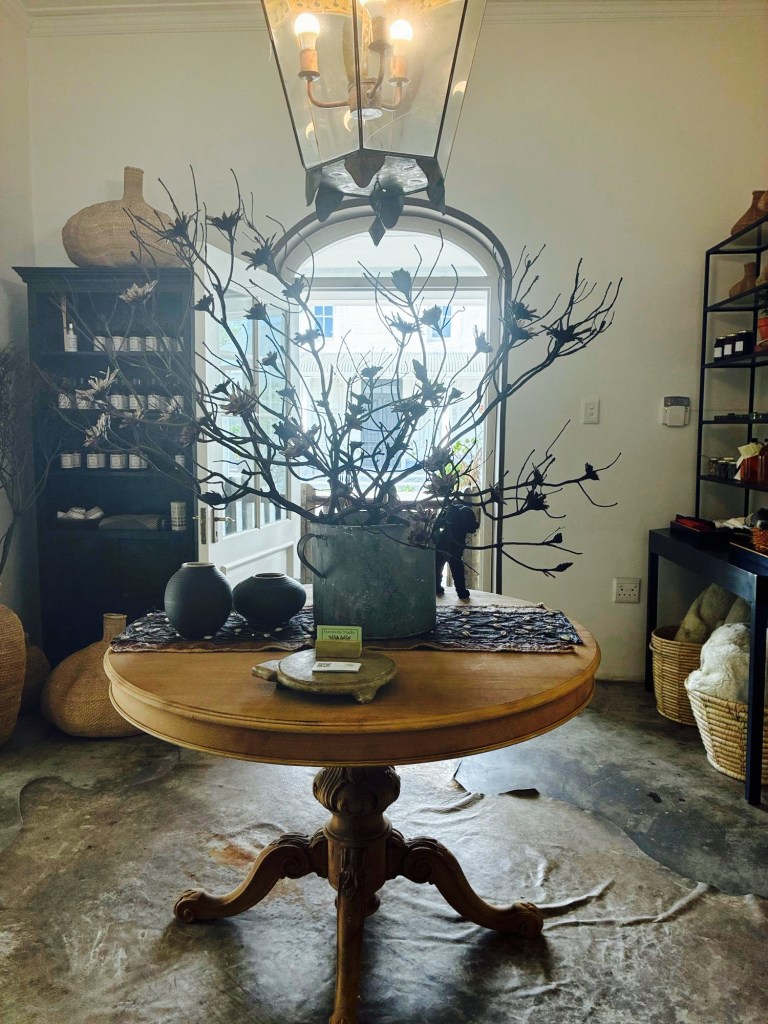
Loving the South African tradition of incorporating burned sugarbush Proteas into floral arrangements. Madre restaurant in Stanford – fire-scorched fynbos, most likely a Protea species, with its blackened branches and dried flower heads still intact.
Protea’s fascinating connection with fire
Proteas are remarkably adapted to the Cape’s natural fire cycle.
- Many species store their seeds inside old flower heads for years.
- Fire kills the parent shrub but triggers the opening of these seed heads.
- Seeds disperse onto the freshly burned landscape.
- Winter rains then create the conditions for a new generation to germinate.
2. An extraordinary stretch of coastline – Die Plaat & Walker Bay Nature Reserve
An extraordinary coastline – not just its beautiful white sand, but the combination of an almost untouched coastline, ancient dunes, rare coastal vegetation, whales and evidence of human life going back approximately 85,000 years.
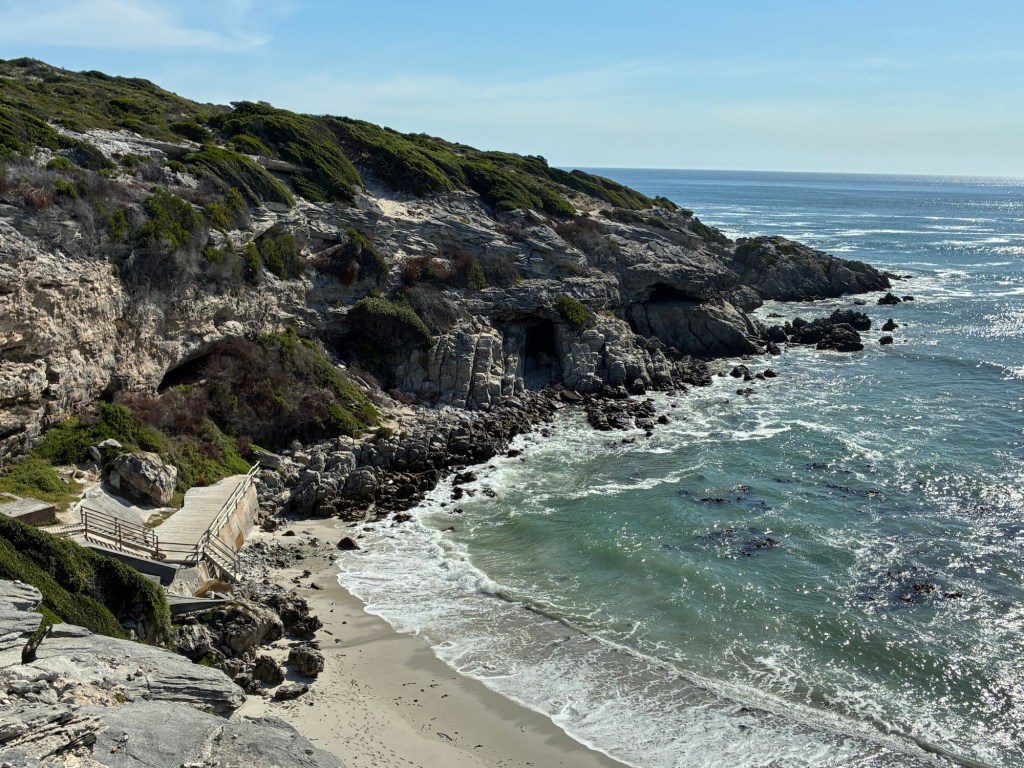
Die Plaat, in Walker Bay Nature Reserve – First Beach, the small sheltered cove reached by steps from the parking area near De Kelders.
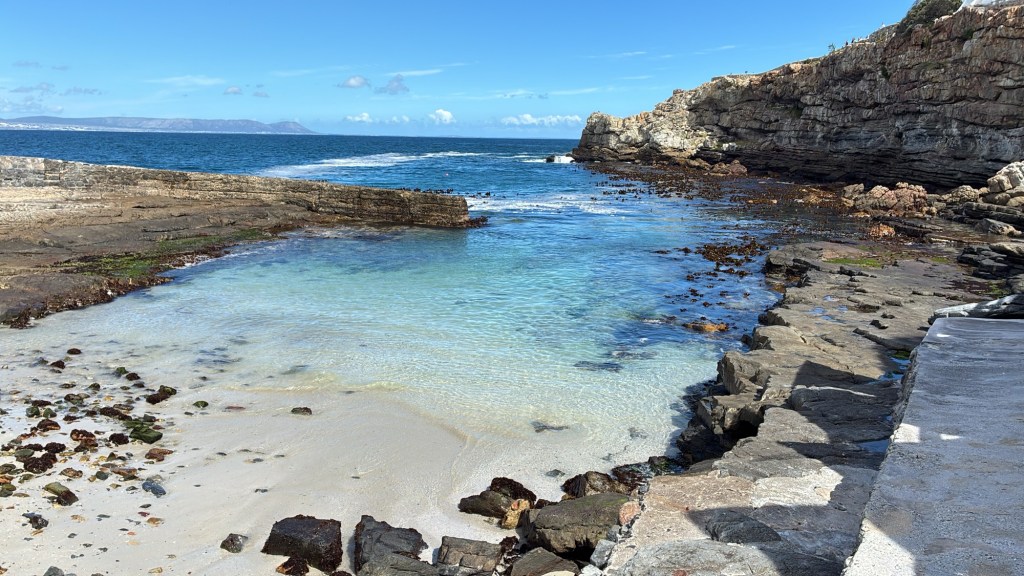
3. Fick’s pool and Hermanus Saturday market.
Lovely day at the market or to have a drink and some and have some Pinchos 🥘 
Kara 💕
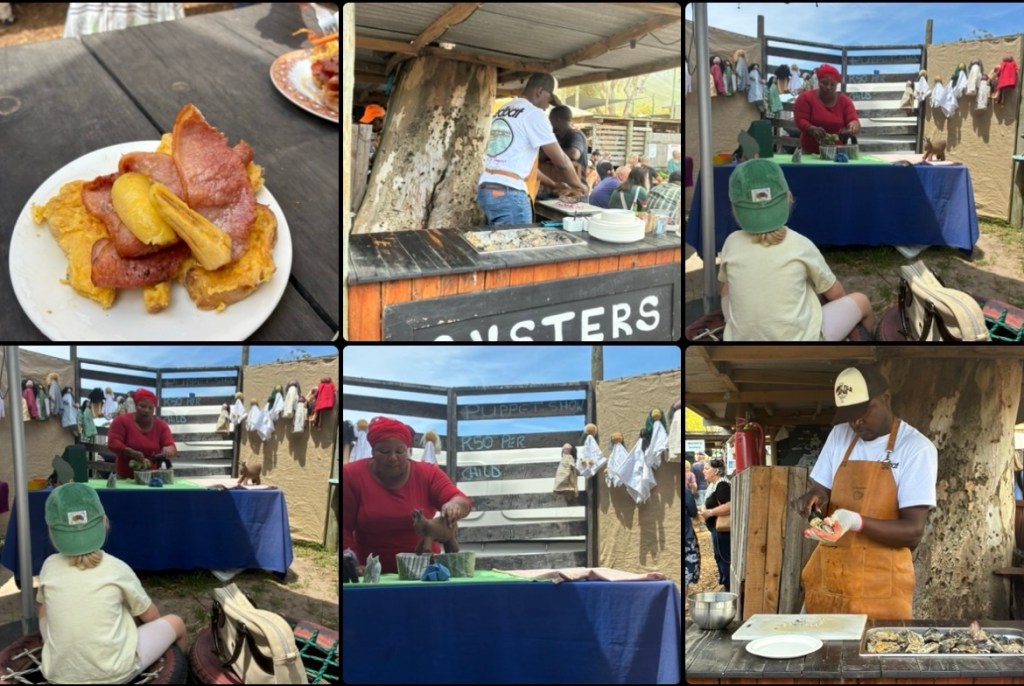
We all love a breakfast/ brunch at the Saturday market in Hermanus: good food, wine and crafts ie ceramics, jewellery and… great music. Very family-friendly, with a children’s play area too.
4. The old harbour and Perlemoen restaurant