Day 1 – 14th Oct: Landed in Cape Town ready to explore
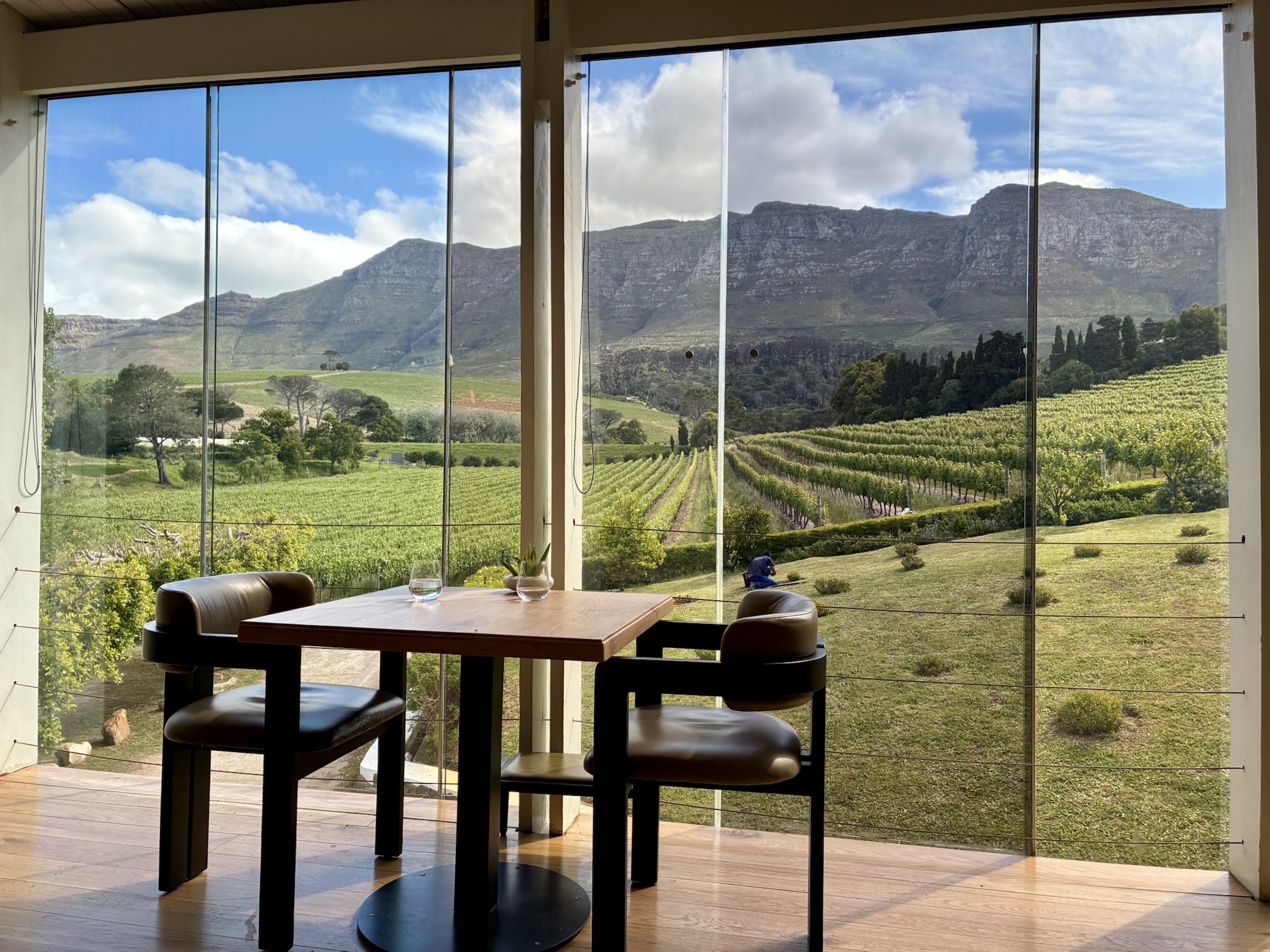
Just as we got off our flight we headed straight out to a restaurant called ‘Beyond’ just by Buitenverwachting Wine Estate, a historic wine estate on the slopes of the Constantiaberg mountains in Cape Town. Its name means “Beyond Expectation” in Dutch, reflecting an estate celebrated for its heritage and wines, picturesque vineyards and relaxed countryside atmosphere.
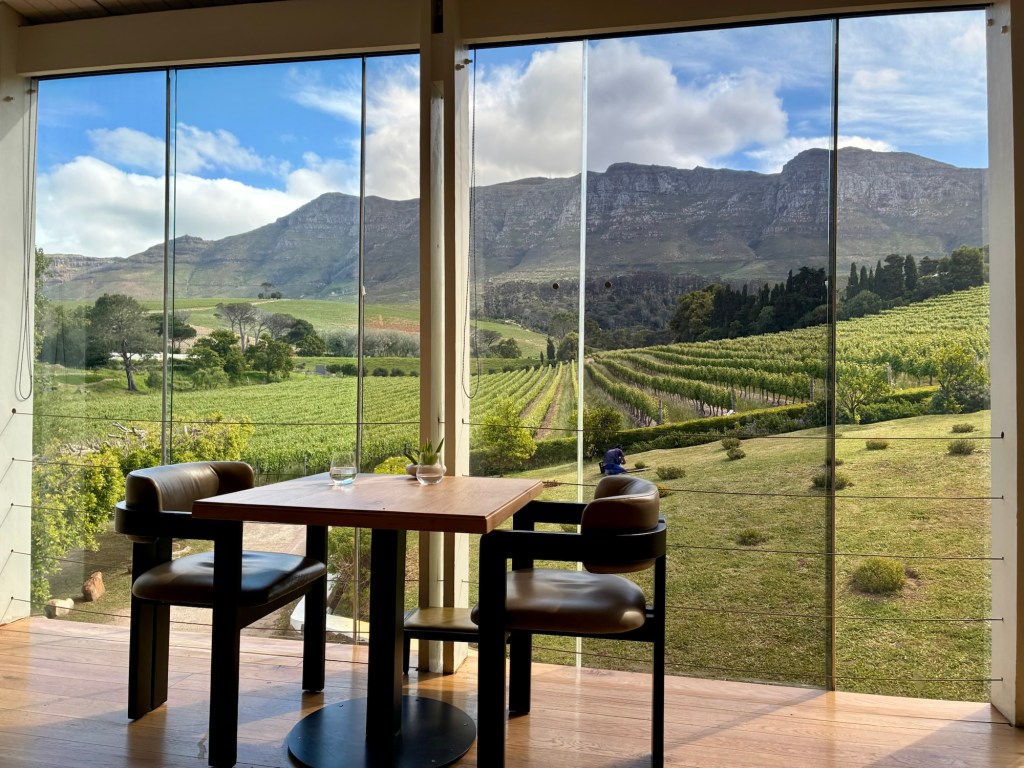
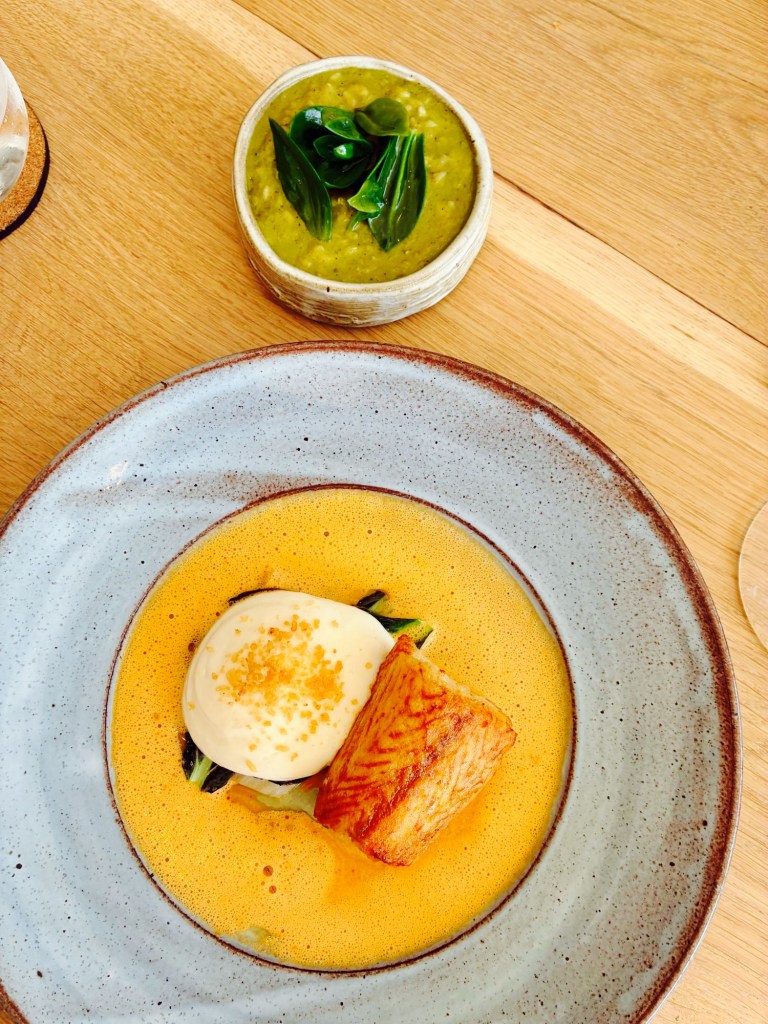
Food was amazing, we got to try some interesting wines too (some went off piste of course!) and the bit I enjoyed most was just the atmosphere: sophisticated but deliberately unpretentious, with an emphasis on the quality of the ingredients rather than theatrical presentation.
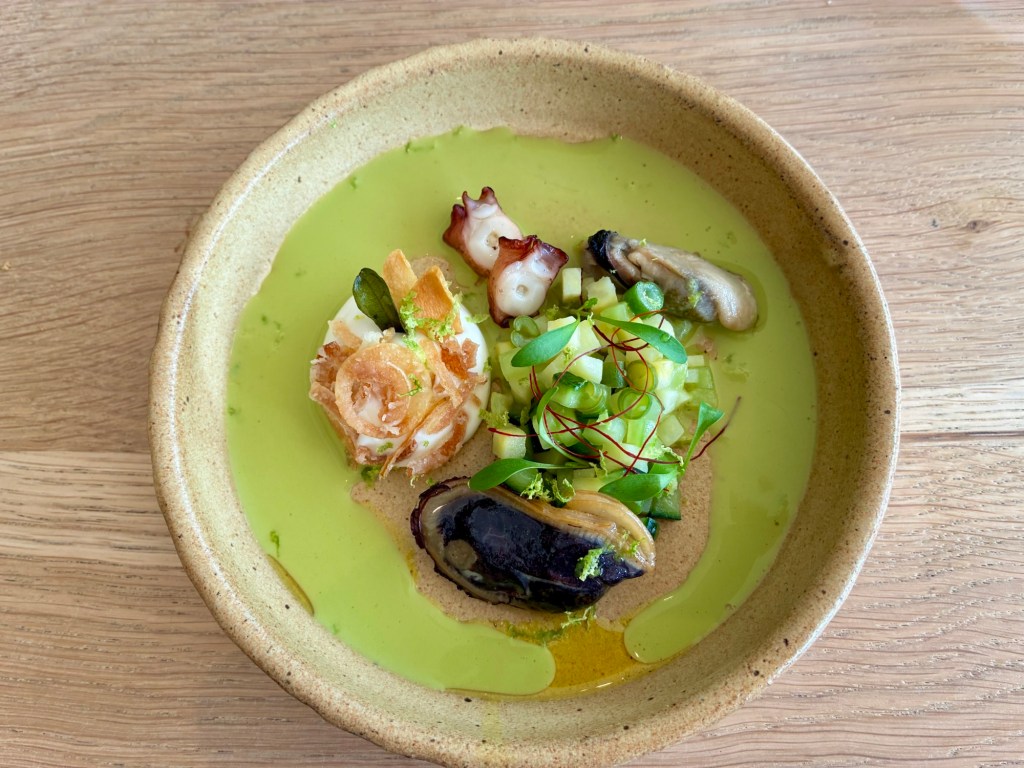
The Chef’s Surprise is a lovely part of the experience because it gives the kitchen an opportunity to present something unexpected, highlighting unusual local ingredients.
Buchu is an aromatic plant native to the Western Cape’s fynbos vegetation. It has a distinctive fragrance combining blackcurrant, mint, citrus and herbal notes. It’s very interesting because buchu was traditionally used medicinally by the Khoisan peoples and is now being rediscovered by contemporary South African chefs.
Day 2 – 15th Oct: Kirstenbosch and Little Fox
We unanimously decided to head back to Kirstenbosch (quite rightly one of the world’s most celebrated botanical gardens, on the slopes of Table Mountain). This is definitely one of my favourite places to be. From there we took a walk towards Constantia Nek (a beautiful mountain pass) via the Contour path.
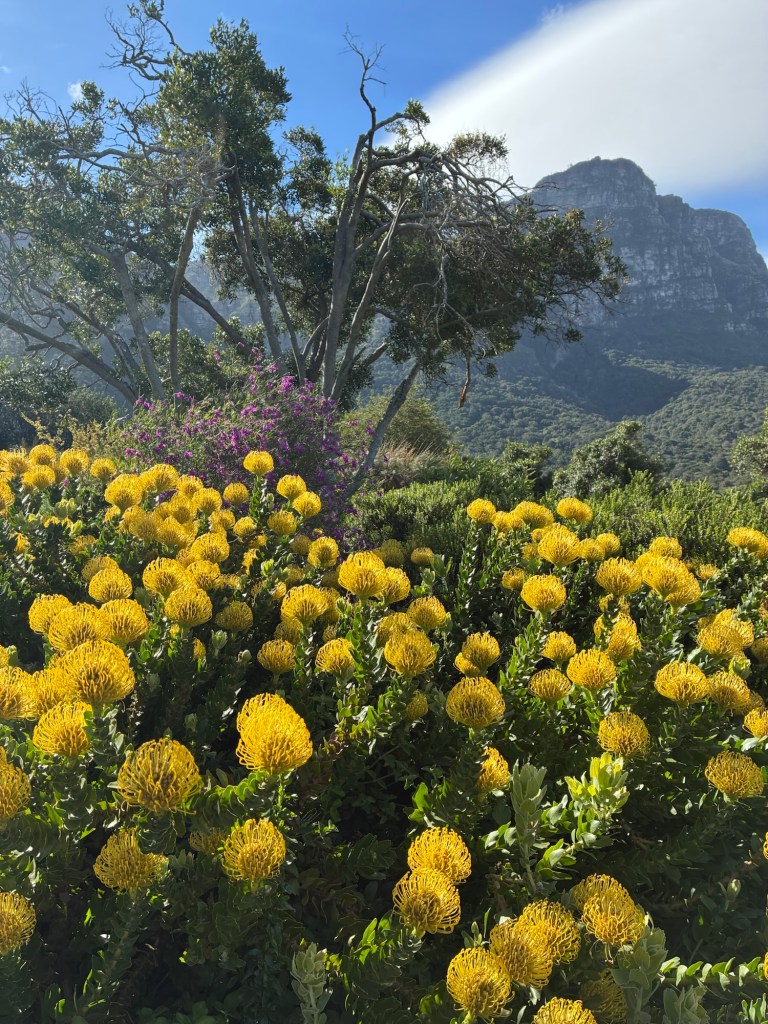
Striking golden-yellow pincushion proteas part of South Africa’s remarkable fynbos vegetation
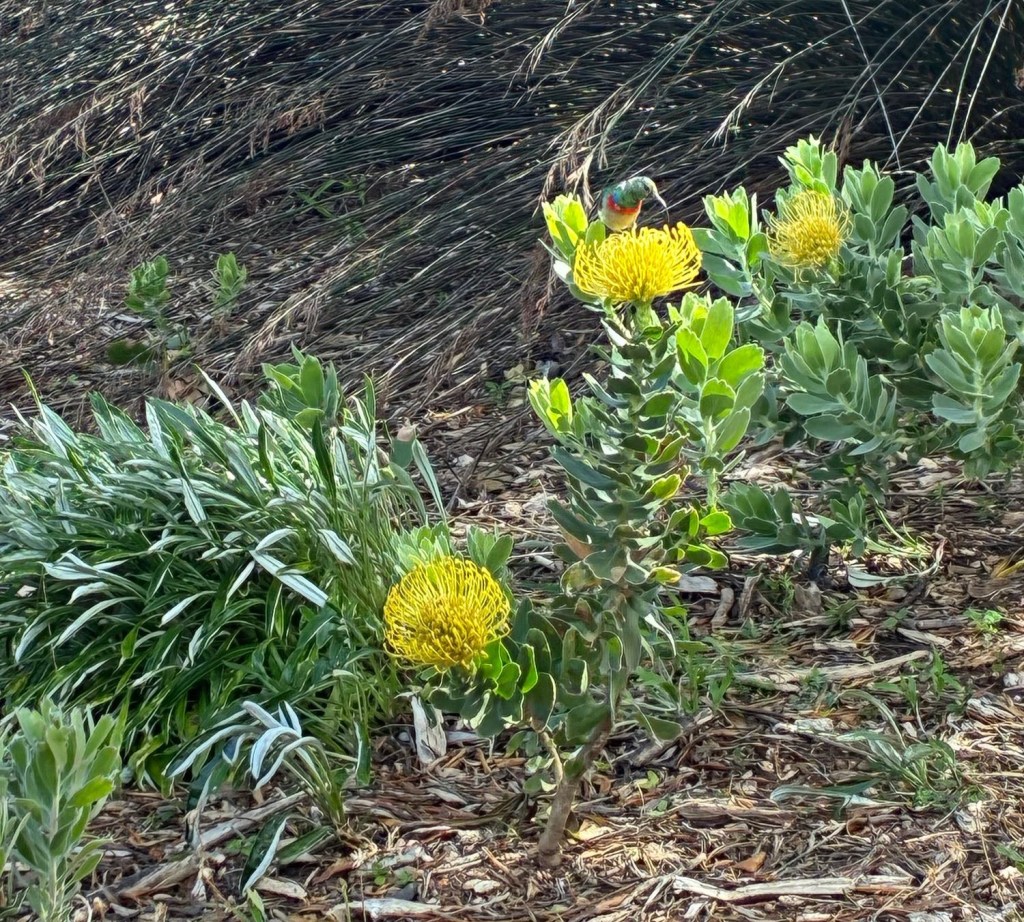
A sunbird feeding on a yellow pincushion protea, most likely a male southern double-collared sunbird
Lovely walk, quite diverse and the scare of a puff adder some before before us had spotted, made it more adventurous than we anticipated.
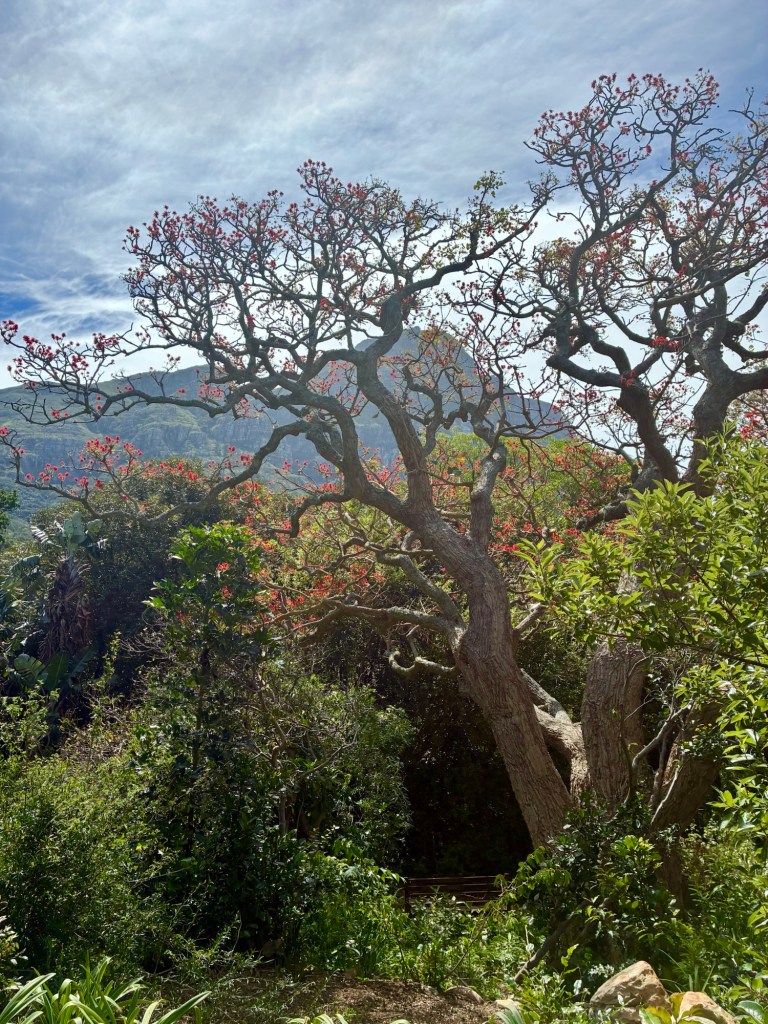
Ethiopian Coral Tree flowers when it has almost no leaves: it sheds its leaves to conserve water during dry periods. Its scarlet flowers often appear before the new foliage, making the entire crown look as though it’s on fire (seeds are poisonous!).
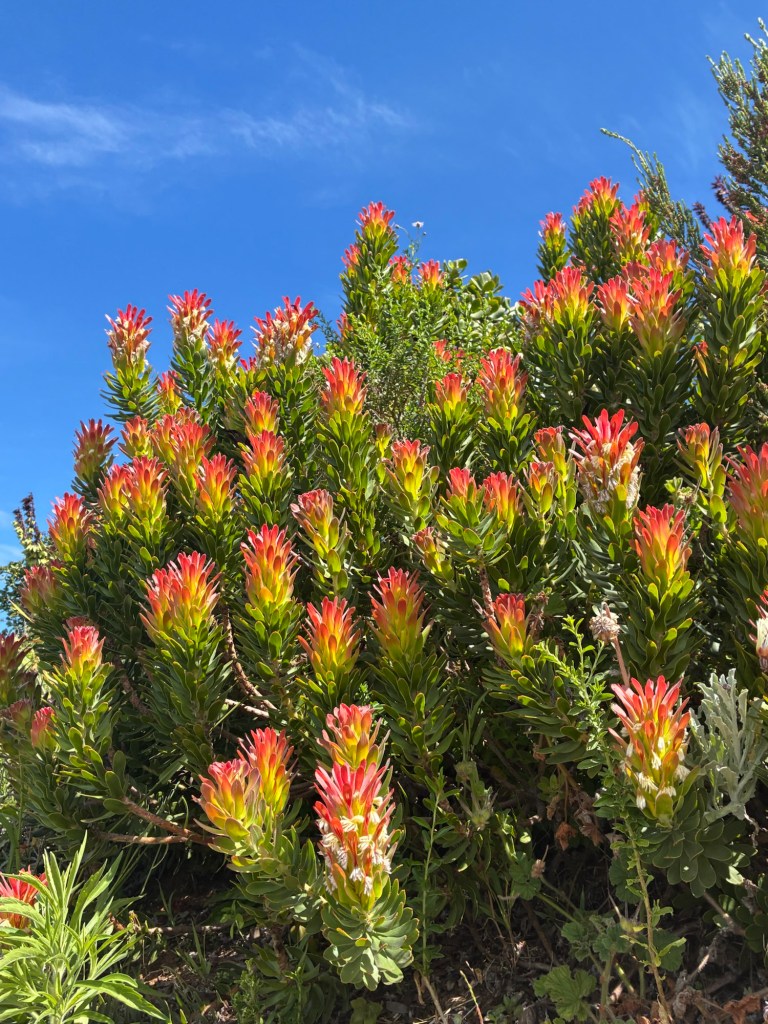
Walking around Kirstenbosch brings some wonderful examples of how plants have evolved to thrive in the Cape’s nutrient-poor soils, dry summers and fire-prone landscape. The Conebush, for example, has adapted to the Cape’s natural fire cycles. In some species, woody cones protect seeds until fire triggers their release.
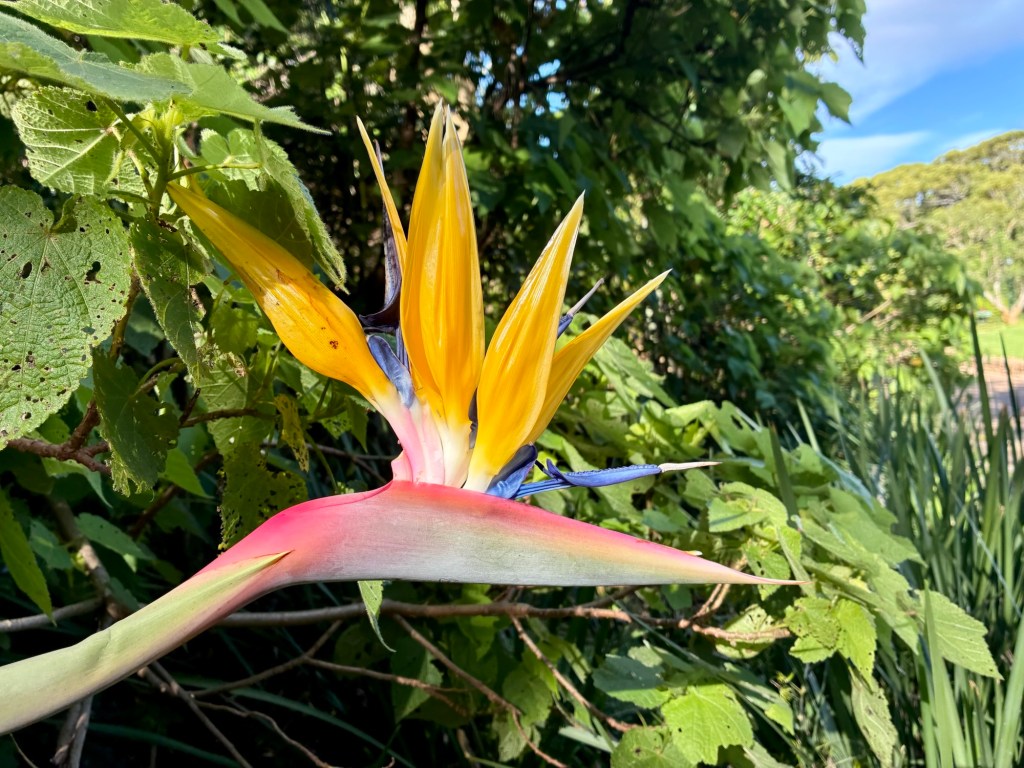
Strelitzia ‘Mandela’s Gold’ – A rare golden-yellow form developed through a breeding programme at Kirstenbosch and named in honour of Nelson Mandela in 1996. Its flowers have yellow rather than orange petals, contrasting with the characteristic blue.
It took almost 20 years to develop Mandela’s Gold. Starting with just seven yellow-flowering plants in the 1970s, Kirstenbosch horticulturists carefully cross-pollinated them to preserve the rare colour.
Its natural pollinator (the cape weaver bird) doesn’t live in Cape Town. At Kirstenbosch, gardeners have to hand-pollinate Mandela’s Gold to produce seeds. Interestingly, sunbirds are cheeky and they often ‘steal’ the nectar without pollinating the plant, because they can reach it without activating the flower’s mechanism.
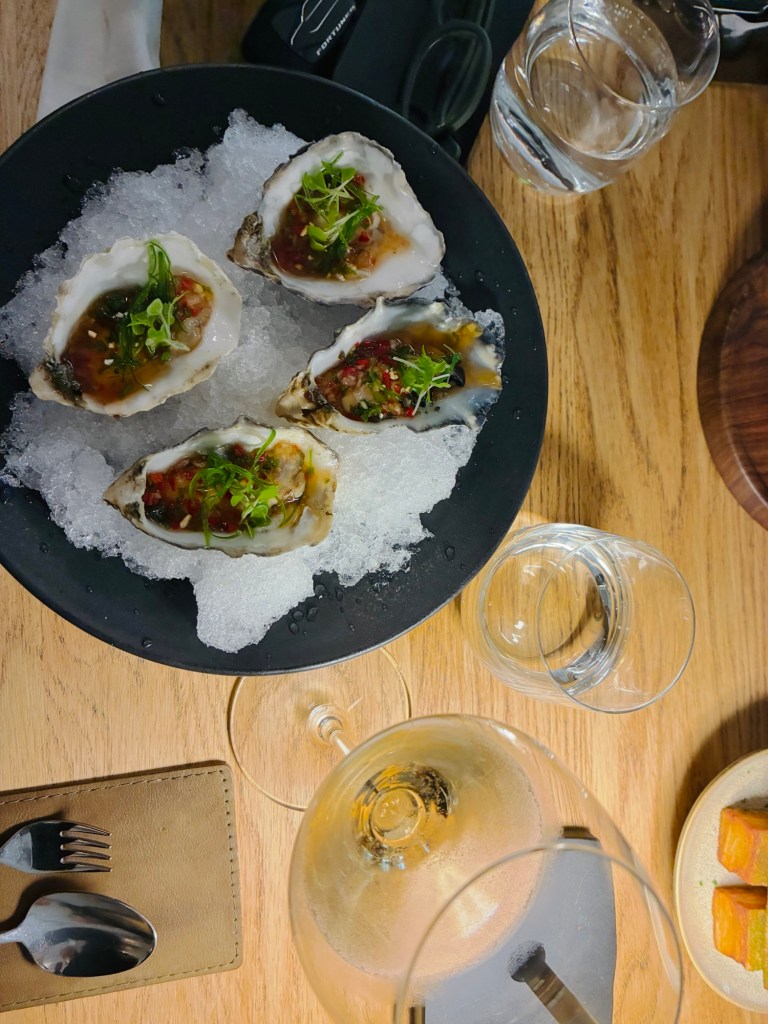
Day 3 – 16th Oct: Fish Hoek, V&A waterfront and the (so called) Diamond Museum
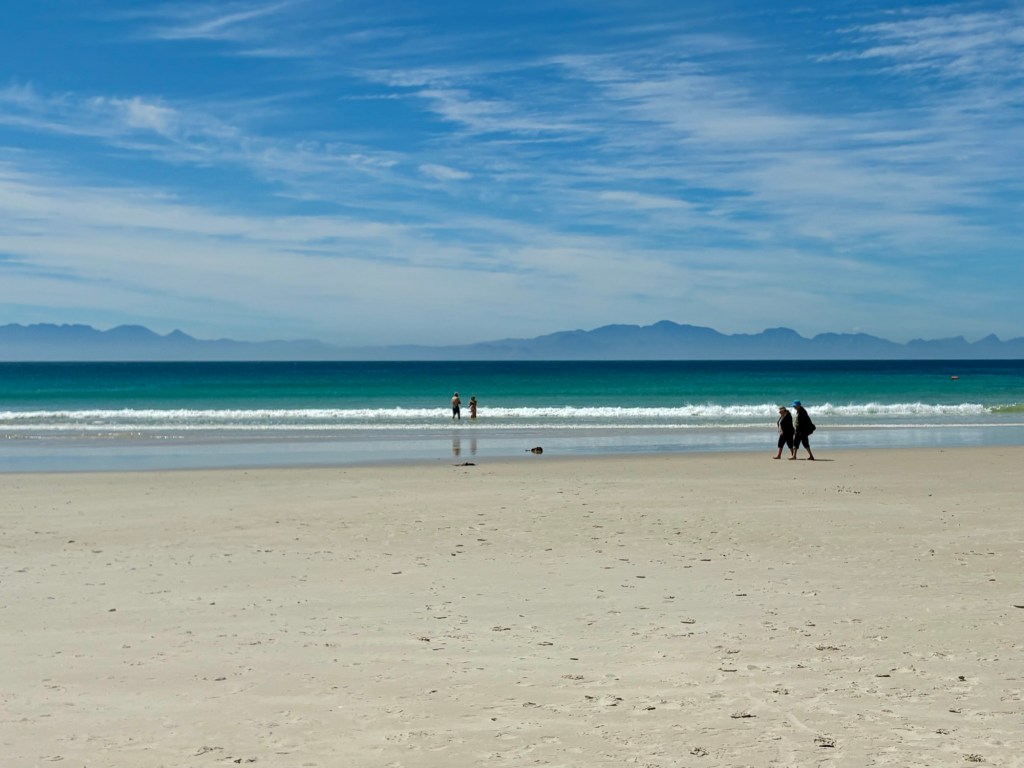
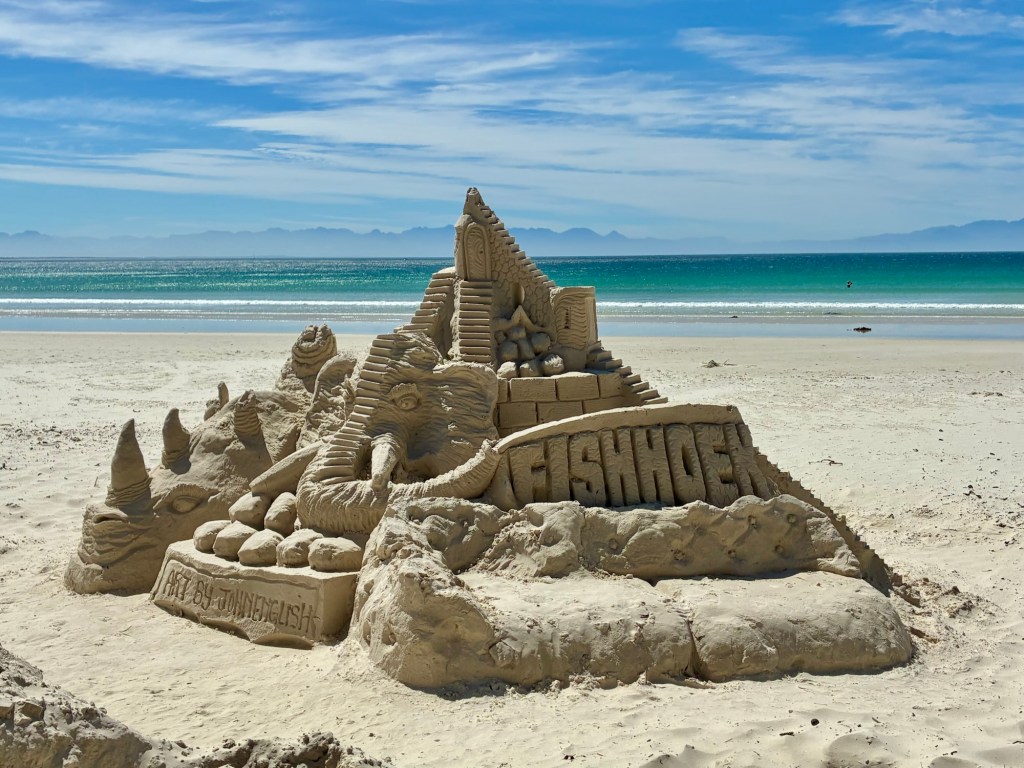
We couldn’t avoid a quick but FREEZING 🥶 swimming stop in Fish Hoek (Kara would not have it otherwise!) so we stopped at the beach and the headed out to the V&A waterfront.
I have been wanting to go to the Cape Town Diamond Museum for a couple of years so I ‘conned’ everybody into joining a tour. I left bitterly disappointed, unfortunately- totally not what I was expecting. We did get some information about diamond history, but the dominant impression was of a carefully orchestrated sales experience rather than a genuine museum visit. And at R400 per person, we paid a premium for the privilege of being sold to.
Day 4 – 17th October Groot Constantia
After a quick lunch, I went to see Groot Constantia Museum – this is a genuine historical museum within South Africa’s oldest surviving wine estate (established in 1685) unlike the Shimansky wannabe be Diamond Museum we visited yesterday, I felt this is primarily a heritage experience rather than a sales attraction. A beautiful and fascinating window into colonial Cape society, not just South African wine. instead of drinking wine 🍷 all day we visited The museum which gave us more of an idea of what it was like back then and a bit of the history of the place. By KARA 💕
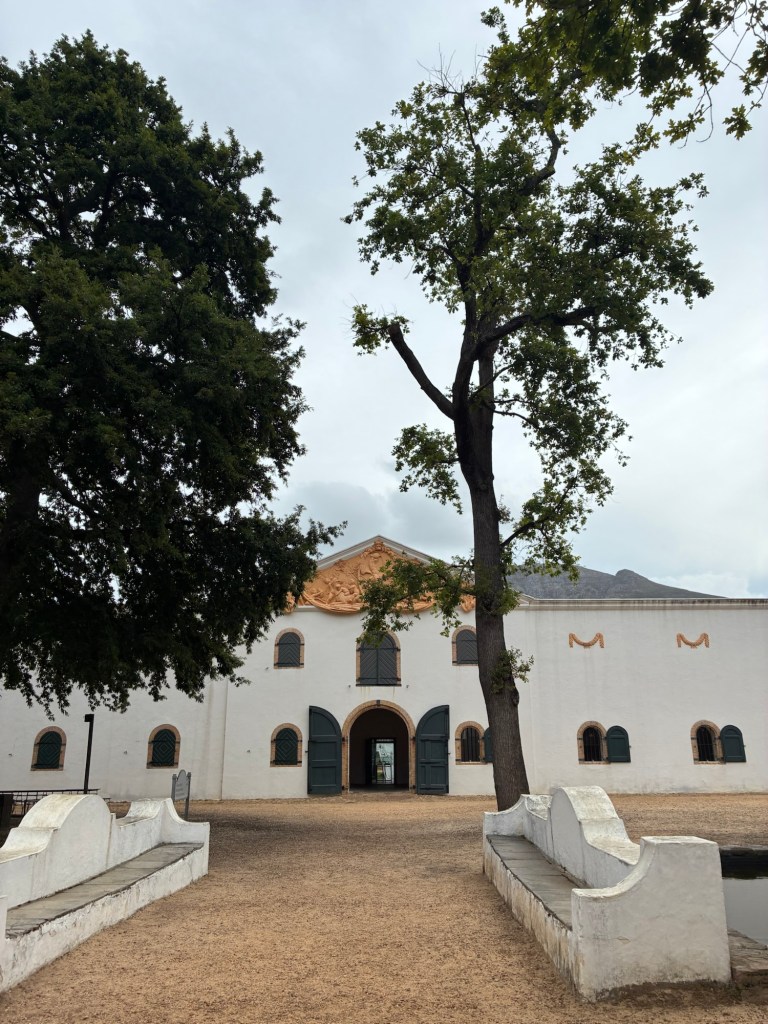
Cloete Cellar, one of the most important buildings at Groot Constantia, dated 1791.
I love how monumental the cellar looks despite originally being an agricultural working building. Hendrik Cloete was announcing the prestige and success of his wine estate through architecture. The elaborate stucco relief above the doorway illustrates a scene from Greek mythology. At its centre is Ganymede, a beautiful young Trojan prince whom Zeus, disguised as an eagle, abducted and brought to Mount Olympus to become the gods’ cupbearer. Can you think of a better subject for a wine cellar? A mythological figure responsible for serving drink to the gods!
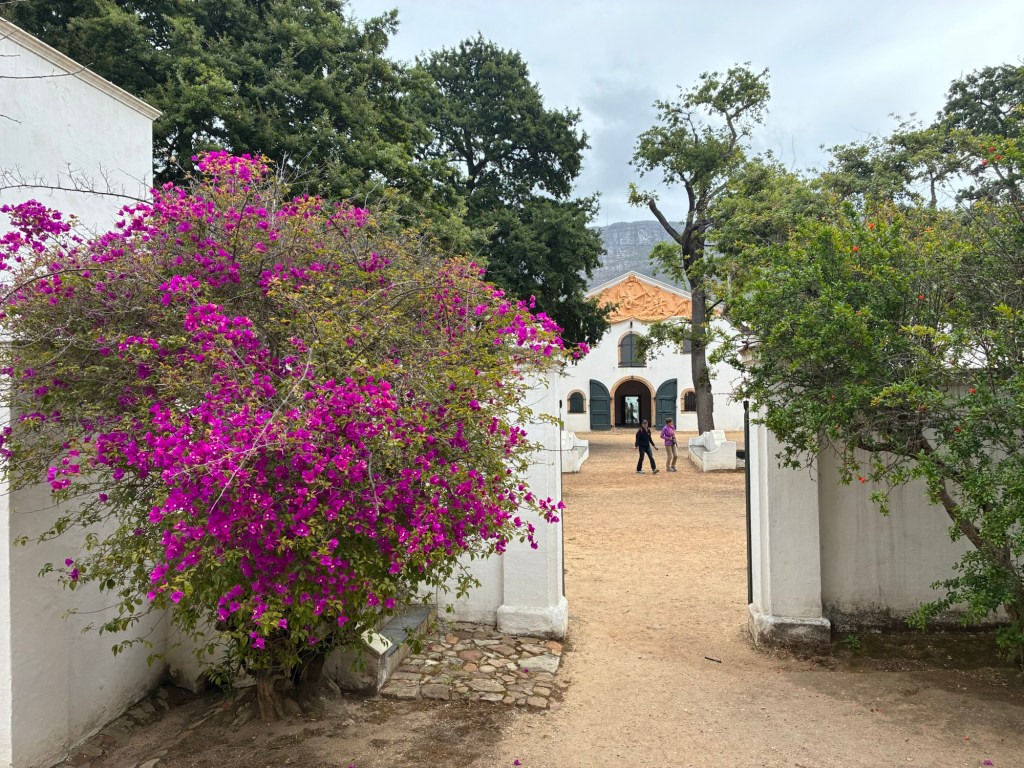
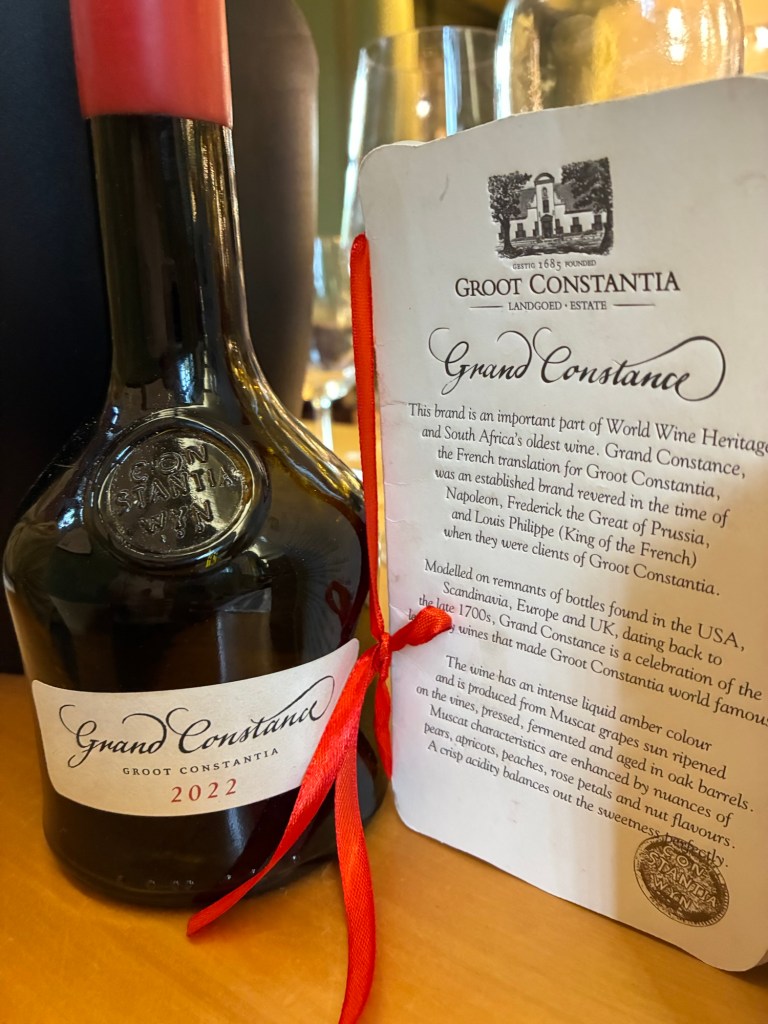
Talking of Constantia’s wine’s success – Napoleon Bonaparte himself was a happy and very loyal ‘customer’! He enjoyed Constantia wine during his exile on Saint Helena (1815–1821). Records describe shipments of Constantia wine to the island (about 30 bottles a month).
Day 5 – 18th October:
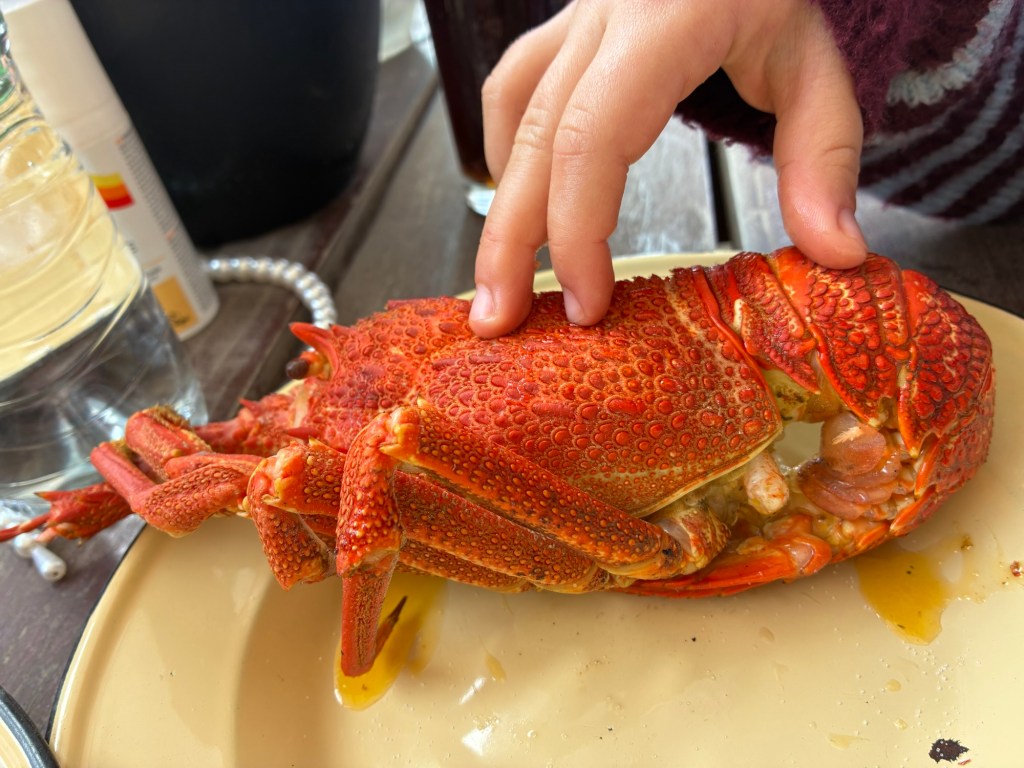
We left Cape Town and arrived just in time for lunch at Muisbosskerm (one of the most distinctive traditional seafood experiences on South Africa’s West Coast). Rather than a conventional restaurant, it’s a traditional West Coast seafood feast, with fish cooked over open wood fires, rustic shelters made from local shrubs, and tables overlooking the Atlantic Ocean. Established in 1988, it celebrates the food traditions of West Coast fishing communities.
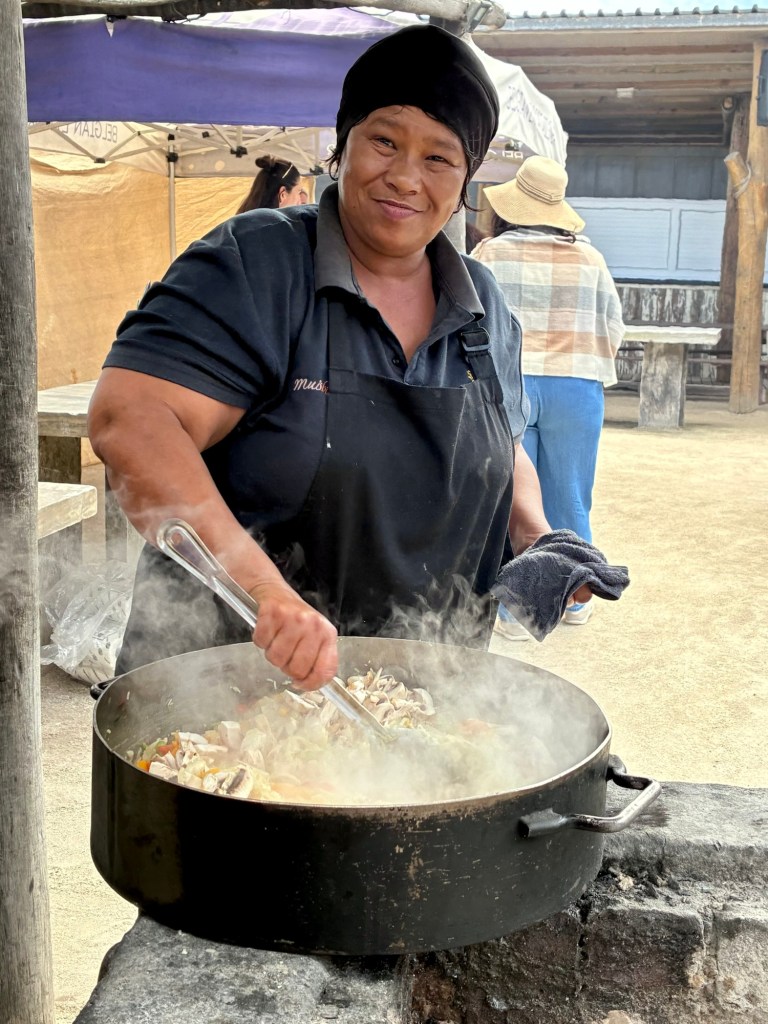
West Coast seafood potjie, cooked slowly over an open wood fire. The cooking style is influenced by South Africa’s Cape Dutch culinary traditions.
Unlike a Spanish seafood paella, which relies on rice absorbing the cooking liquid, a seafood potjie gently simmered mix of fish, shellfish and vegetables.
The food is served help yourself buffet-style over two to three hours, with several courses appearing throughout the meal (some of which came as a complete surprise just as you thought the fish feast is over: ie pork knuckle, beef stew and beef steak!).
- Snoek: An iconic South African fish, frequently smoked or grilled over coals.
- Angelfish: mild, slightly sweet, with a richer flavour than many white fish.
Fairly meaty flesh, excellent grilled over wood coals. - Bokkoms: Salted, wind-dried mullet, a traditional West Coast speciality.
- Seafood potjie, a type of seafood paella: A popular house dish with a veggie rice type of dish with LOTS of seafood
- Potato-yeast bread: Served with homemade preserves and butter.
- Boer coffee, a farmhouse coffee, particularly associated with Afrikaans-speaking farming communities; heated over an open fire or wood burning stove
- And…. Koeksisters: Syrup-soaked fried pastries served with coffee.
The setting, the people and cooking methods are much of the attraction as the food itself.
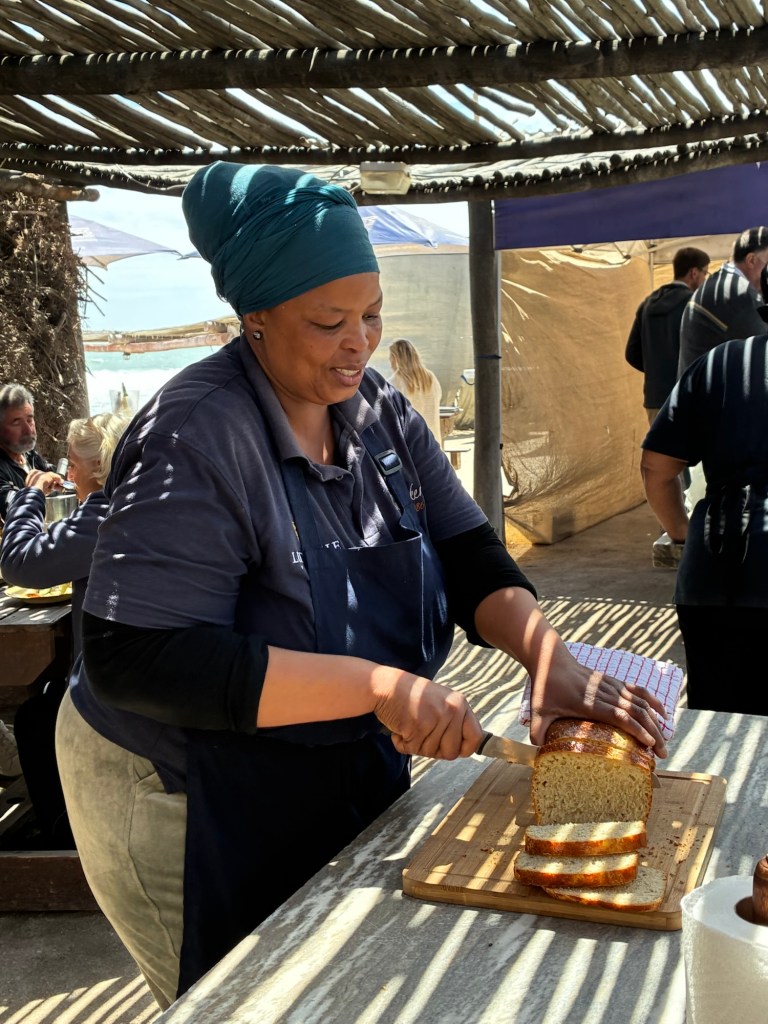
Potato yeast sourdough bread (aartappelgisbrood) is a traditional farmhouse bread and one of the specialities served at Muisbosskerm. Potatoes were historically used to cultivate natural yeast for bread-making (baker’s yeast wasn’t readily available).
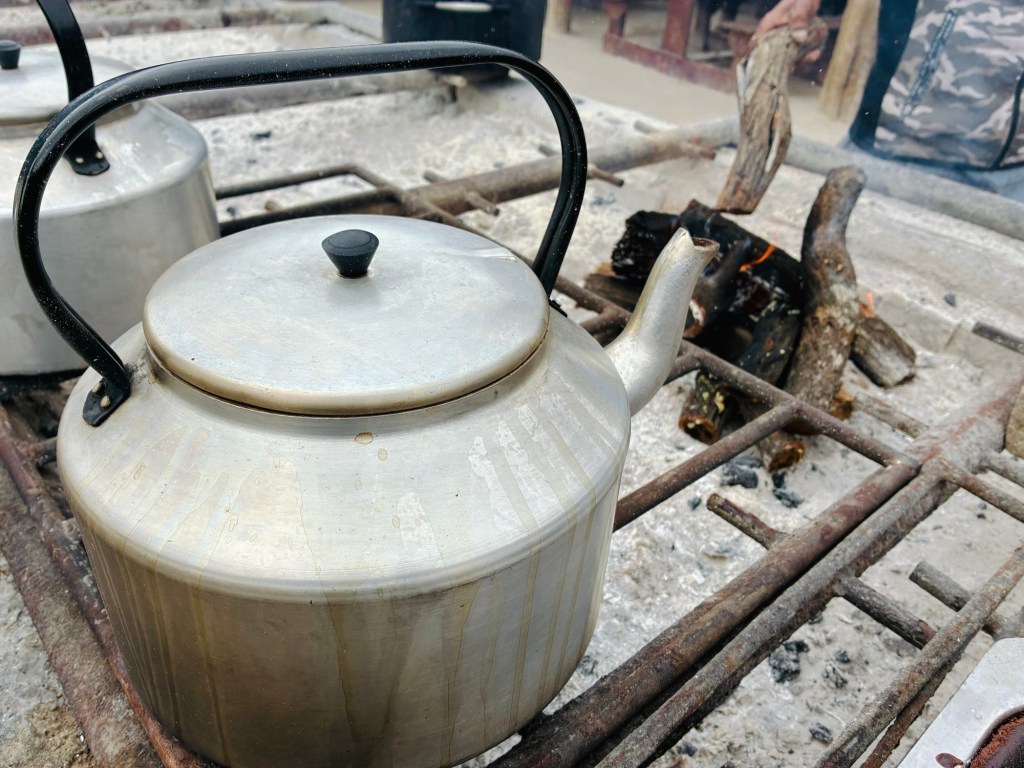
A memorable black coffee freshly brewed over a wood fire. Unlike espresso, this is a gentler extraction, producing a full-bodied, long earthy coffee with low acidity. The flavour picks up smoky notes from the outdoor prep and I loved it!
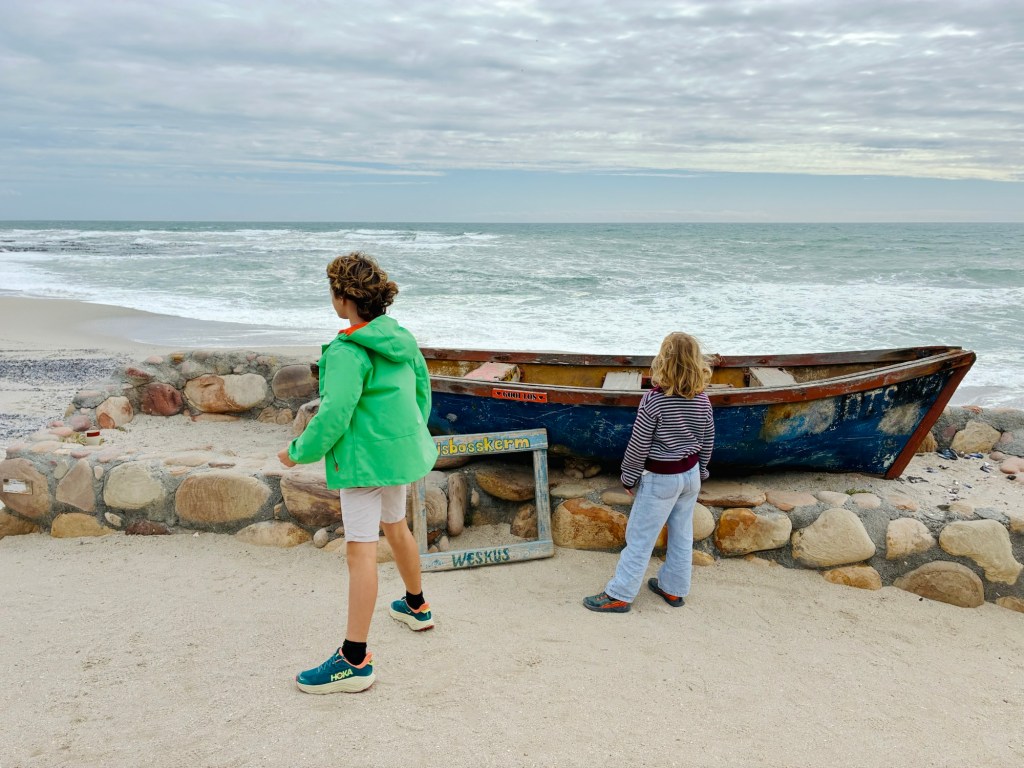
The wild Atlantic coastline at Muisbosskerm, near Lambert’s Bay. The old blue wooden fishing boat is a reminder of the West Coast’s traditional fishing communities. This coastline is rough so it’s hard to imagine local fishermen would brave the Atlantic swells in small wooden boats like this
Kara: After that we got on our way to Elands bay (I was quite bored no offence sorry)

