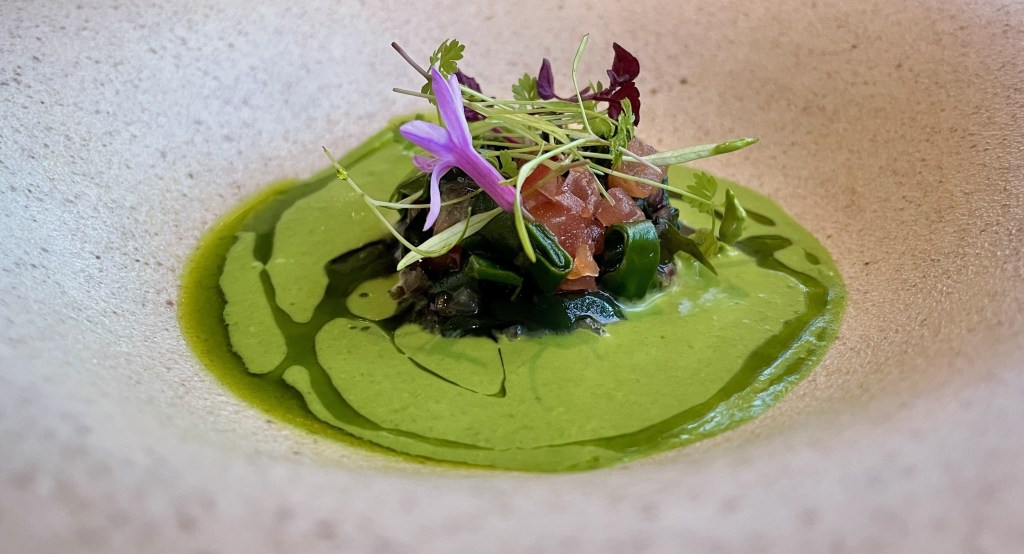
We started in style, rushing from the airport straight to Fyn, an African × Japanese fusion restaurant, apparently one of the most talked about places in Cape Town. Exciting local ingredients (fynbos, seafood, game) and Japanese techniques & minimalism, what a treat, loved every bite!
Just a regular salad – ‘tulbaghia’ the South African wild garlic. It often grows wild or in gardens along the Cape coast
It was great to try plankton, the algae not the animal type. It tastes salty, similar to seaweed in my view. It is rich in omega-3 fatty acids and contains vitamins, minerals, antioxidants and is considered a sustainable “future food”.
We love the chilled low-key vibe in Fish Hoek so we returned to our usual spot for the first two nights in South Africa.
Day 2: Hout bay, Clifton beach and Noordhoek village
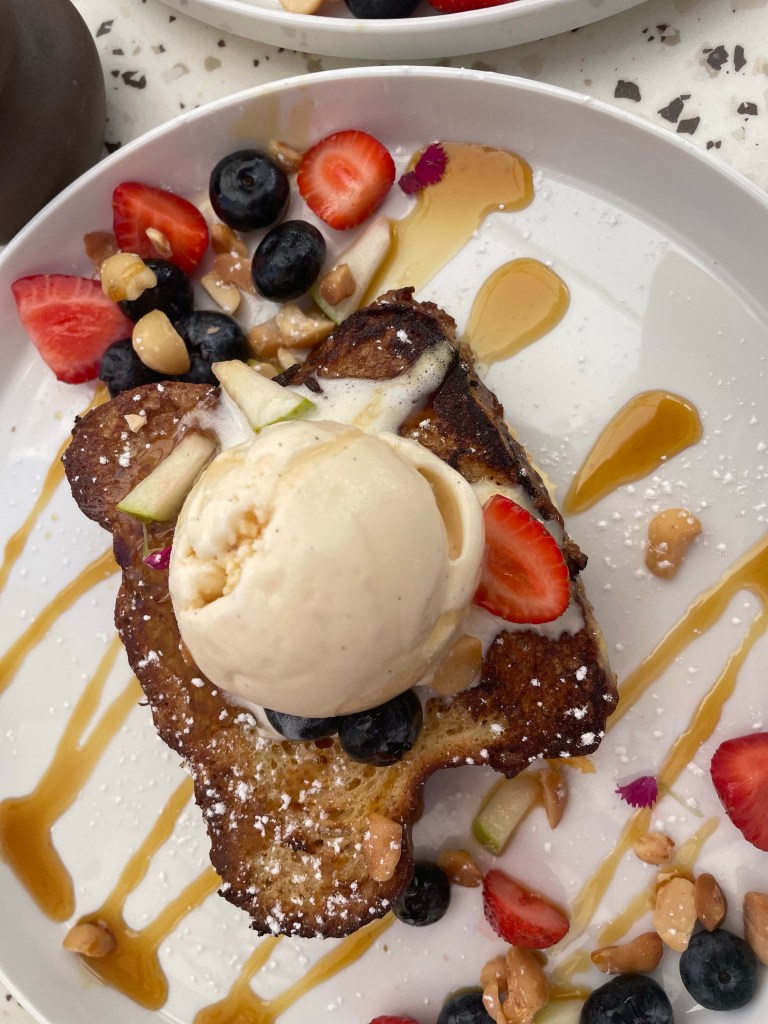
After the painful and time consuming exercise of extracting ourselves from the house in Fish Hoek, we took the scenic drive (again!) and went for brunch at the Deli Social in Hout Bay. Coffee and cake were both exceptionally delicious.
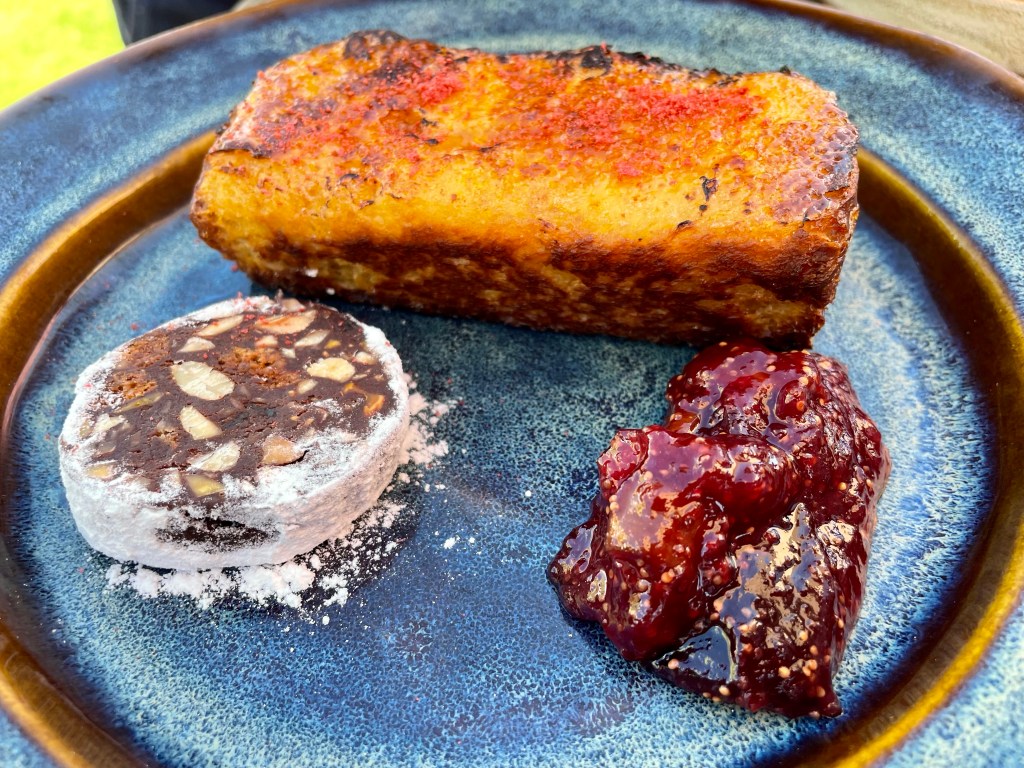
French Toast at the Deli Social
Today we chose Clifton 4 for our swim, cold ice but fun, definitely worth experiencing (once). I know it’s a controversial opinion, even in our little family, but here it goes: I much prefer the uncool Fish Hoek beach. Nice to have checked it out though.
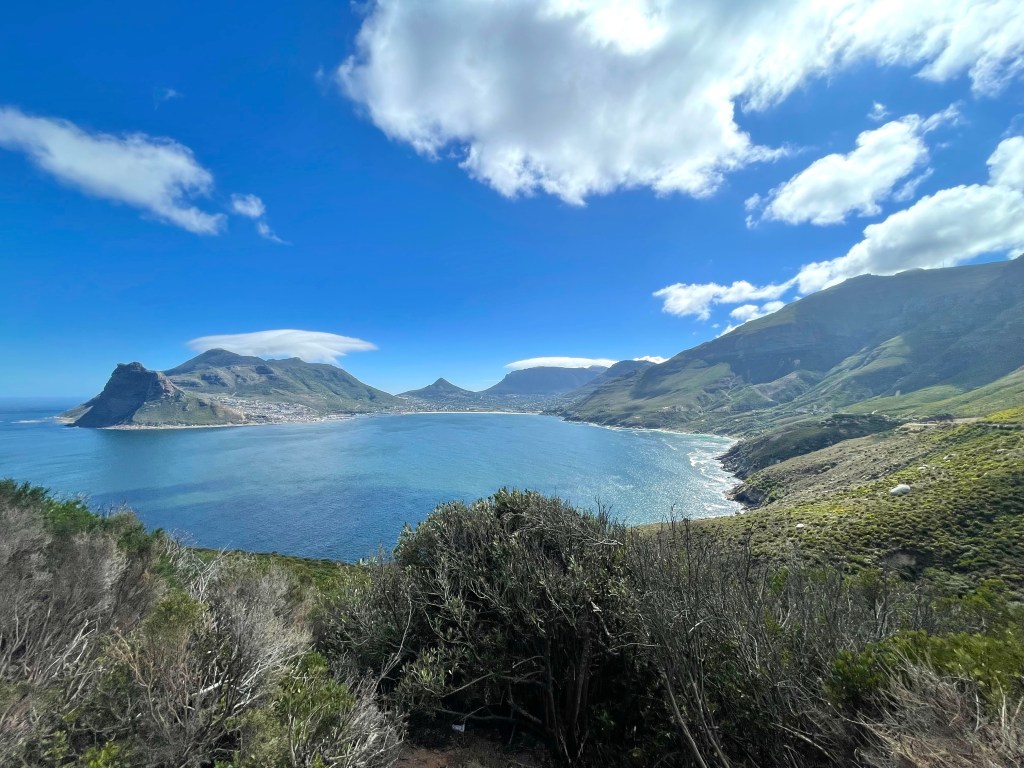
Hout Bay seen from Chapman’s peak drive, one of the most scenic coastal drives in the world, some inaccurately say where a James Bond scene was filmed
So for dinner… now this is exciting: we came to The Foodbarn Café & Tapas in Noordhoek Farm Village, just outside Cape Town. It’s known for blending casual café vibes with high-end, chef-driven food—a bit of a sweet spot between relaxed and refined.
The food barn is run by a French chef Franck D, who previously made his name at top-tier restaurants, so the food has serious pedigree but without the stiffness which forced us to have far too many little plates with G. trying to order pretty much everything on the menu.
Day 3: Fish Hoek, !Khwa Ttu and Paternoster
We stated our day with yet another freezing cold swim in the Atlantic (technically still the Atlantic via False bay, but not an Atlantic facing beach making it – in theory!) feel a bit warmer. It had to be done – we couldn’t leave Fish Hoek without a splash in the bay.
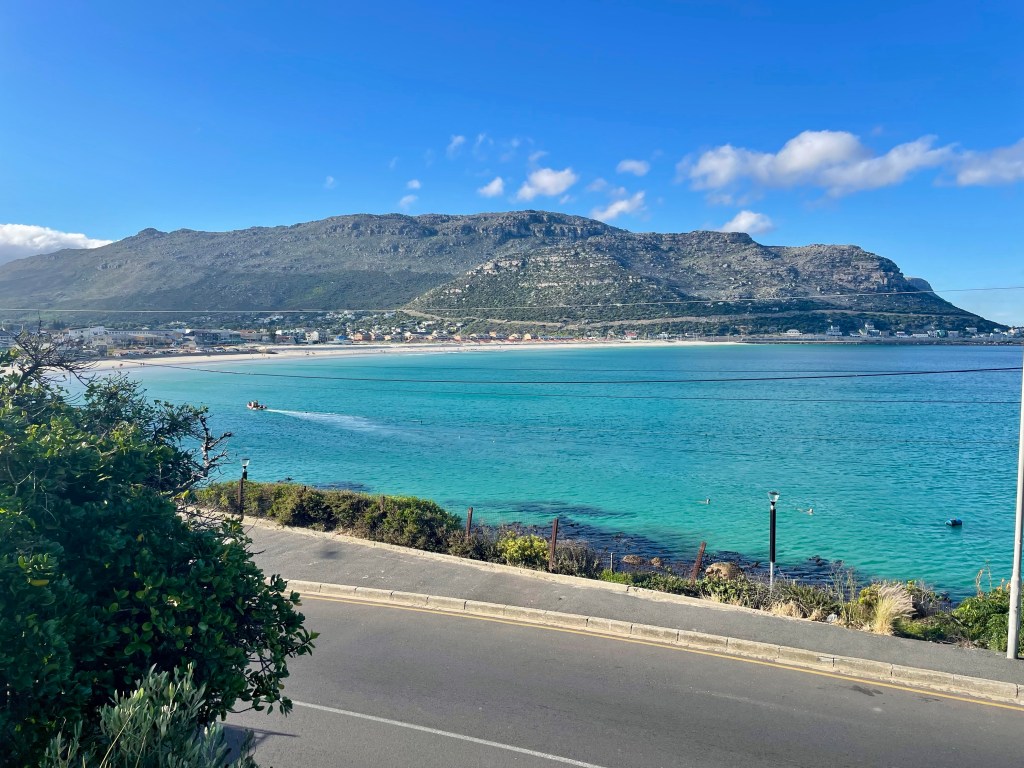
Fish Hoek beach from our window at the Cove, what a fantastic sight!
We took a drive up the cost and stopped at !Khwa ttu, a cultural centre focused on the San people (Khoisan) and started our learning experience with… lunch. I went for Weat Coast mussels with a very interesting fermented bread (askoek) and pepper sauce.
Askoek is a traditional South African bread, cooked in ashes (hence the name) Slightly smoky, rustic, often served warm and torn by hand.
Mosbolletjie is a traditional South African sweet bread roll with a very distinctive flavour. A soft, slightly sticky bun made with grape must (“mos” in Afrikaans), Naturally sweet, often flavoured with aniseed. Light, fluffy texture—somewhere between bread and a brioche-style roll
Before commercial yeast was common, the fermentation from grape must have helped the dough rise—so mosbolletjies are a bit of a natural sourdough ancestor in South African baking.
Dinner was such a treat – Wolfgat, one of the world’s most remote and celebrated restaurants is a tiny, award-winning restaurant hidden in a 200-year-old fisherman’s cottage in Paternoster. It’s become legendary in the global food scene and it did NOT disappoint us. Right by the ocean — we could see and hear the waves as we sat outside for a drink. We loved the rustic, minimalist interior that keeps focus on the food and all the exciting wild herbs, coastal plants and seaweed Fresh seafood (mussels, fish, oysters) on the menu. It was a real treat to watch the kitchen team prep all the delicious dishes!
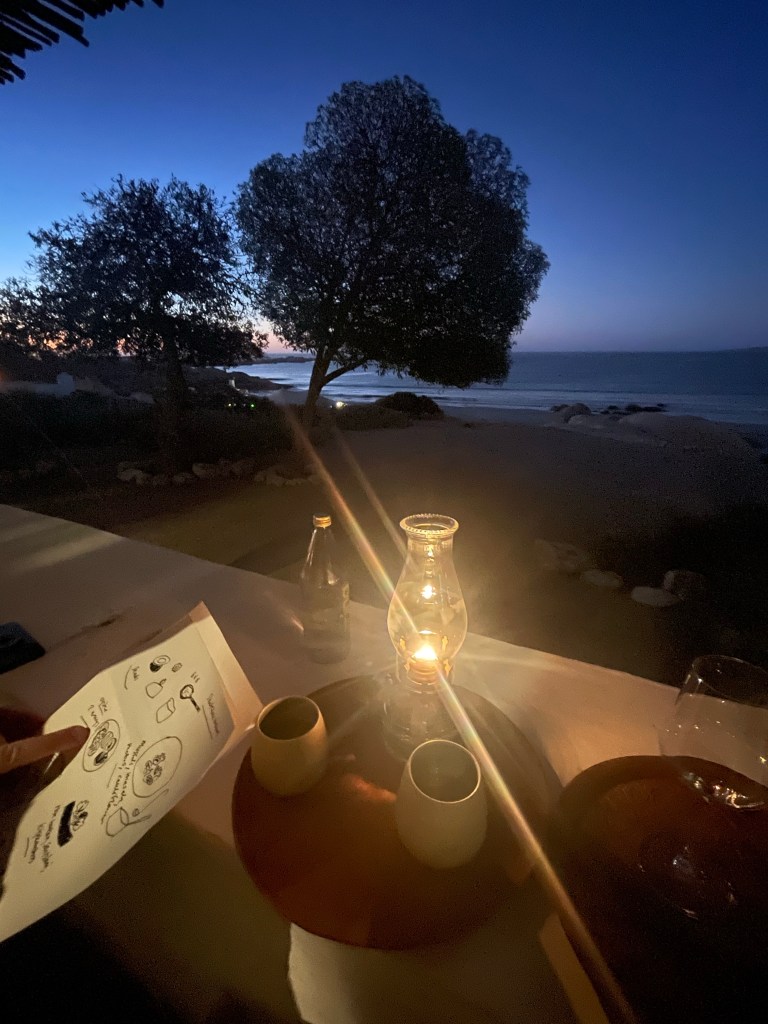
Wolfgat – sitting right on the beach overlooking the Atlantic
Day 4: Paternoster, Cape Columbine nature reserve
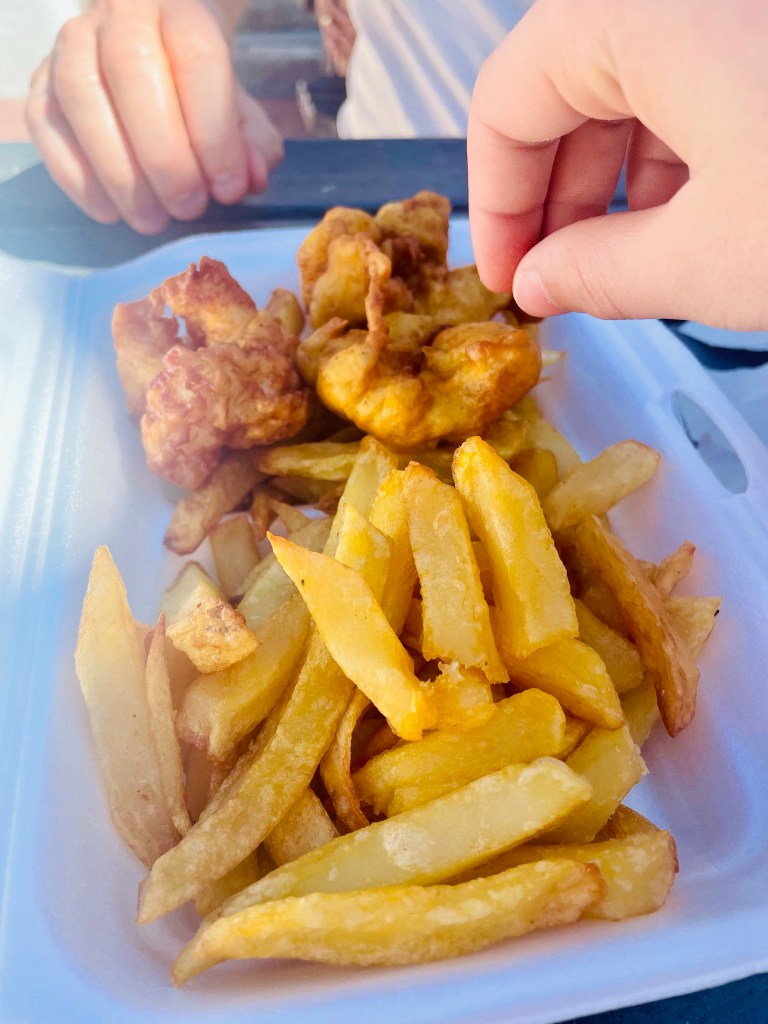
As our own (for 2 nights!) fisherman cottage was literally on Paternoster beach, we came for a short walk (trying to identify al the edible coastal plants we learned about the night before) and a play on the beach and we were allured to the local fish and chips shop (we couldn’t resist following the smell). Fantastic hake and chips (they peel and cut the potatoes themselves) and ‘tail and chips’ (crayfish tail)
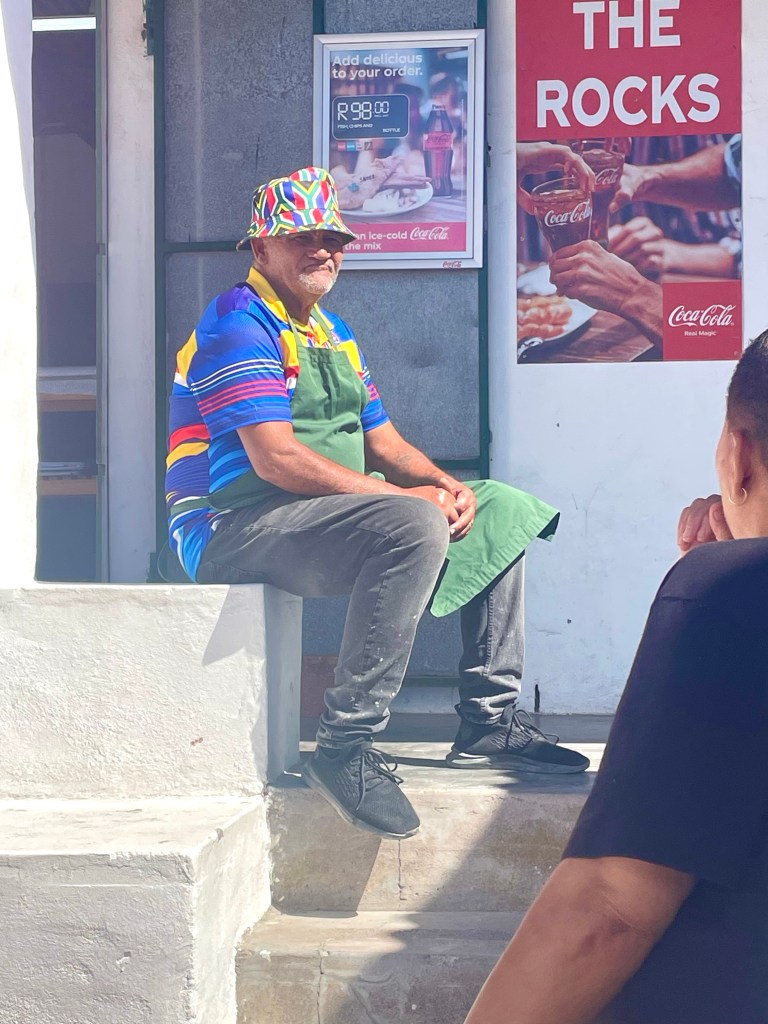
Leon stealing our chips with G. Patiently waiting to dive in – On the Rocks Paternoster On the Rocks – fish and chips brunch
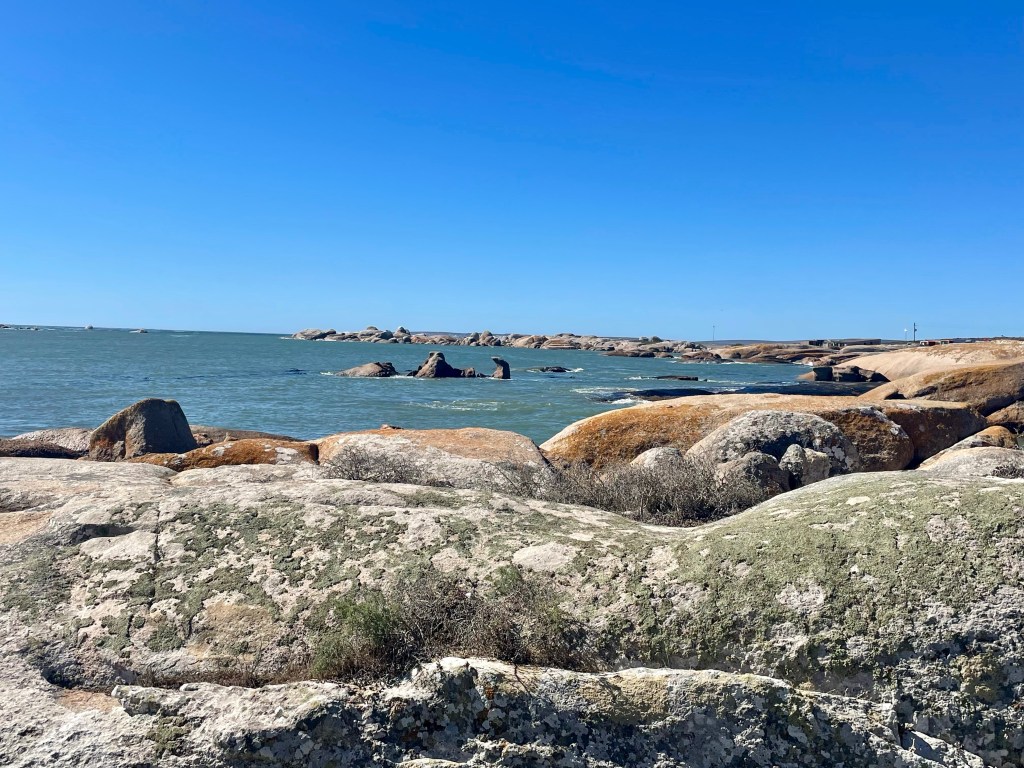
Best way to get some steps in is to explore the Cape Columbine Nature reserve – a wild, unspoilt coastline with massive granite boulders and hidden coves where people can actually camp right the ocean with big boulders creating sheltered “private” spots, just wow!
Cape Columbine nature reserve
Day 5: Riebeek-Kasteel, Tulbagh, Saronsberg wine farm
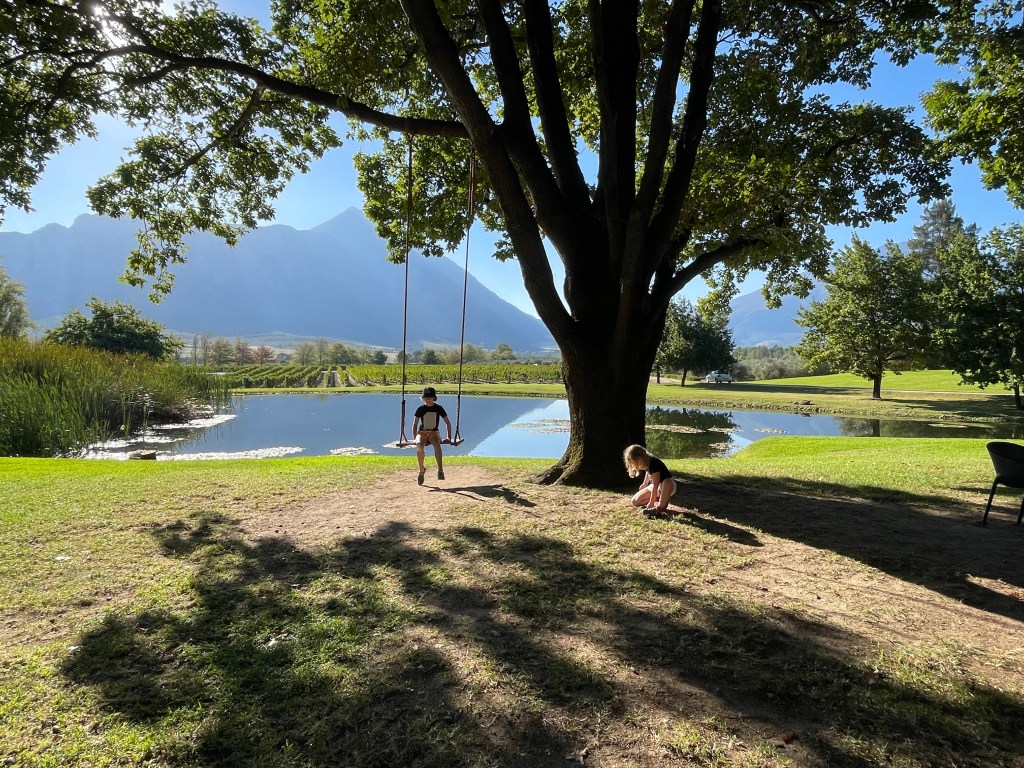
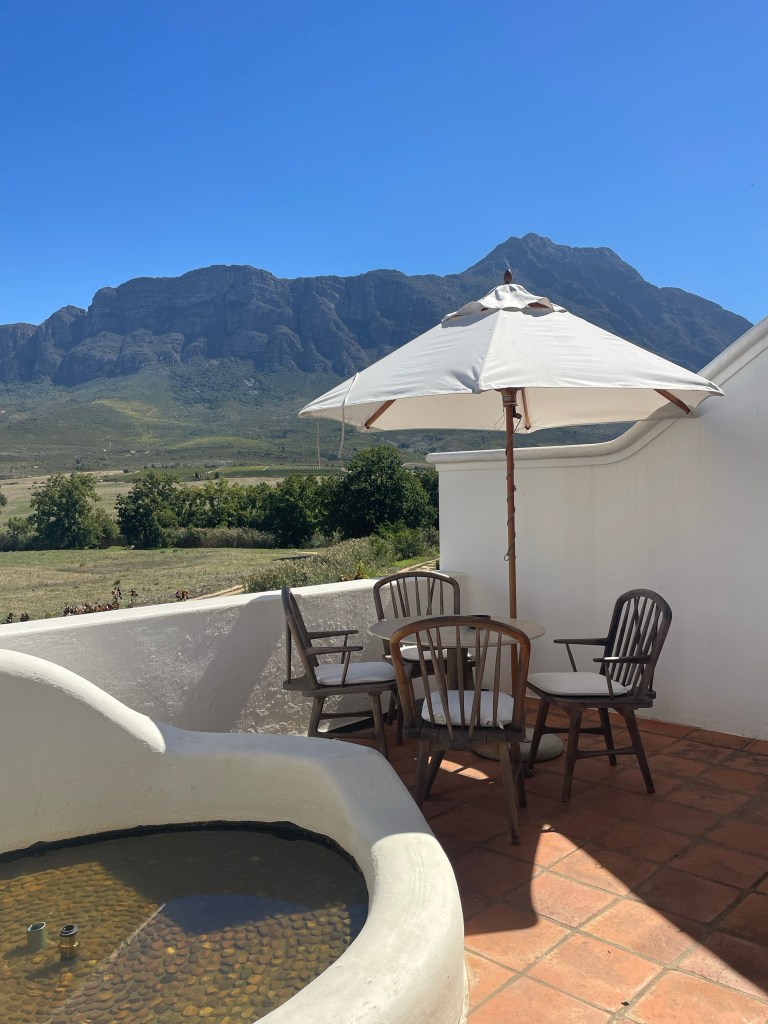
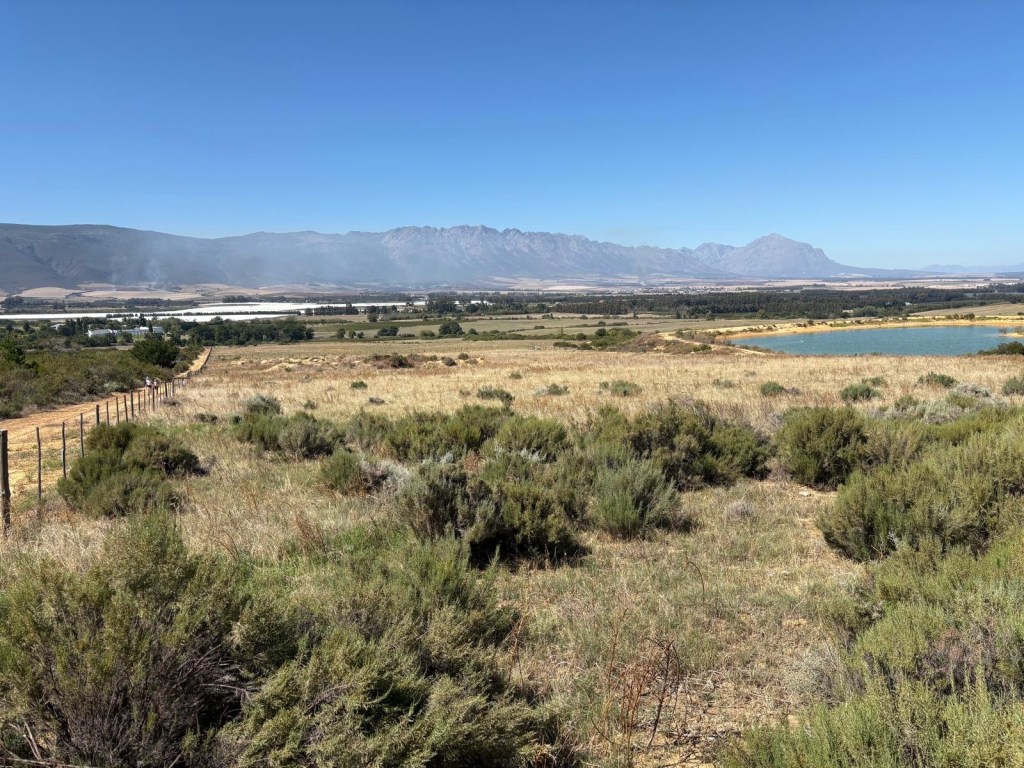
After a short drive from Paternoster we stopped in Tulbagh for lunch and food shopping and checked into our cottage on Saronsberg wine farm. This is the perfect set up for us: wine tasting, beautiful grounds, a pool for the kids and a bbq for all to enjoy while essentially looking straight up at the Saronsberg Mountains, with the wider Witzenberg range framing the whole valley.
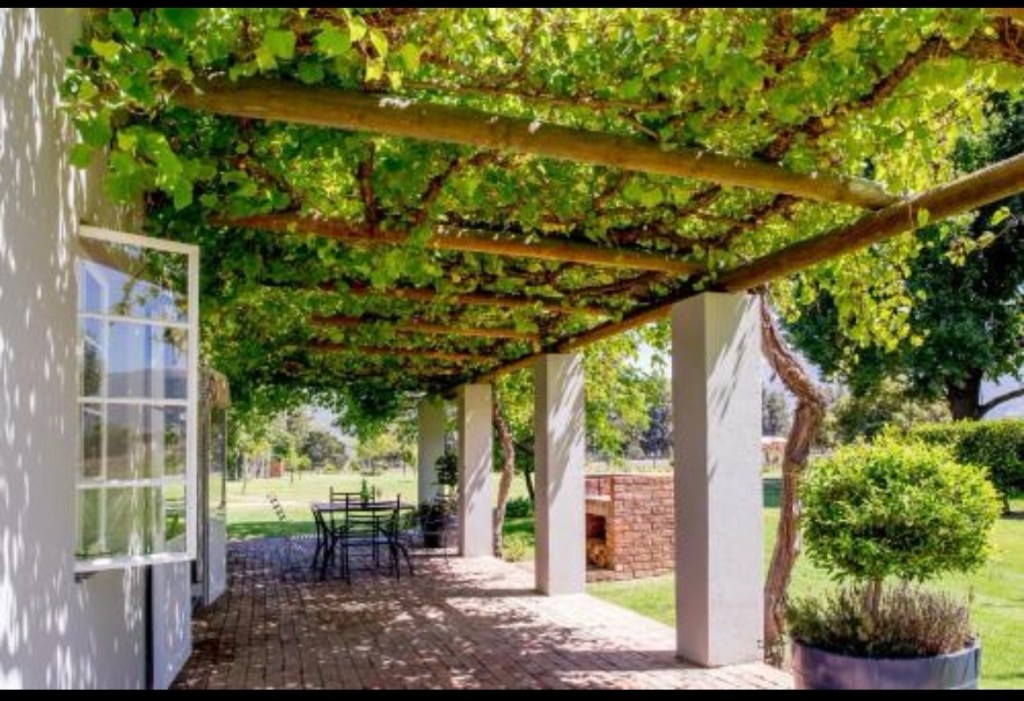
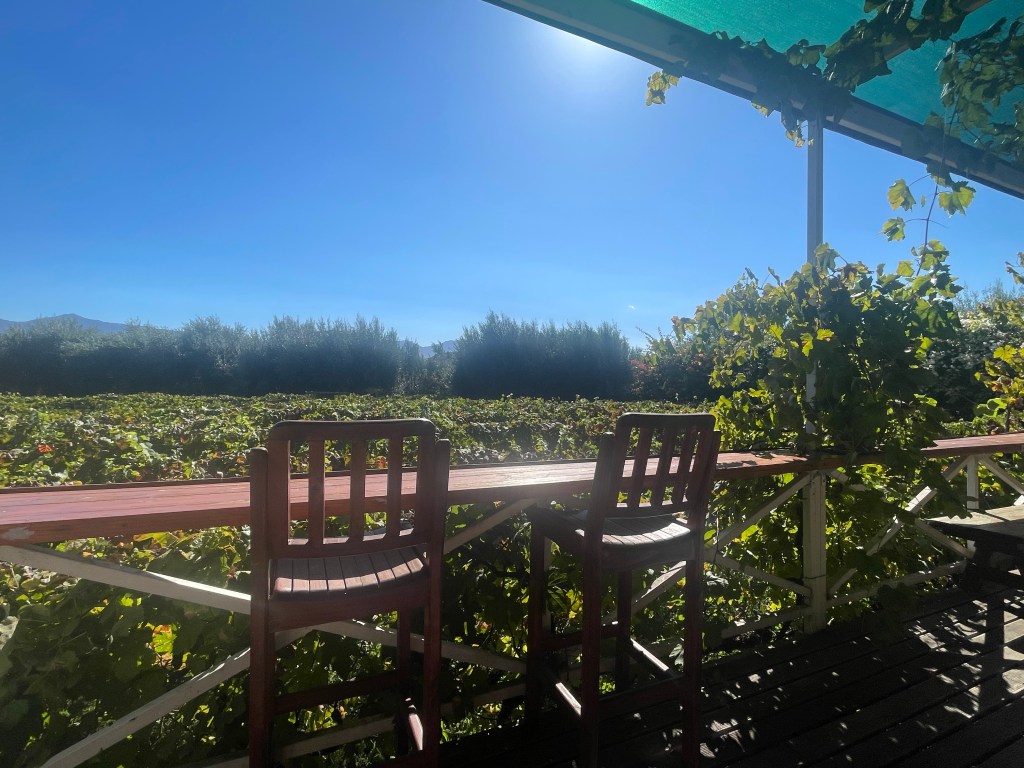
The best and the most chilled spot for wine tasting – Saronsberg wine farm
These mountains create a natural “bowl” around the valley, they help trap cooler air → great for wine growing conditions – this is also why the views feel so enclosed and dramatic, especially at sunset, what a wonderful place to be!
Day 6: Saronsberg and around
We attempted (part of) the Buhu Trail, a scenic hiking route that takes you up into the lower slopes of the Saronsberg Mountains – one of the nicest ways to experience the estate beyond wine tasting. We didn’t go very far (still nice to explore around) as the kids were hot and moany. On the way back we accidentally discovered Krone (we knew their wines but did not expect to find them here). How exciting, we thoroughly enjoyed our find and their exceptional Cap Classique wines!
What a lovely tasting spot!
Founded in the early 18th century, the estate is one of the oldest farms in the Tulbagh region. Its name, Twee Jonge Gezellen (“Two Young Companions”), reflects the original Dutch settlers who cultivated the land. Over time, the Krone family established it as a leading producer of bottle-fermented sparkling wines, making it a cornerstone of South Africa’s Cap Classique tradition.
Buhu Trail (Saronsberg, Tulbagh)Staying at the Saronsberg cottages was such a highlight, we would definitely come back
Day 7: Swellendam, Gourikwa
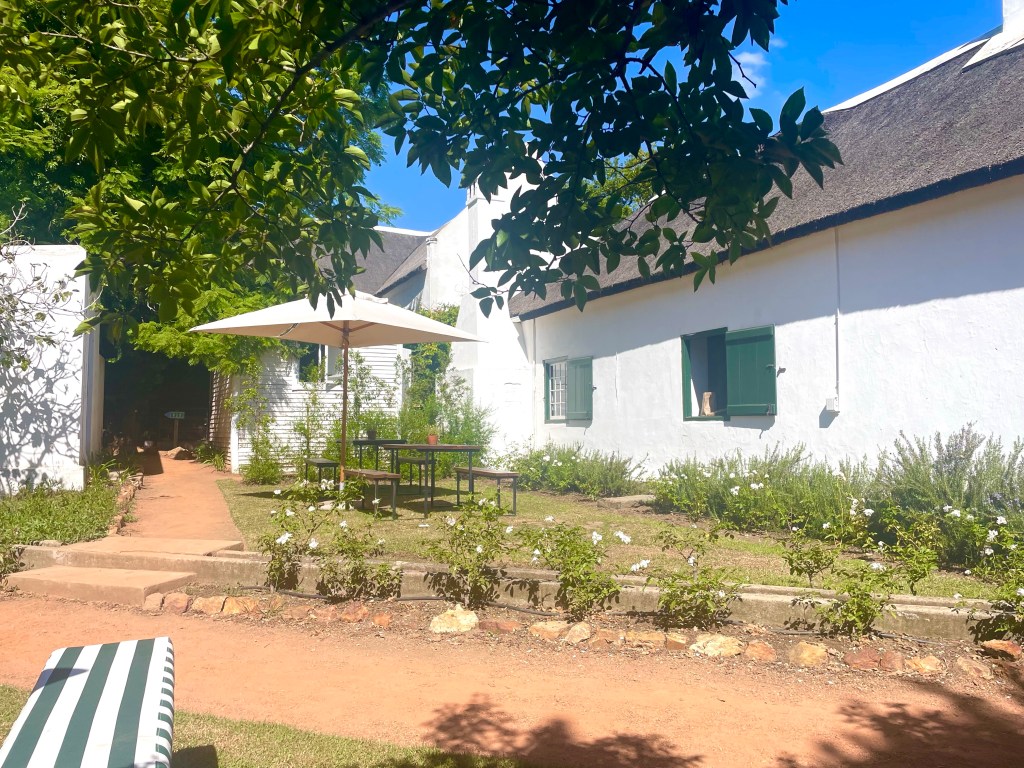
We stopped for lunch at the Country Deli in Swellendam, a charming bakery / deli, florist and coffee shop, having all our favourite things. I wish we had more time to explore, there were quite a few of incredible buildings on the high street, but we were short of time. Maybe next time, I saved the cottage they are renting out, looks great 👍
Country Deli outdoor sitting area
Swellendam is one of South Africa’s oldest towns (founded in 1745), tucked between the dramatic Langeberg Mountains and rolling farmland in the Western Cape. It’s about a 2.5–3 hour drive from Cape Town, making it a popular stop on the Garden Route.
Day 8: Gourikwa to De Rust
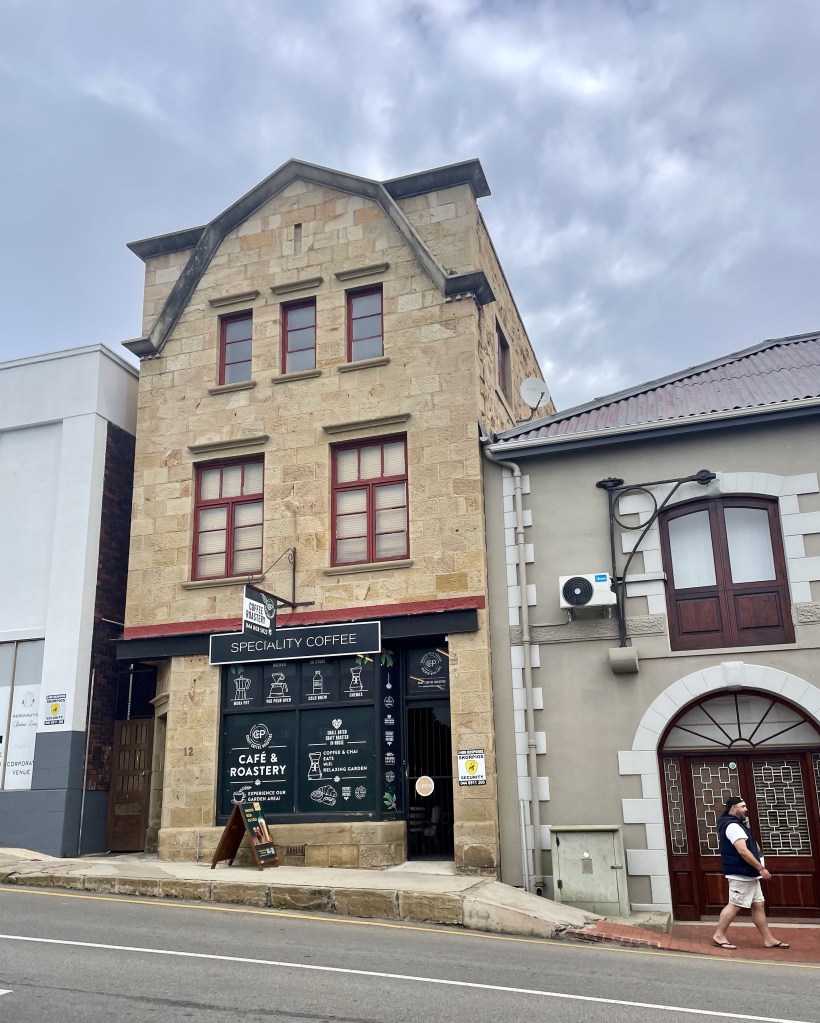
We tried to start early but we were (1 Hour) late and stopped at C&P coffee roasters in Mossel bay before venturing into the Karoo following G’s fascination with this barren, semi dessert remote land.
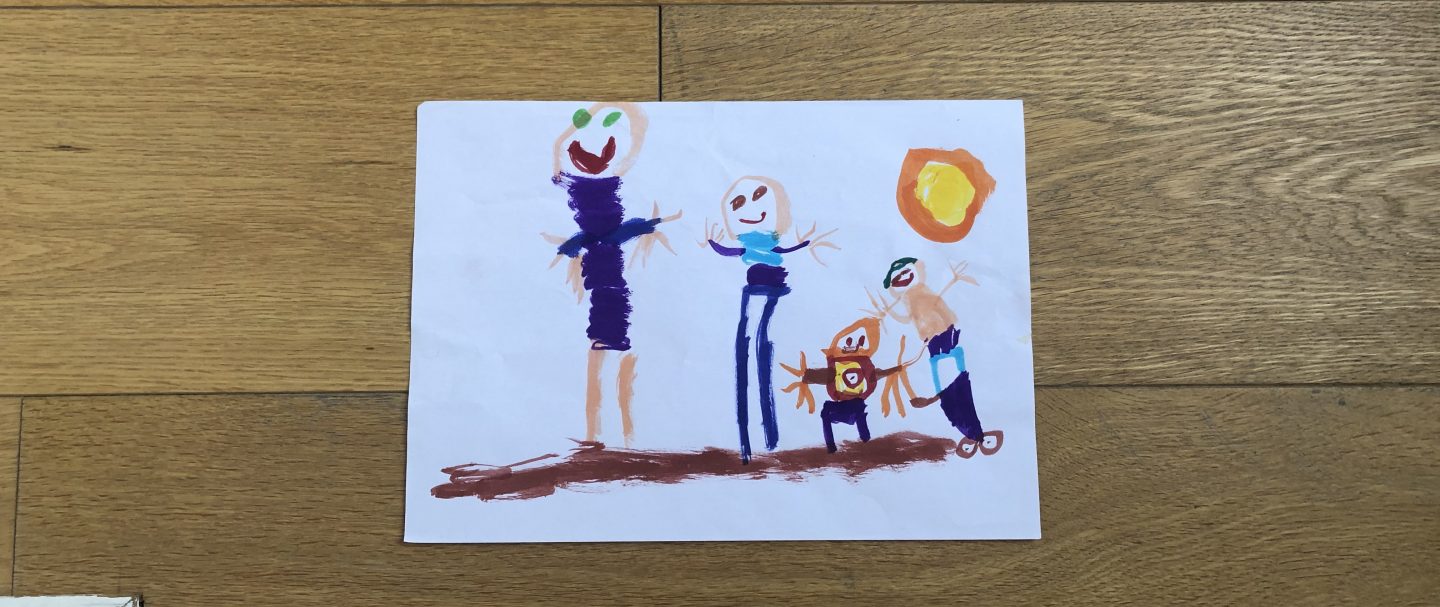
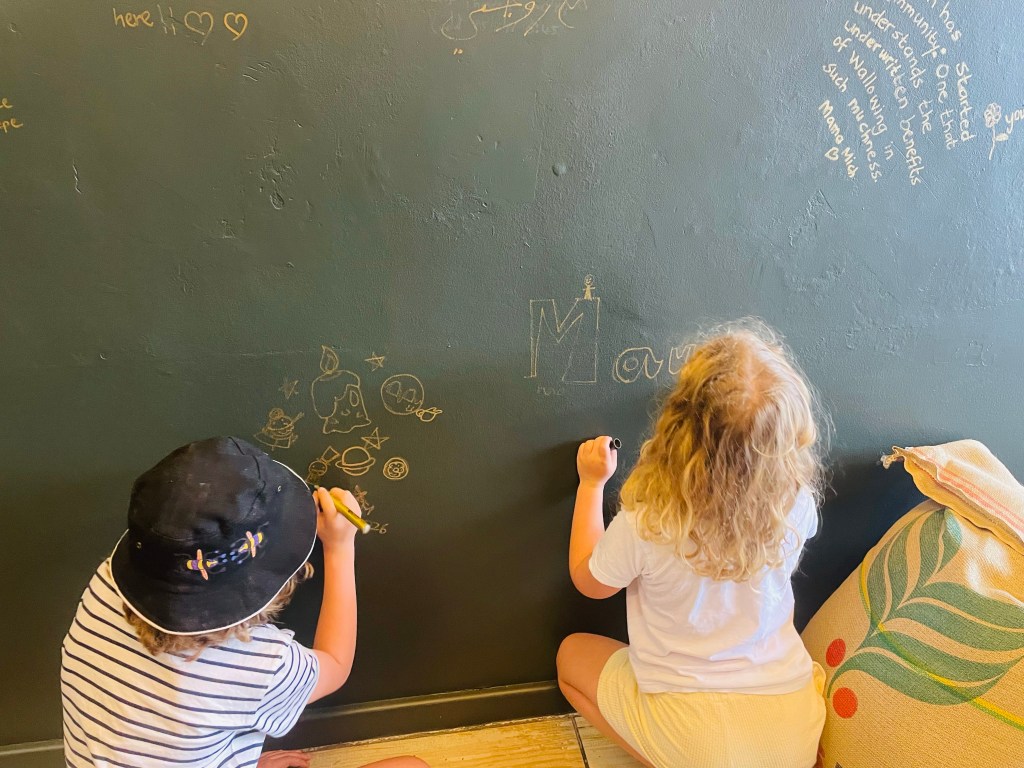
Built in 1904, in the style used for many buildings in Urk, Holland. It is the very first 3-storey building to be constructed in Mossel Bay.L: Who do you think has the better drawing? L (left) or K (right)
After some more driving, we came to a farm outside De Rust. Then we were about to start a braai but a thunderstorm came, but luckily it quickly passed.
De Rust is nestled between the Swartberg mountains and the open plains of the Klein Karoo – founded in the late 1800s as a church and farming village, its name means “The Rest” — fitting for a place where travelers paused before crossing the mountains.
Many buildings are preserved in Victorian and Karoo style, giving it a timeless feel and it still has that “old South Africa” atmosphere—quiet streets, friendly locals, and very little rush.
Day 9: De Rust
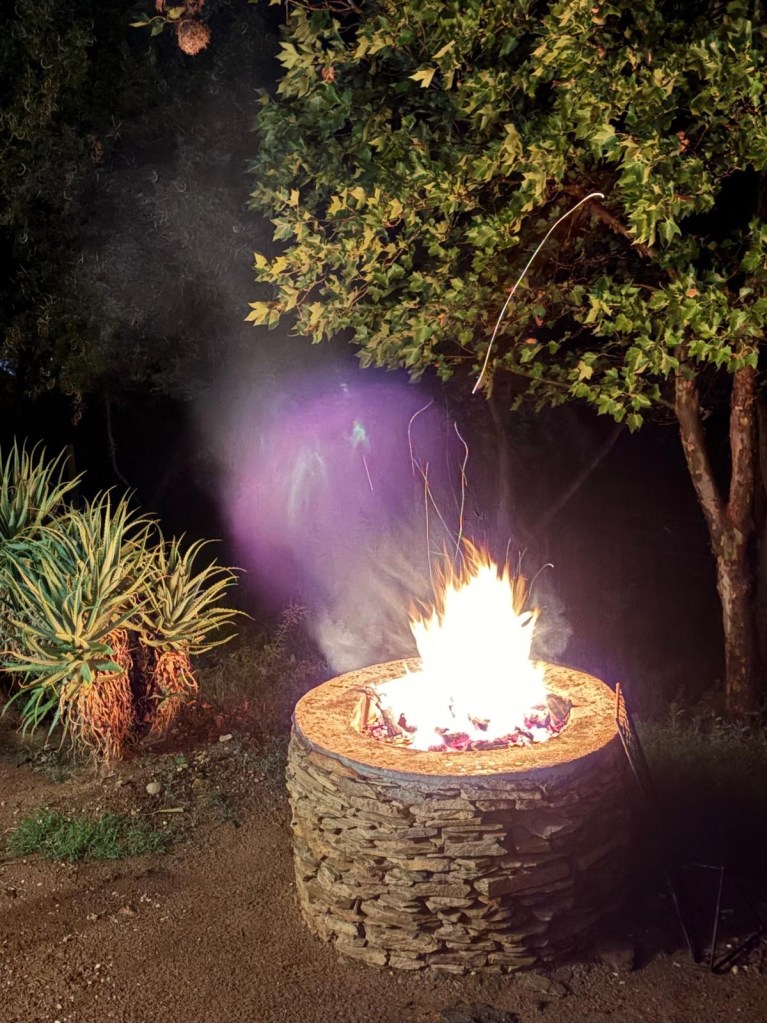
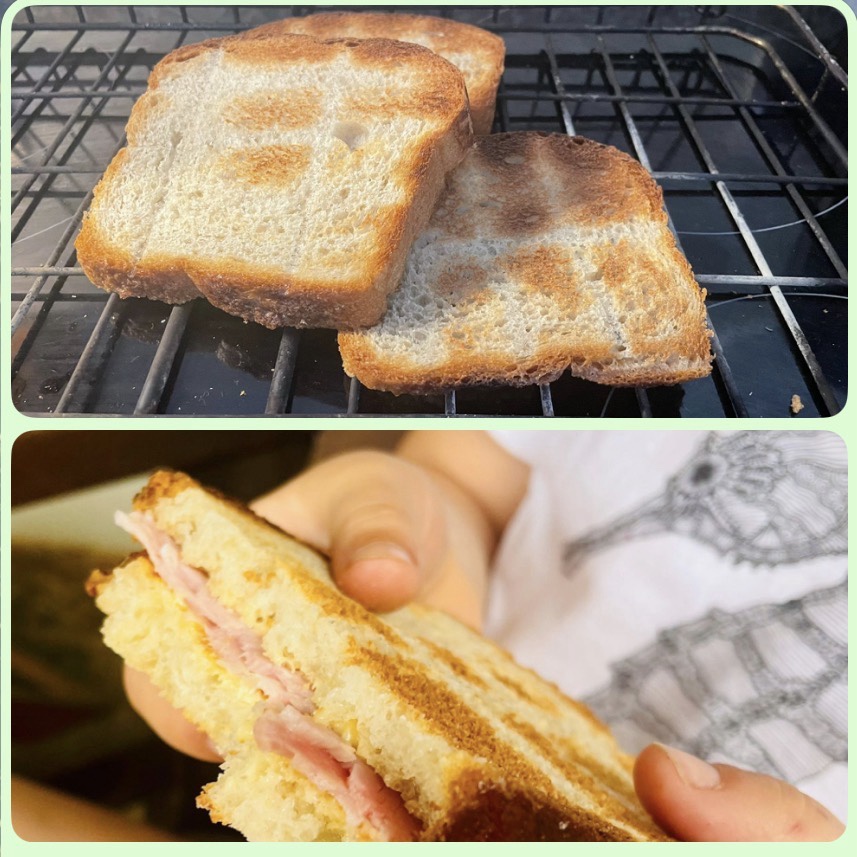
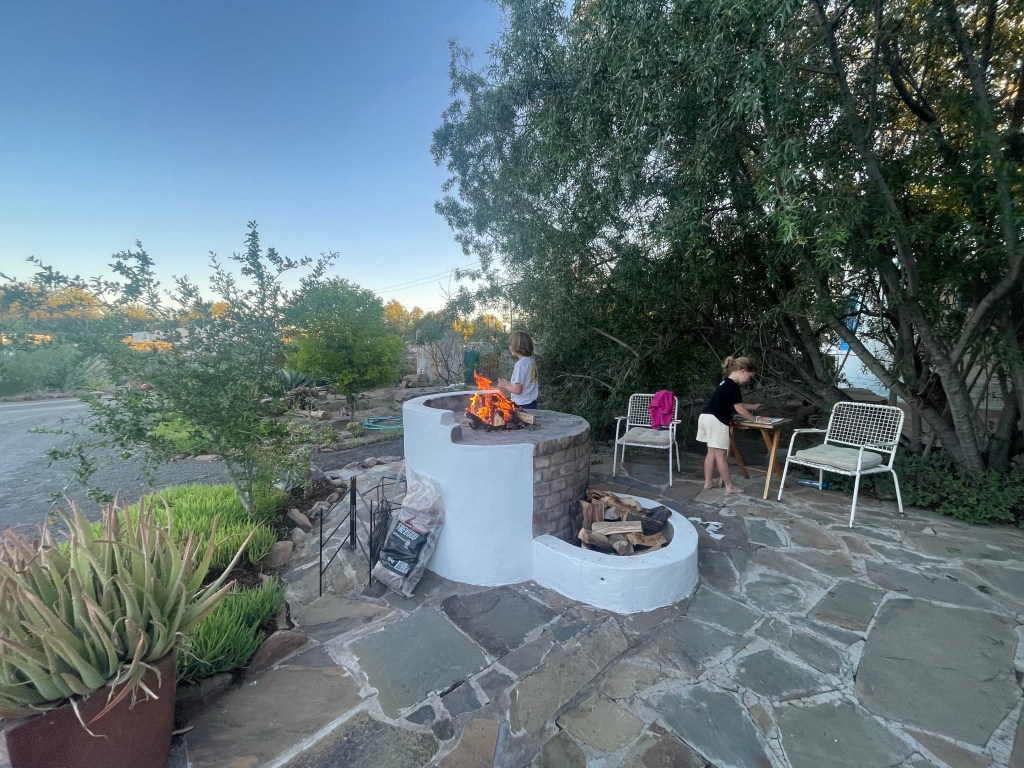
We started at 8 am when G wanted an excuse to start a fire, so we made some toasted sandwiches.
Sandwiches à la Gustavo
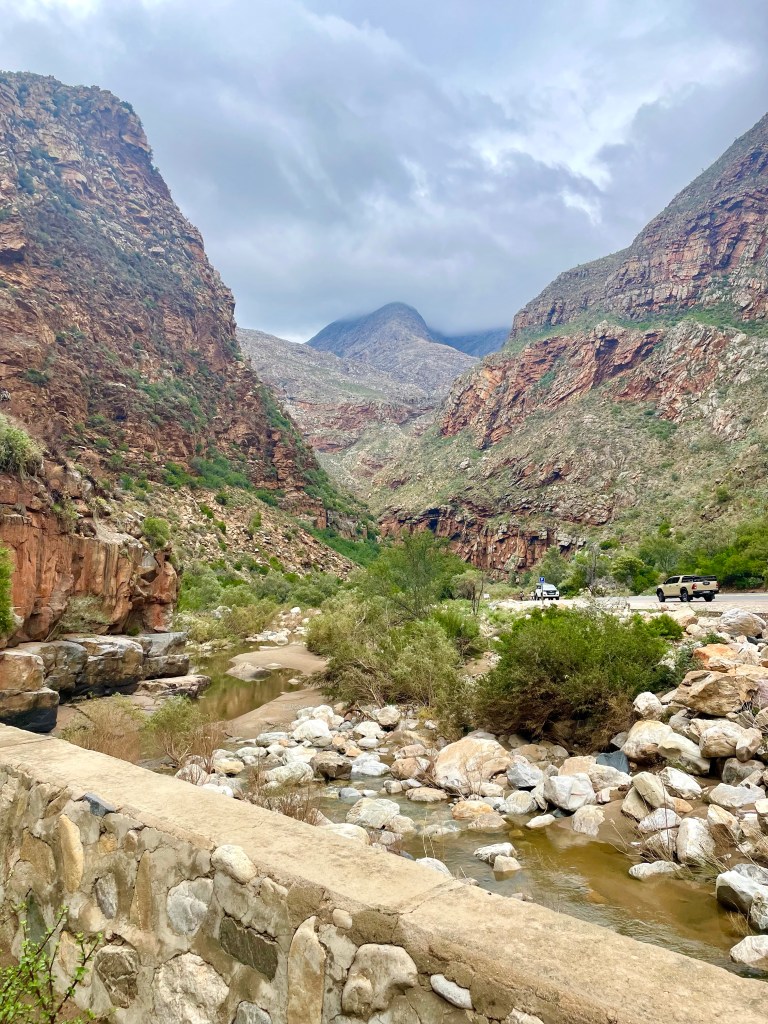
We took a short drive to Meiringspoort, a natural pass /gorge with steep cliffs and interesting vegetation. We took a short but enjoyable walk up to the waterfall, pretty impressive!
Day 10: Prince Albert
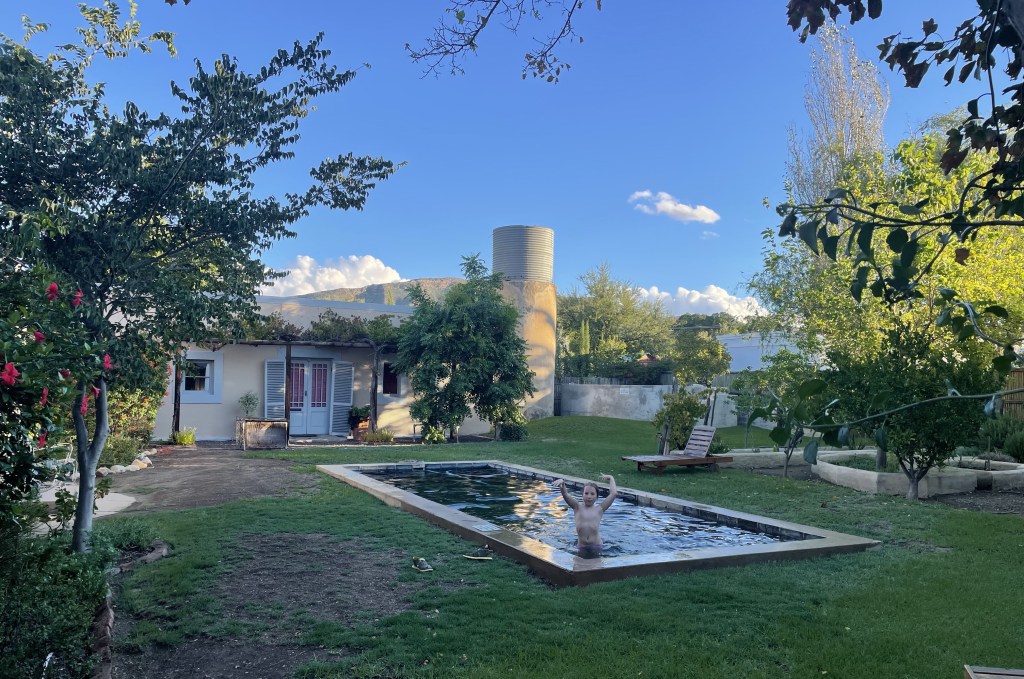
Everyone was keen to leave the farm in De Rust, the mud and the flies (even though some flies did get into our car, probs trying to escape too)! We returned to Prins Albert to enjoy some known hang outs like the pretty high street, the gin bar (still very good!), Gay’s cheese shop and a newly found house with a pool at number 85.
Prins Albert – 85 on Church
It was great being back in Prins Albert, lots of beautifully preserved historic cottages and a few more in progress,
As always, in our travels, we learned a few things:
Prince Albert has never actually been to South Africa
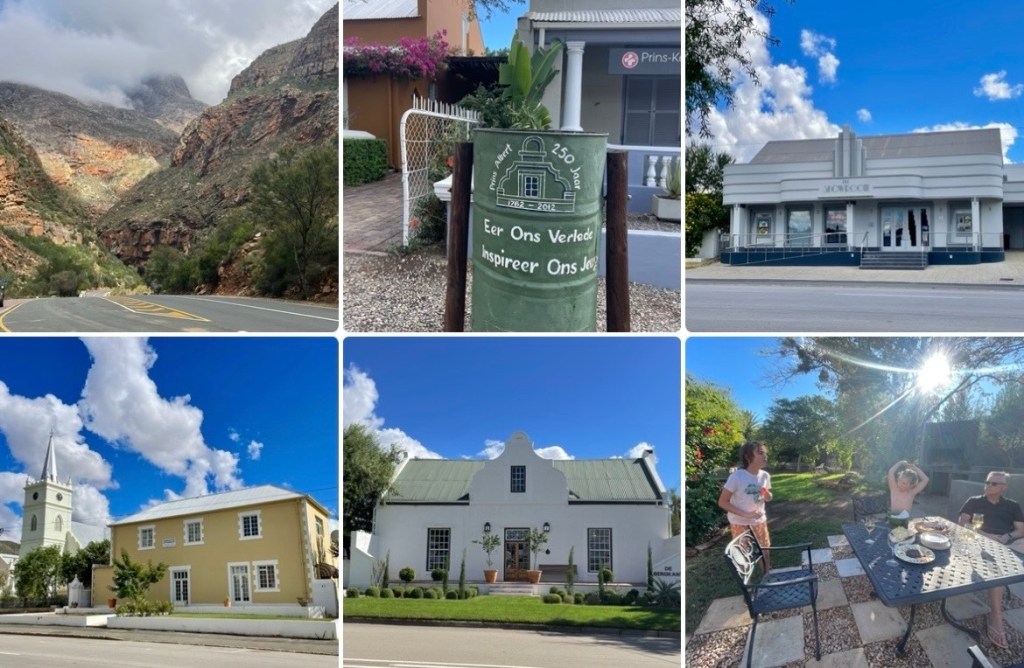
The Art Deco cinema as we have been calling it is the Showroom Theatre – a modern cultural venue that looks old but has a surprisingly recent history (built in 2010 by a film producer who fell in love with the town, moved there and transformed an old building on the high street into a 1930s looking atmospheric movie house.
Snaps around Prins Albert
Day 11: Merweville
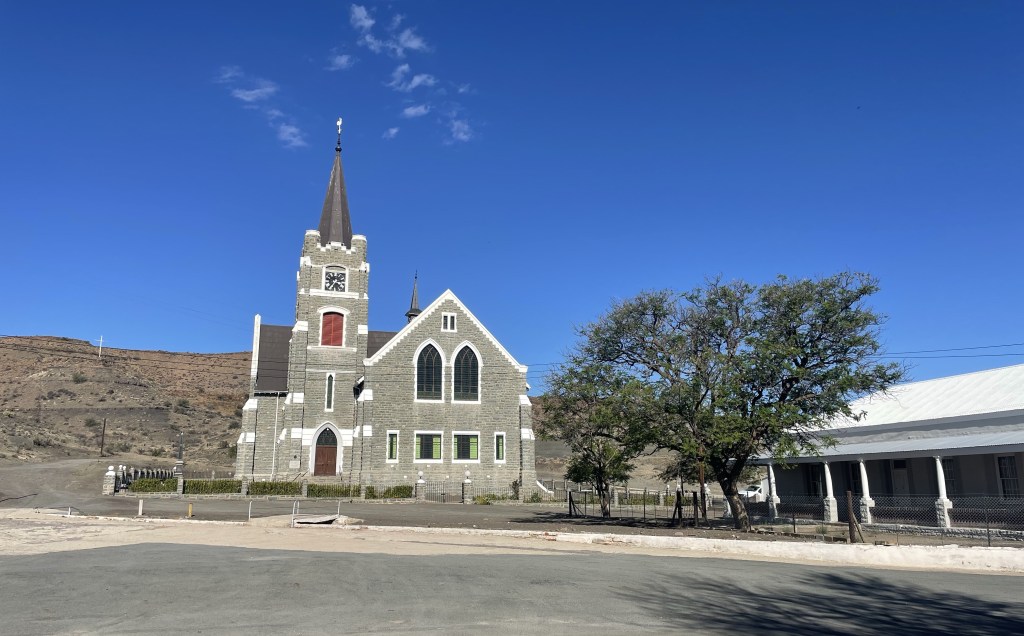
We found a real gem in Merweville – Die Boekkclub coffee shop. Simple, tasty food and a genuinely friendly welcome. Ironic to realise some of these smaller villages offered us better food than bigger, well known towns! Despite its description of a sleepy village where nothing happens, we felt Merweville was very much alive and welcoming, such a fascinating place to experience! Friendly, chatty people, interesting church (the reason the town exists), a well connected network of people, a real community coming together and making things work.
An authentic stay in Merweville at Cindy’s House, a local granny who loved hosting and had a few holiday cottages (and now her old house has become în too!) Dutch reformed church in Merweville- intentionally not plastered and painted white, but blending into the Karoo landscape rather than starkly standing out. Feels more grounded and less formal, also easier to maintain prioritising practicality and the natural stone look over the whitewashed traditional style.
The church in Merweville is not just a local landmark, but the reason this town exists. In the 19th century, local farmers had to travel over 120 km to attend church services and majority of farms were scattered in the area and isolated.
The Merweville church began as a solution to isolation in the 1890s, survived delays from the Anglo-Boer War, and became the heart around which the entire town was built, with the current building dating to 1907 (a mix of Cape Gothic and Victorian influences, built to dominate the landscape, visible from far outside the village).
Day 12:Seweweekspoort and Calitzdorp
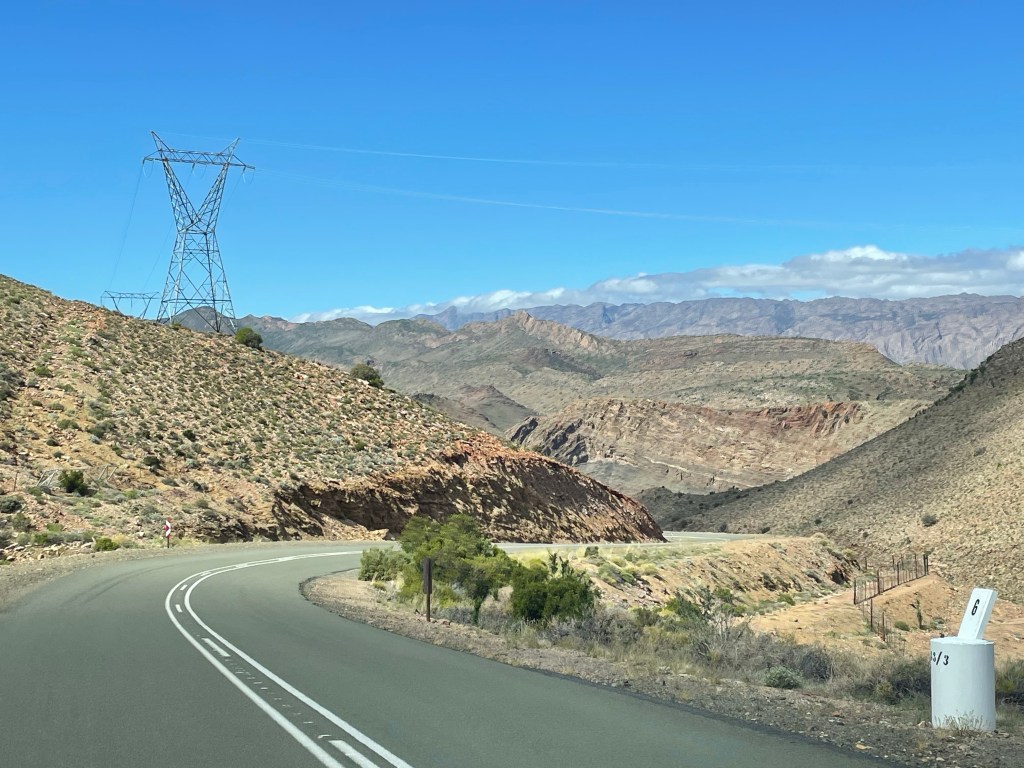
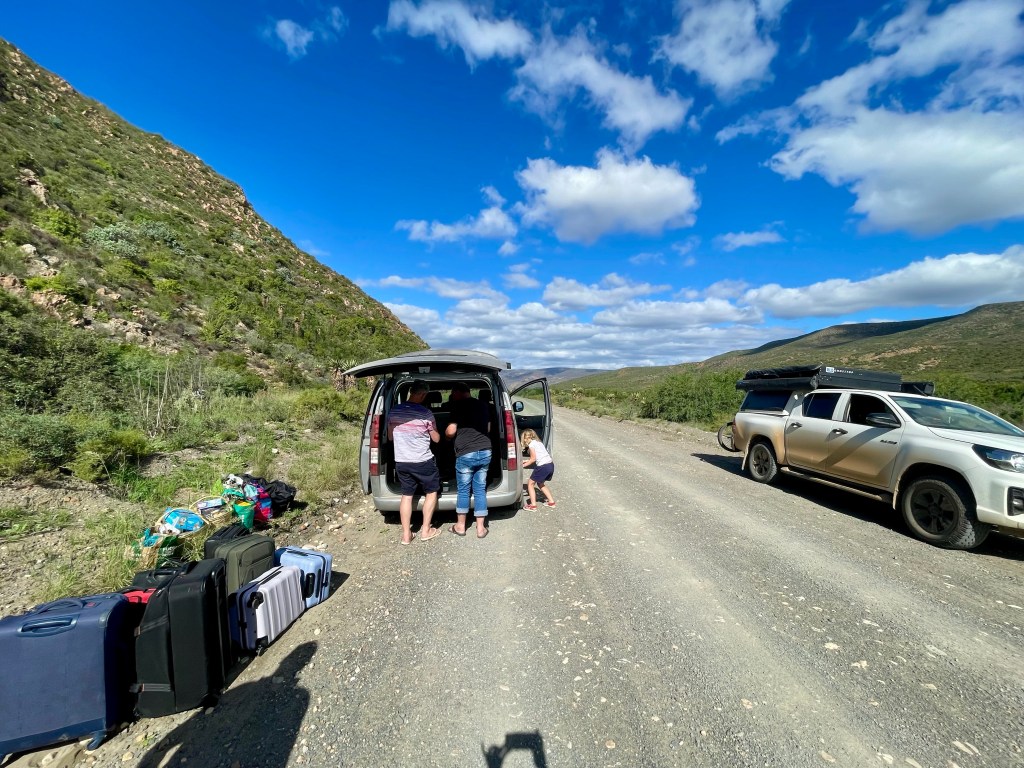
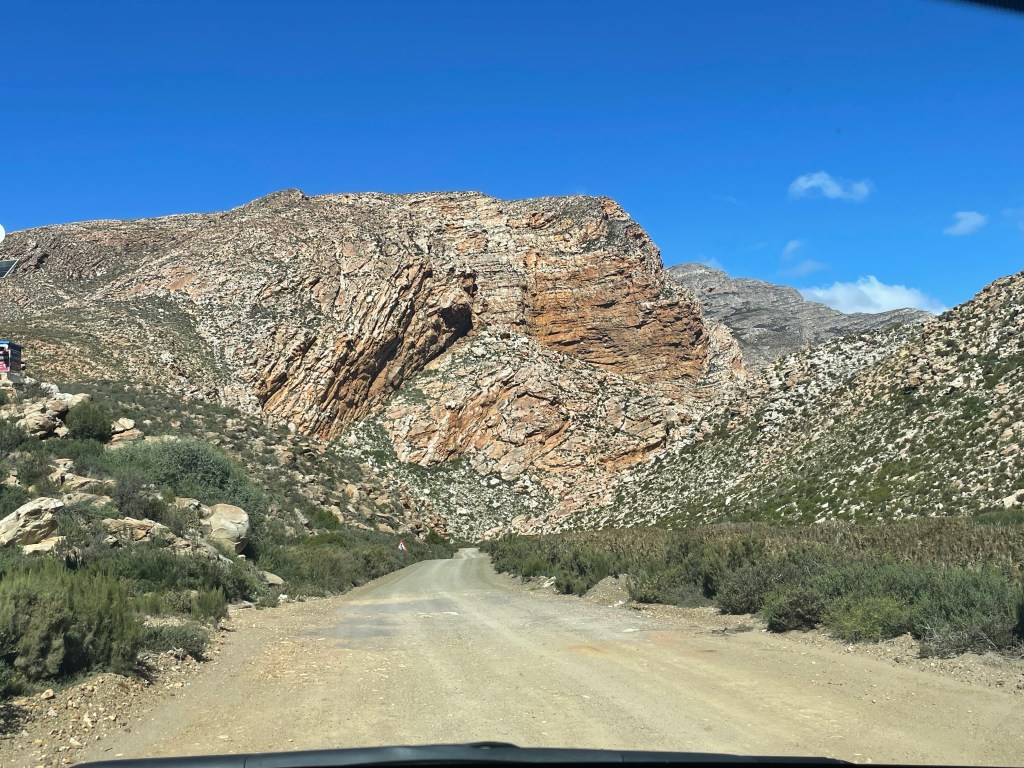
Eventul day today with an unexpected flat type just at the end of Seweweekspoort – a scenic drive crossing the Swartberg mountains and connecting the Little Karoo with the Great Karoo. Quiet, remote, spectacular and less touristy than other passes and we believe more exciting the Swartberg pass, so definitely recommended.
I find the history of these passes fascinating- a mix of isolation, engineering skill, and early (much needed) trade routes. These routes opened up opportunities for otherwise isolated farmers to trade wool and access harbours.
Designed and built between 1859-62 by Thomas Bain (he built over 20 mountain passes)
👉 What makes Seweweekspoort special:
It follows a natural river gorge, rather than climbing steeply over mountains
Required very little blasting compared to other passes
Built mostly using manual labour and basic tools
Unlike many modernised passes, Seweweekspoort remains untarred, remote and quiet, Closely connected to its original 19th C purpose. One of the best places to experience what travel felt like in the Cape Colony era.
Day 13: Calitzdorp, Gamkaberg
After a morning spent at Leon’s newly opened bar, we ventured to the Gamkaberg nature reserve. It was initially created to protect the endangered Cape Mountain zebra – in 1976 there were only 5 left, now recovered to dozens.
The name Gamkaberg is derived from the Khoi and San word ‘Gami’ or ‘Xami’ meaning Lion.
The whole area is rooted in the Khoi and San culture and place names reflect this heritage: Karoo is derived from ‘Garo’ and means ‘land of thirst’.
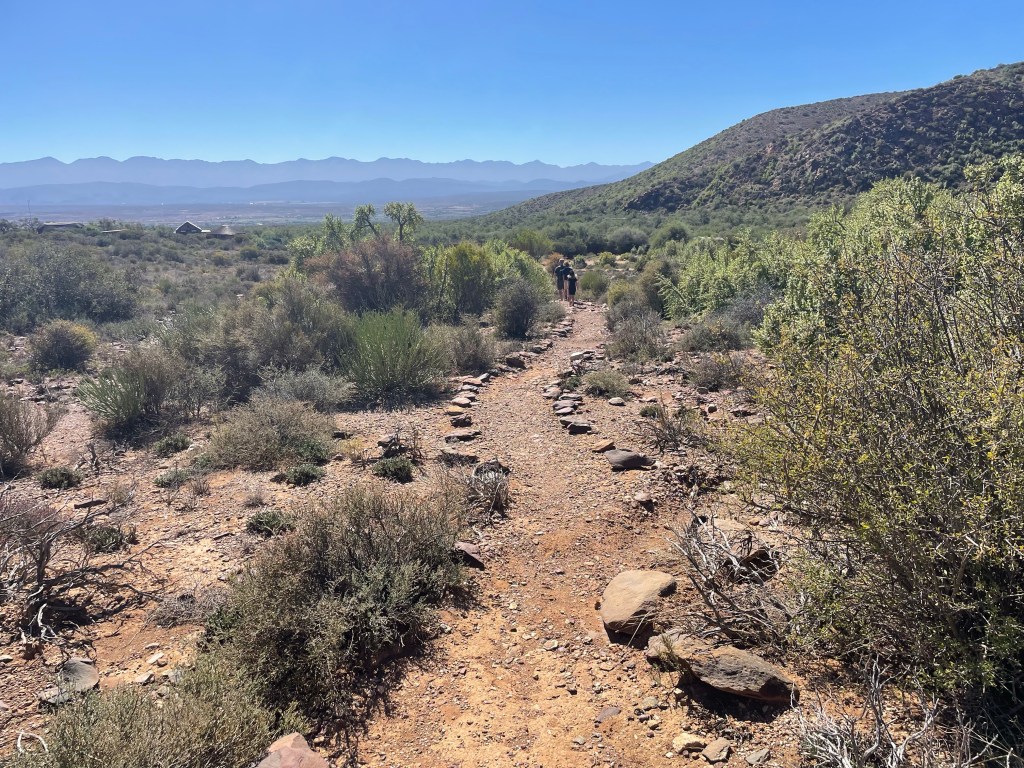
Guarrie trail at Gamkaberg nature reserve
Beautiful hiking trails and lots of info boards along the way to learn about the plans, animals, geology and fossils.
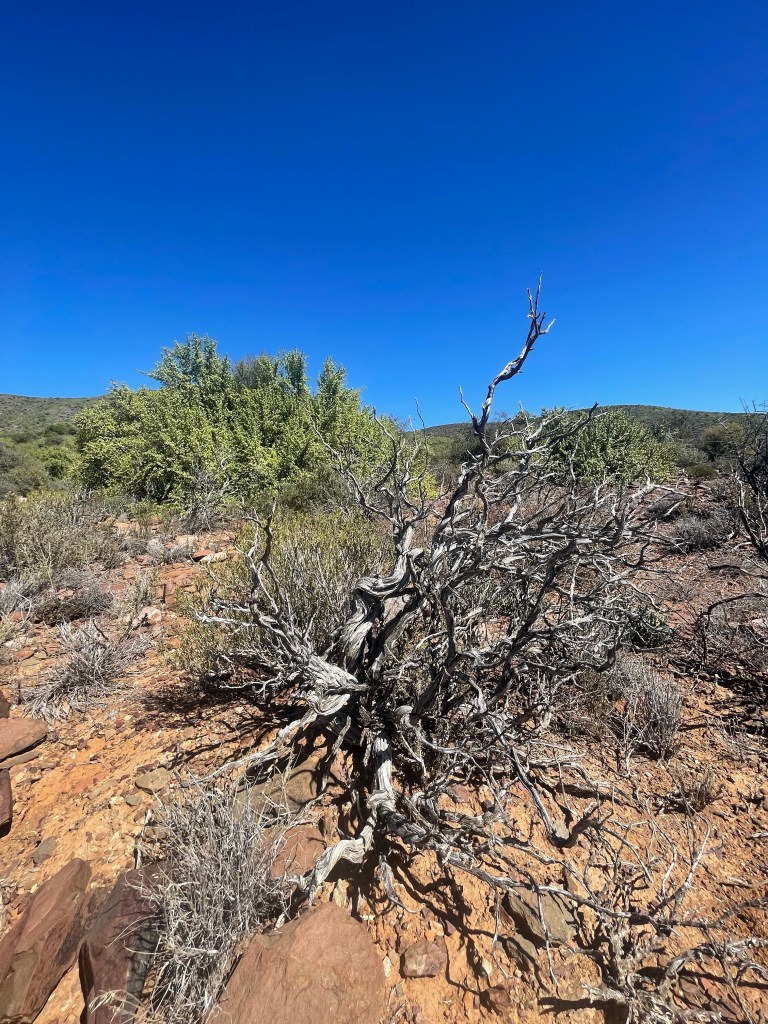
I love these dead shrubs – their sculptural look is why these plants are sometimes called “natural bonsai” of the Karoo”—they look almost like driftwood on land.
Once again, we learned on our travels: KhoiSan is a very controversial and relatively recent term invented to group two distinct indigenous people.
The Khoi (Khoikhoi) and the San are two closely related but historically distinct indigenous people who share ancestry and cultural traits, but their ways of life were different:
Khoi (Khoikhoi) – semi nomandic hearders of live stock
San (Bushmen) – highly nomadic hunter gatherers
Day 14- 21 Hermanus
After a quick breakfast stop at TTT Cellars Calitzdrop we set on our way to Hermanus for the last 6 nights of our South African adventure.
TTT Cellars is a small, young, independent winery compared to the historic estates around it. TTT stands for “Things Take Time” and it reflects a philosophy of patience in winemaking—allowing wines to develop naturally rather than rushing production. The cellar was established as part of a new wave of small, boutique producers in the region.
While Calitzdorp has been producing wine since late 1800s, TTT represents a modern chapter: small-batch wines, more experimental than traditional estates. Unlike long-established farms, TTT didn’t grow out of a multi-generational estate—it was created with a fresh, independent vision.