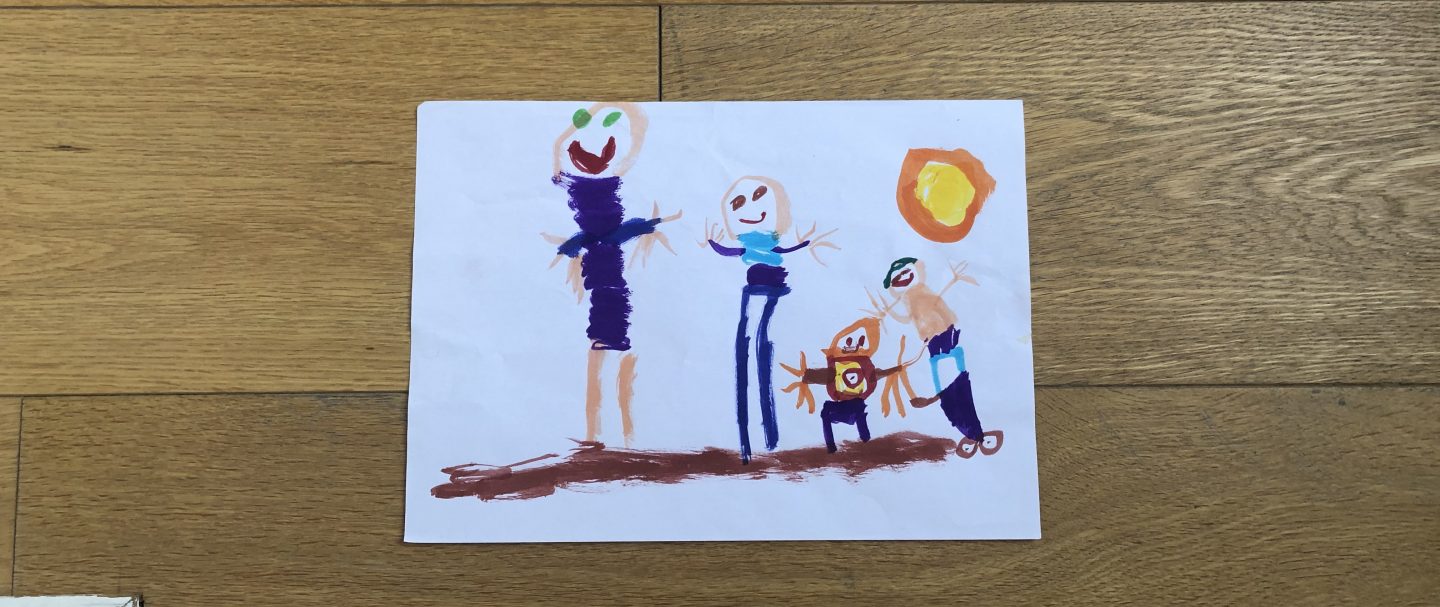
Day 1-3: Bucharest – Brasov – Viscri
Saturday 22nd August
After yet another exceptional coffee visit at Mabo on Vulturilor, we left crazy (traffic in) Bucharest behind and set on our way to Brasov. We love everything about Mabo so yet another opportunity to give their coffee and their seasonal summer drinks menu a shout out, just wow! Their Cold Brew Tonic is exactly in my lane: bright, refreshing, slightly fruity/bitter, and most importantly, coffee-forward without being heavy or milky. Winner!
After a short and sweet stop in Brasov (and a visit at the focacceria + a few small beers) we took the back roads to Viscri), arriving just on time for dinner at our home for the next 3 nights – Viscri 125! We had ‘ciorbă de fasole verde cu afumătură și smântână’ / Transylvanian smoked-pork and green bean soup and a chicken paprikas (yummy! and a little too generous) followed by a plum sponge cake.
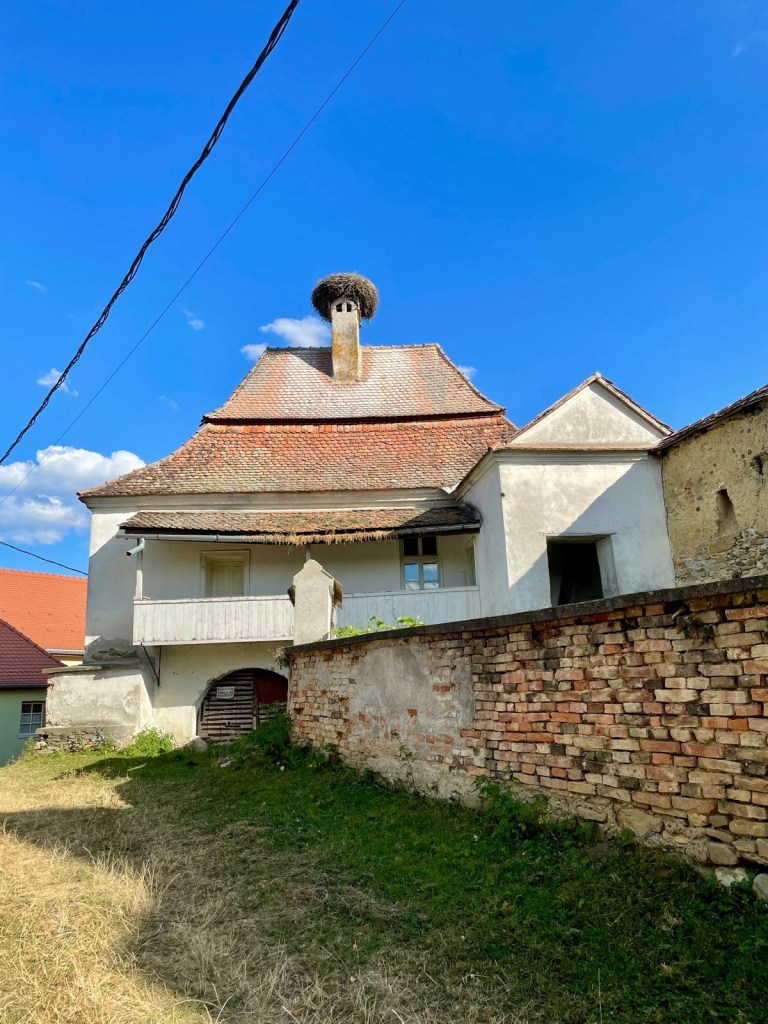
Biserica fortificată Roadeș dates from the 14th century; three of its defensive towers survive, along with sections of the fortified wall. Inside are a late-Gothic chancel vault, painted galleries and an organ dating from 1838.
Unfortunately it is temporarily closed. The main tower partially collapsed in 2016 and the complex is in a precarious state.
Sunday 23rd August
Viscri – Roades 16km
After a delicious breakfast at Viscri 125, we stopped for coffee at deViscri Coffee Shop. Exceptional coffee as always and off we went on our way to Roades / Archita.
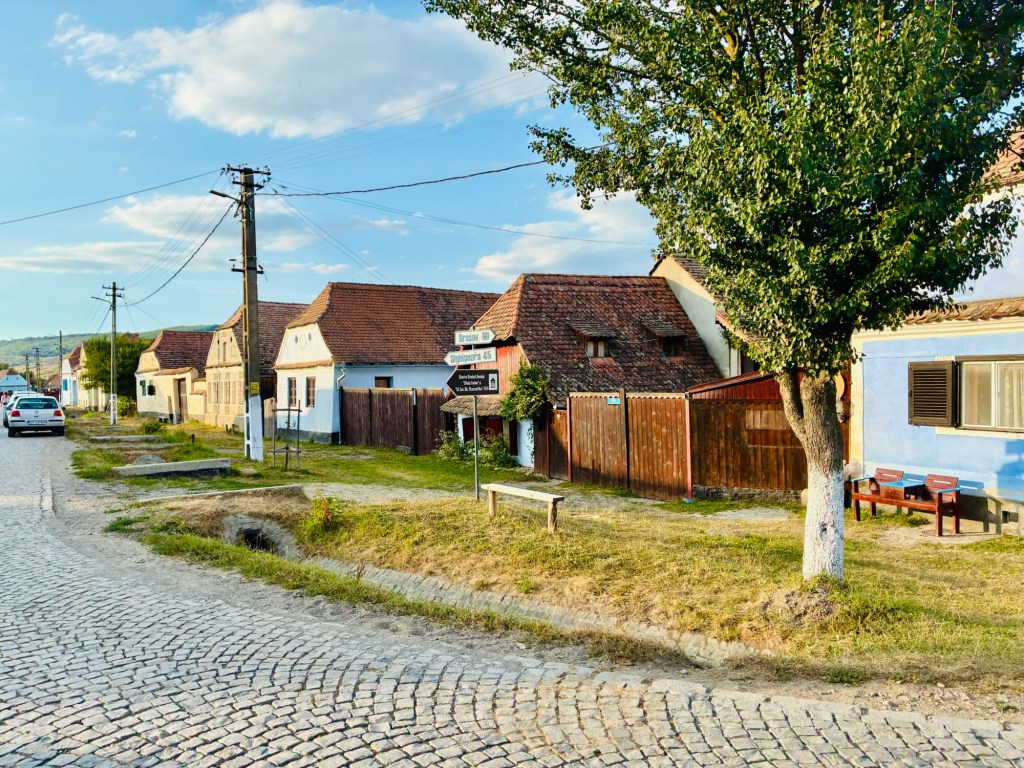
Viscri is a Saxon village founded in the 12th century, included in the UNESCO world heritage list, renowned for its traditional restored houses, preserved crafts and authentic old-world atmosphere.
16 beautiful kilometres up and down the rolling hills of Transylvania, we were aiming for Archita but stopped for a beer in Roades and decided to have another beer and get a lift back to Viscri in time for dinner at the white barn at number 32.
The food wasn’t actually slow but unfortunately we had the least welcoming start we have ever experienced in this area. I thought the food was really good and I also realised they were perceptive enough to try and make an effort but unfortunately the rest of our party struggled to appreciate the food and wine after the grumpy, unfriendly start. Such a shame as I have been following these guys on insta for a long time and I was keen to try their restaurant.
Monday 24th of August
Viscri – Jibert 12 km
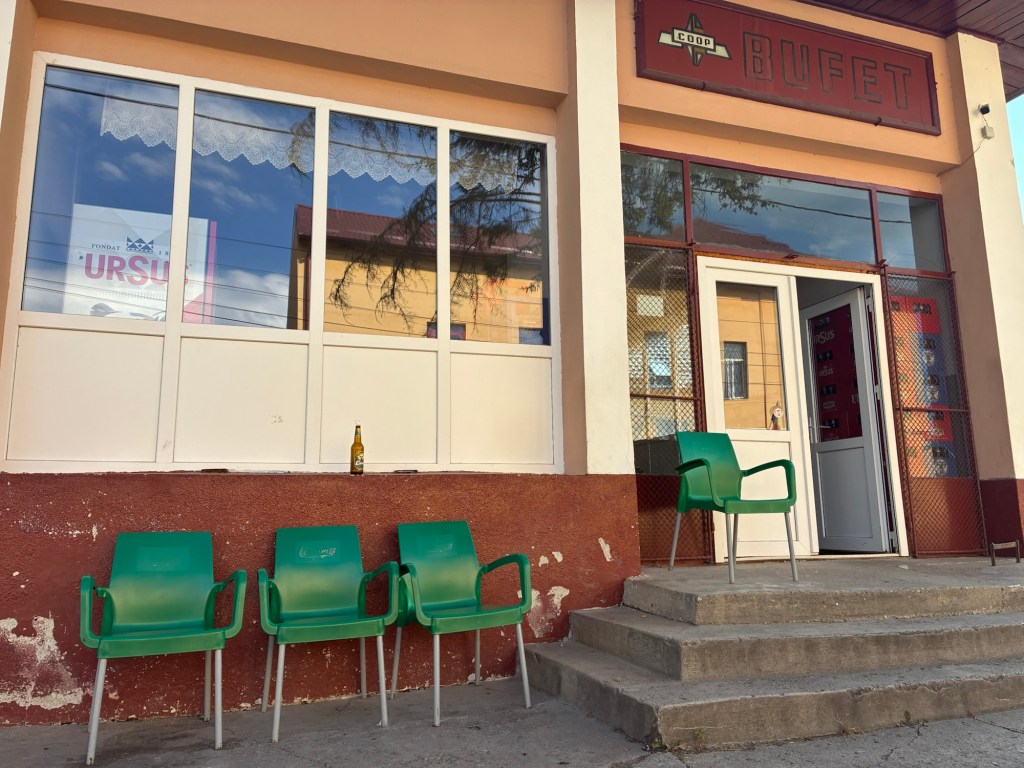
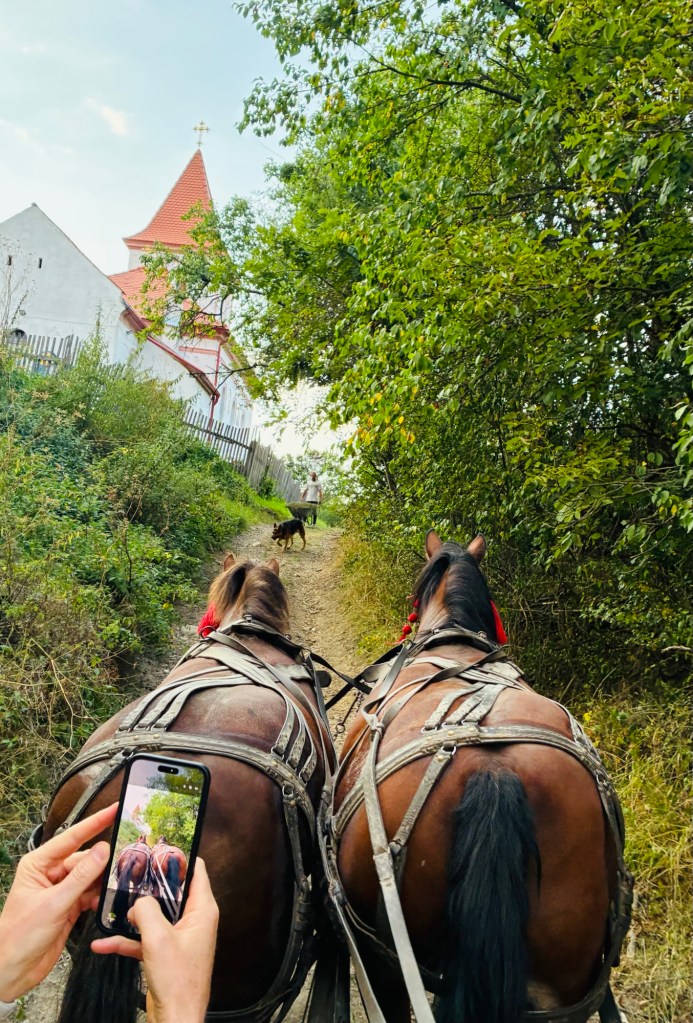
A slow start this morning and once again we took Doamna Vio’s recommendation to make sandwiches (packed lunch) for our walk vs trying to find a good stop for lunch. We left Viscri by taking a narrow street hidden between the rows of houses and leaving the village behind we headed into open pastures and rolling farmland, with open views over the surrounding hills. It then alternated between grassy tracks, field paths and sections through/along woodland before descending toward Jibert, where we – of course – stopped for a well deserved beer at the local ‘magazin’.
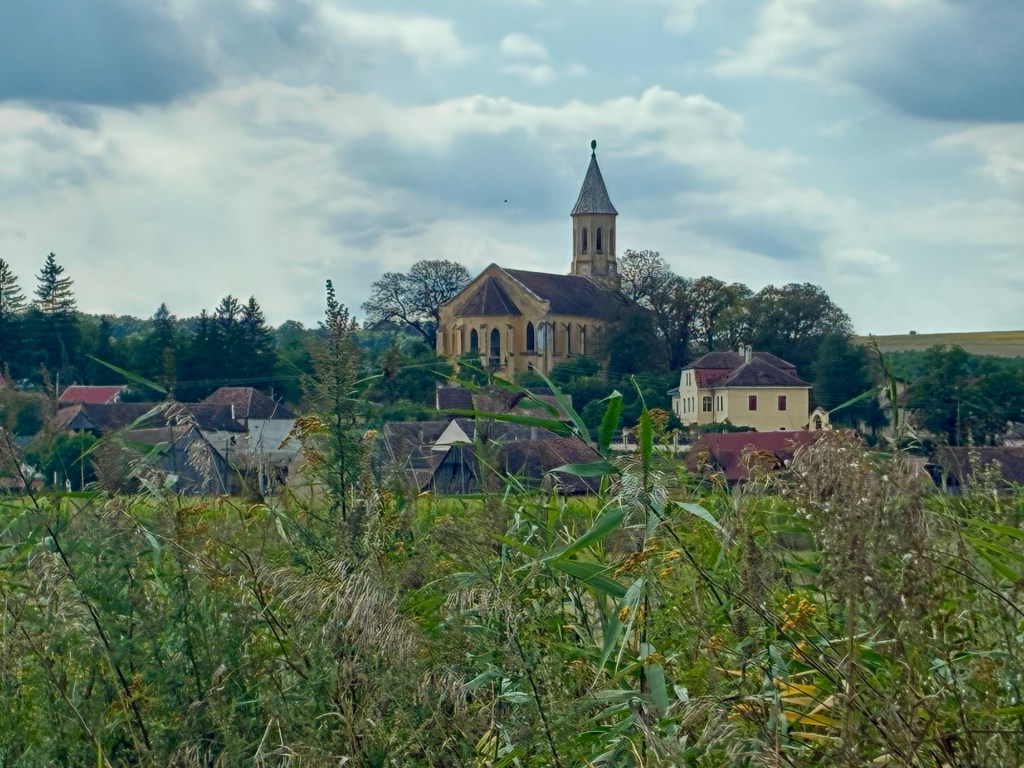
The Jibert fortified church (Biserica Evanghelică fortificată din Jibert / Seiburg) is an old Transylvanian Saxon Lutheran church; a medieval church existed here by at least the 15th century. The medieval church was demolished in the 19th century and replaced by the present church, built in 1869, while elements of the older fortifications survived. It’s much less restored and much less visited than Viscri, which gives it quite a different vibe.
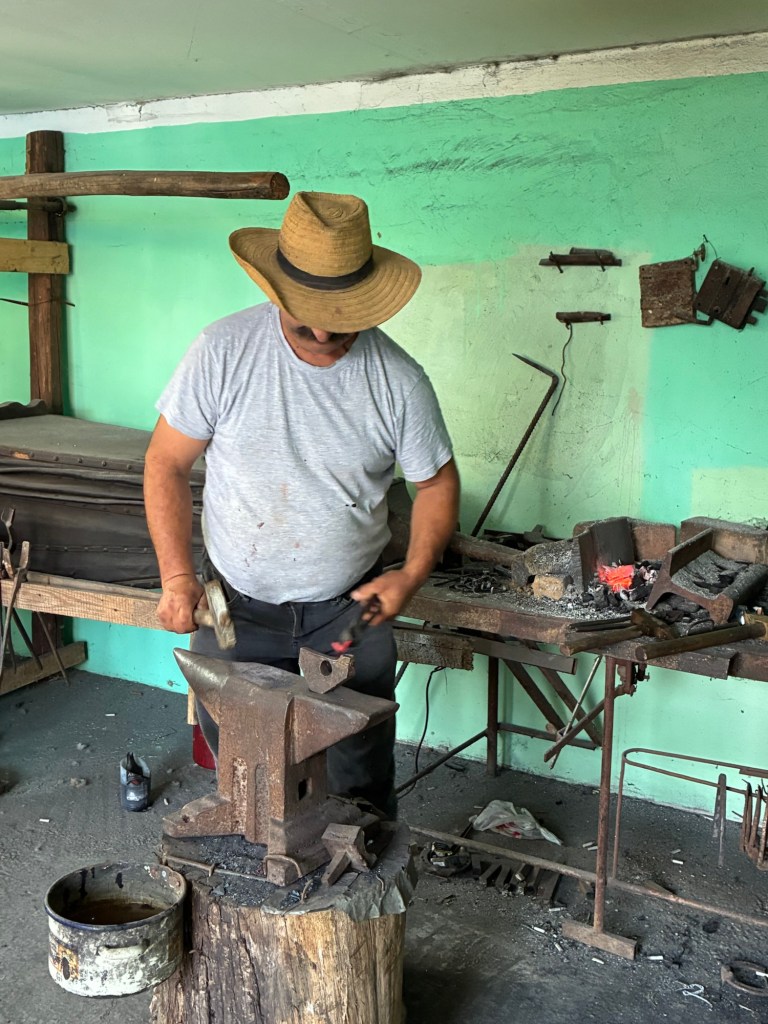
The visit at the blacksmith’s house was quite an experience – one of the village’s living heritage experiences, showcasing skills that have supported these rural communities for generations. Istvan, the blacksmith, was so grateful for the interest and affection the local community received from King Charles (Prince Charles at the time) without whom (he said) the village would even be on the map. He was very welcoming and we were very lucky to see him heating, hammering and shaping iron by hand into 2 small hoofs with kids’ initials on.
Tuesday 25th August
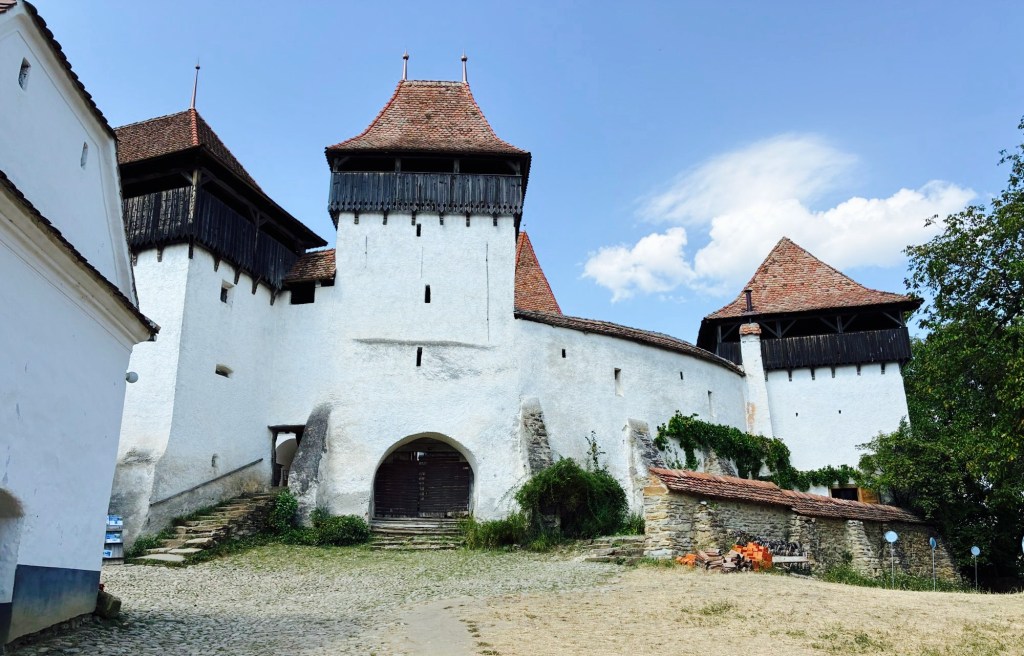
We couldn’t leave Viscri without a refresher visit to the King’s house and a tour of the Evanghelic fortified church.
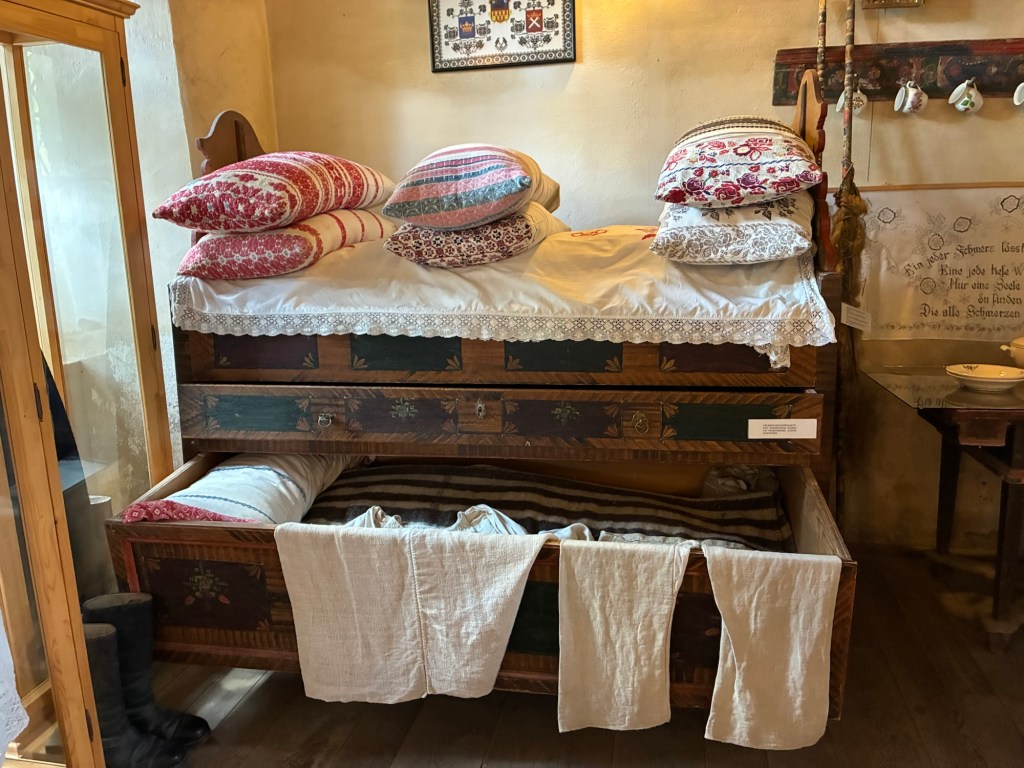
Saxon drawer bed, a traditional Transylvanian Saxon piece of furniture. It looks like a fairly high single wooden bed or bench, but underneath is a large pull-out section containing another mattress. At night, the lower part is pulled out to create an additional sleeping place; during the day it slides away, saving space. Kids totally loved this at Viscri 125, totally ignoring the fact that we we paid so they can have their own room!
Wednesday 26th August
Aurel Vlaicu – Sighișoara aproximativ 14 k including out and about in the citadel
After a day off yesterday we walked from Casa cu Prispă to join the Via Transilvanica trail and continue to Sighișoara. Always great to enjoy the panoramic views as you approach the town and walk the narrow streets up and down to the old town.
Thursday 27th August
Aurel Vlaicu – Sapartoc – Albești way 15km
A very different experience today as we walked to Sapartoc, a small village (dominantly Romanian, not Saxon) with lots of abandoned houses and a few recent signs of restoration.
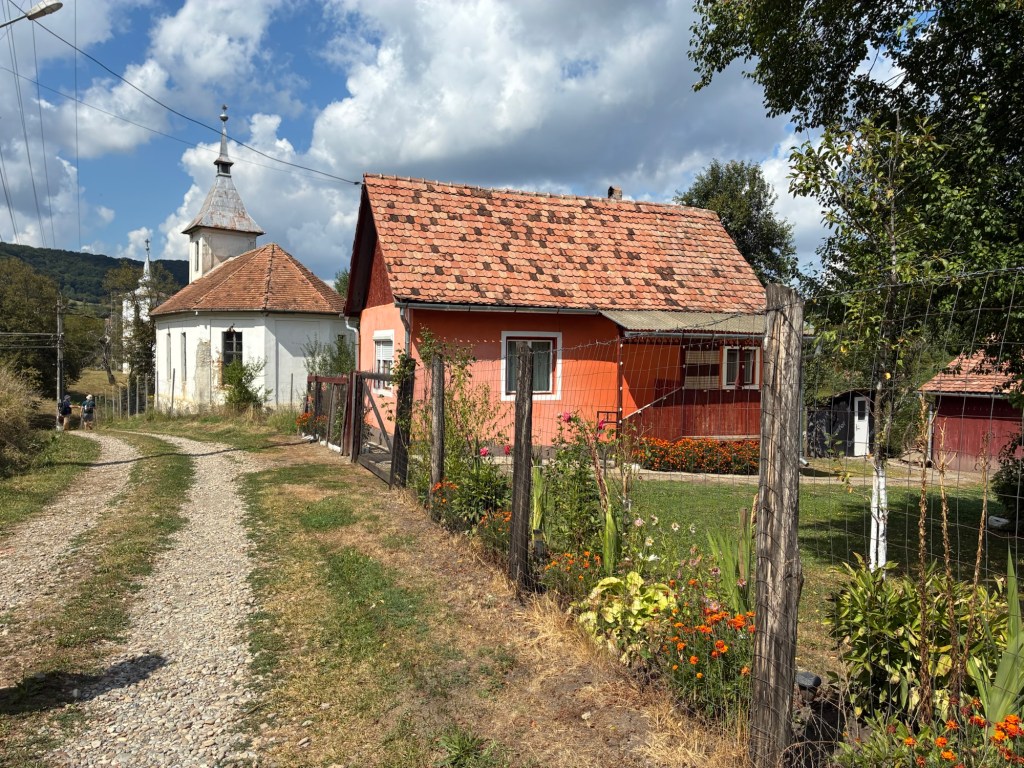
In the village there are three churches: Romanian Orthodox with a date attested by one of the existing bells made in 1696 and a Holy Gospel from 1723, and two churches of Catholic and Calvinist denomination, the first build in the middle of the 19th century (1857) and the second in 1930. In a nearly abandoned village, the view of the three churches, the two parish houses and the two schools (one state and one former catholic) is very nostalgic… nice to see some signs of rehabilitation and a friendly welcome at the Traditional Romanian Village.
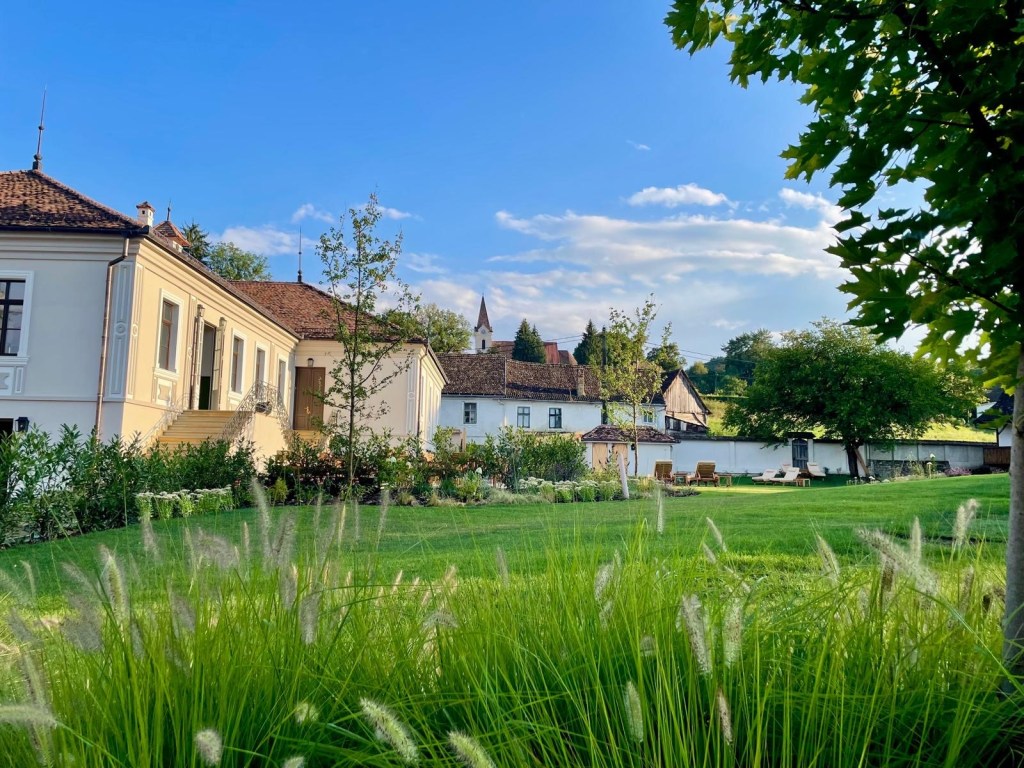
We wrapped up our visit with a return to Cris – at Bethlen Estates. We had the best time last year and were keen to come back! After a thundery summer rain, the sun came up just as we arrived in Criş. I love, love, love how Criş is simultaneously Hungarian, Romanian and Saxon in character and how this beautiful ‘ethnic rainbow’ shares the peaceful landscape.
Saturday 29th August
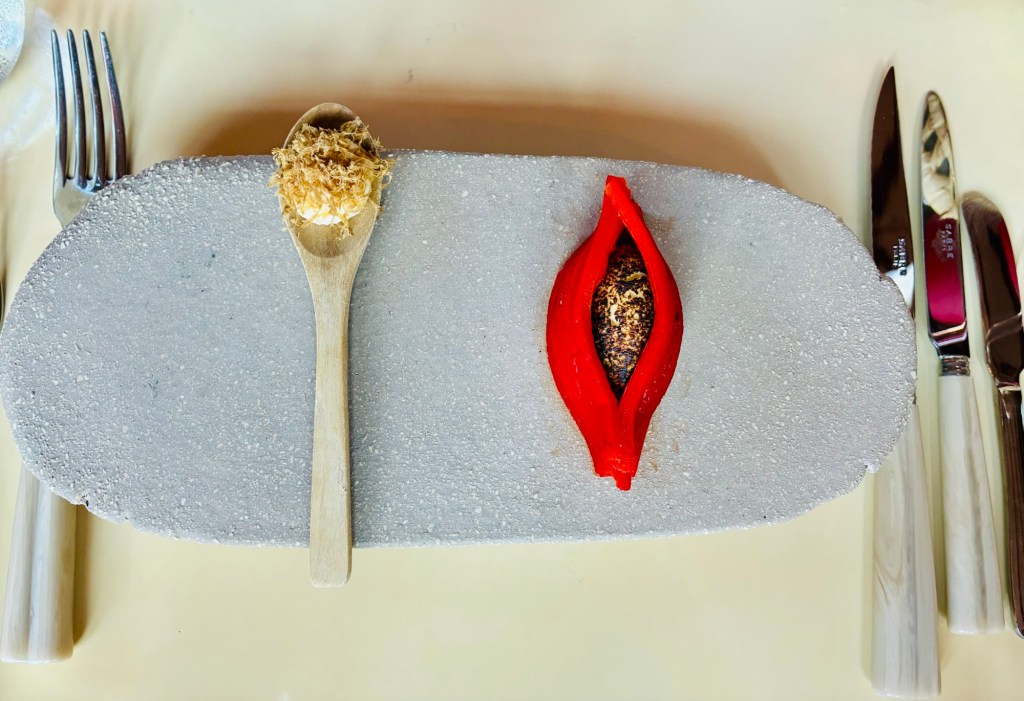
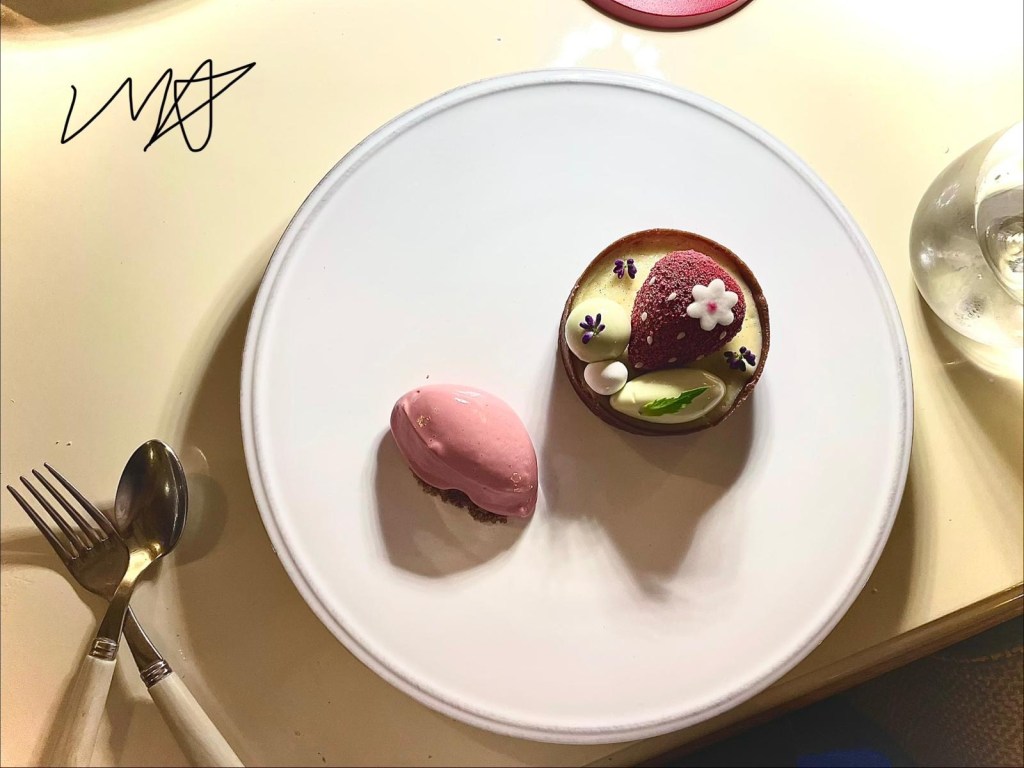
Balmos – Historically a shepherd’s staple prepared at mountain sheepfolds (stână), balmos is a premium version of standard polenta (mămăligă). Instead of boiling cornmeal in plain water, shepherds boil it directly in fresh dairy fats.
Friday 28th August
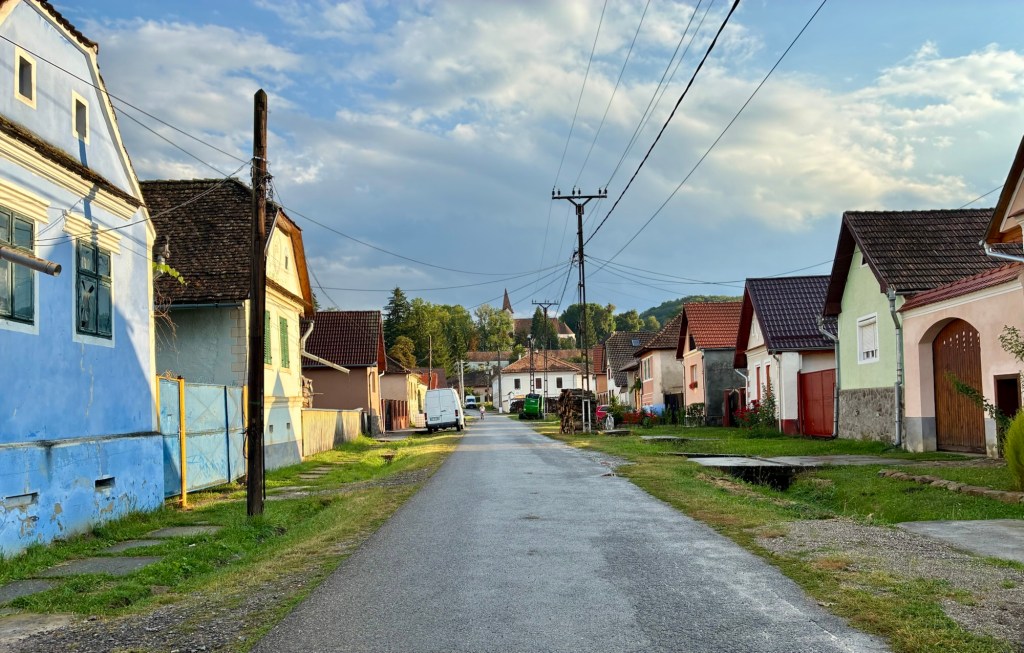
Today was a travel day for us having left Sighisoara to cross the border from the Transylvanian highlands to Bucovina. Beautiful scenery and I must say the highlands looked spectacular in the golden end of day sun – I would love to come back to this area.
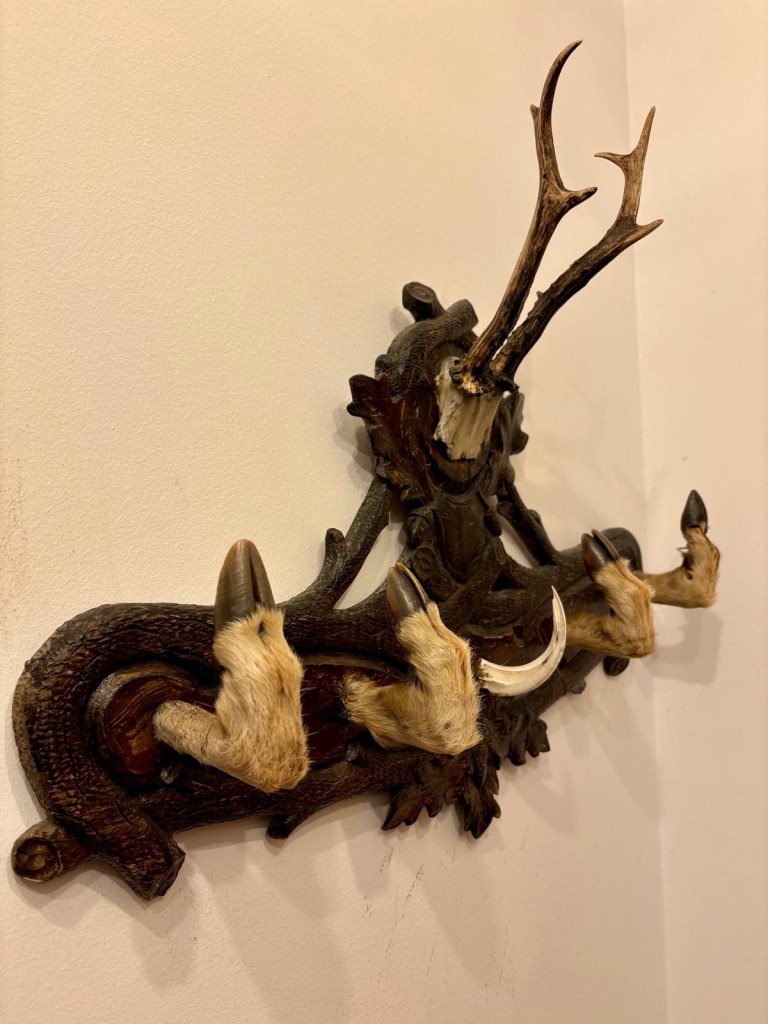
Kara: We entered with a great 😊 feeling but when we came we saw this and it was slightly weird hanging pegs! Assume it must be real goat feet?!
Saturday 29th August
Fundu Moldovei – Pasul Mestecăniș 17.5km, our record day
As we left the village we took a long steady climb up toward Ocină Arseneasa. As soon we got higher up it became very rewarding, open wide views, hay meadows, grazing cattle and some isolated farm buildings.
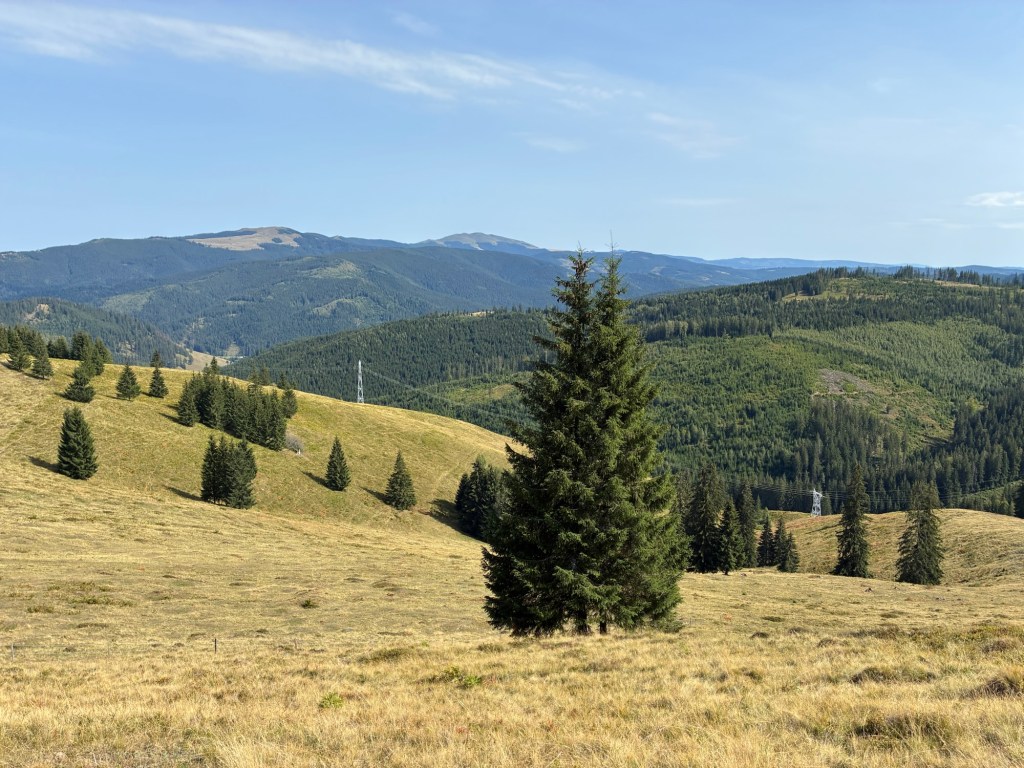
We made some friends on the way, as we spotted a ‘join us for coffee’ sign just before reaching the top of the hill. As we followed the ‘Tainic’ sign we had a super friendly and warm welcome from Alex walking towards us (it really made me wonder if I should remember him from somewhere?!). 😀 Great name for glamping site, very inspired!
‘Tainic’ is a beautiful Romanian word. It means secret, hidden, mysterious, intimate or secluded—something not immediately revealed.
It comes from „taină”, meaning secret / mystery. So „un loc tainic” would be a hidden, secluded place, while „o poveste tainică” is a mysterious/secret story.
For the campsite, Tainic truly is a fitting name: a sort of hidden intimate retreat tucked away in the mountains, almost a secret place.
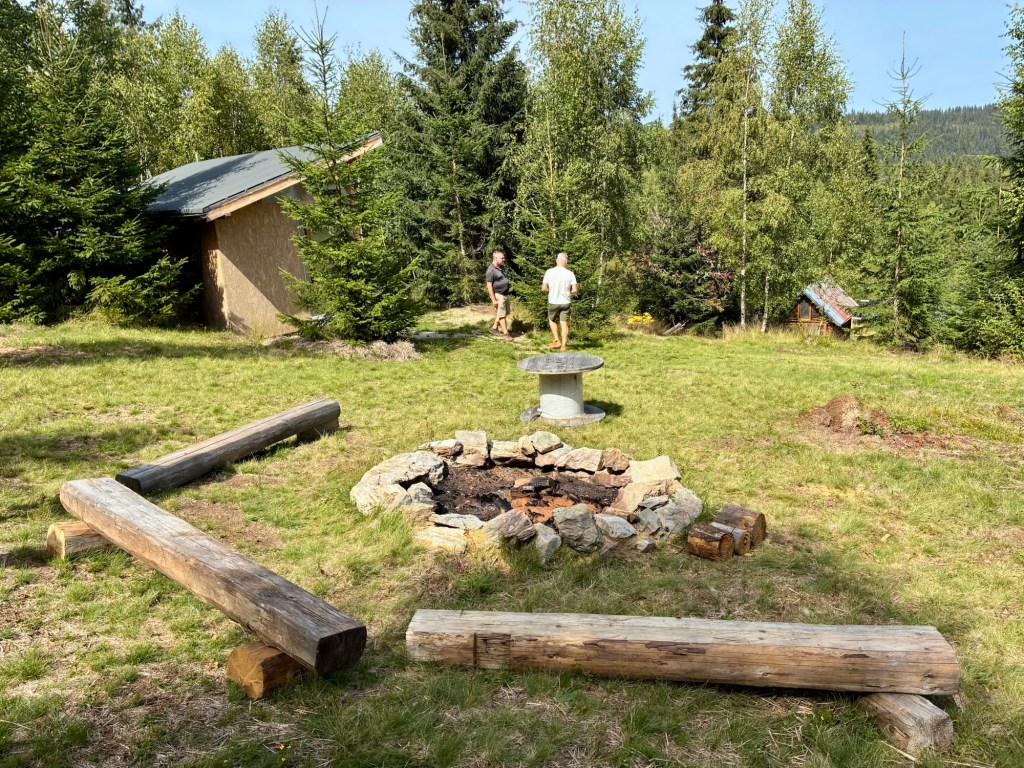
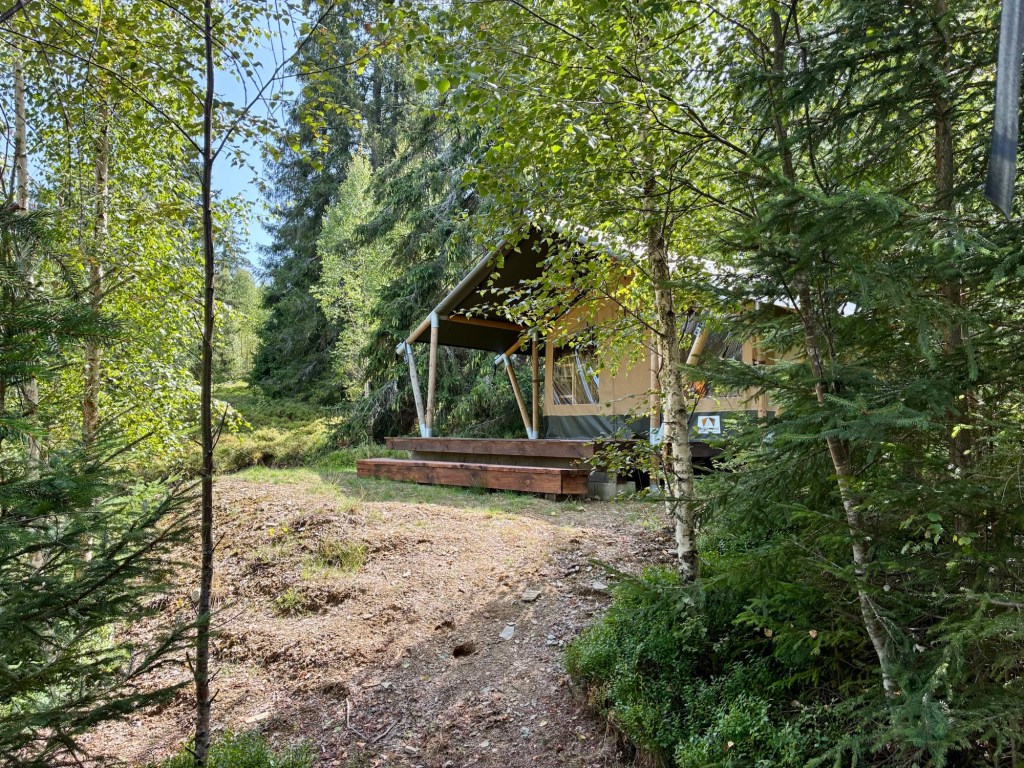
Tainic has safari-style furnished glamping tents, plus space for ordinary camping. They mentioned 12 glamping places, toilets and showers, washing-machine access, and breakfast and dinner on request. It’s right by Via Transilvanica marker 78, around the Pasul Mestecăniș section rather than down in the centre of Fundu Moldovei.
Sunday 30th August
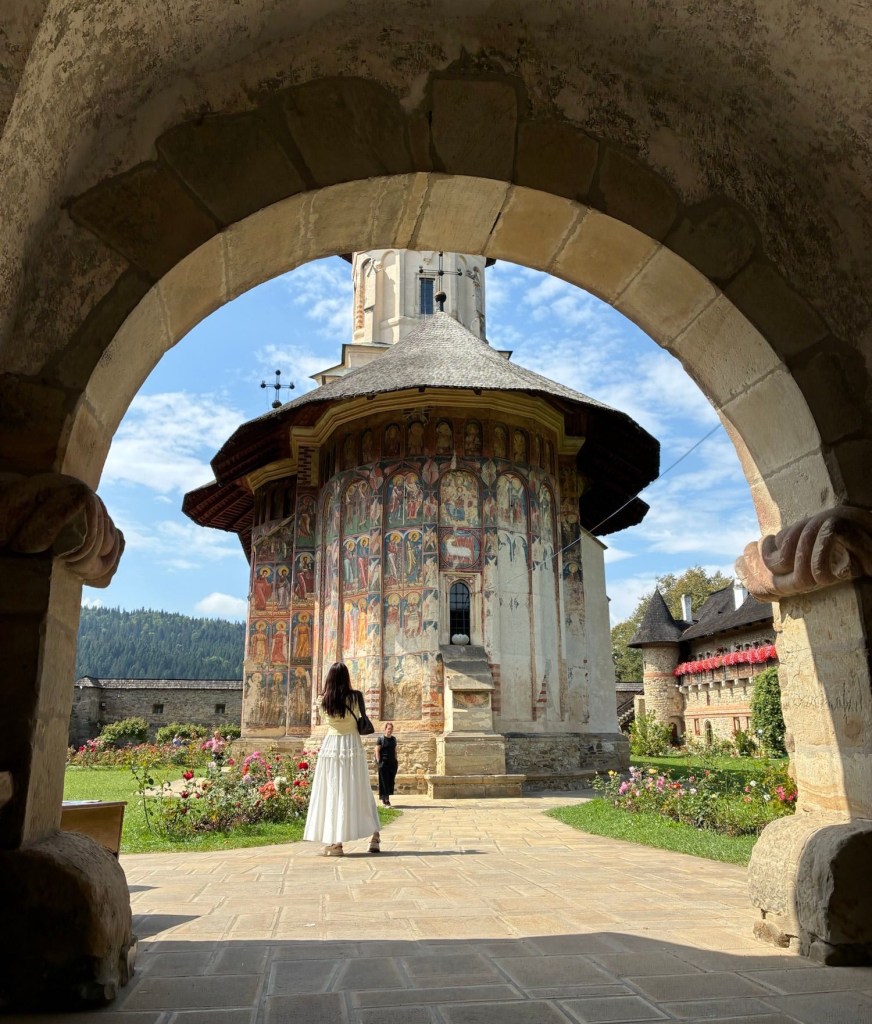
Kara: Our first stop was Moldovița Monastery⛪️. Allthough we had to get changed because it’s respectful cover your legs in church.
After that, we went zooming on the zip line across the 🌳 forest at Tiroliană Pasul Palma. Lots of fun, beautiful views, fresh air, an exiliriating experience! Well organised and overall a smooth operation. To quote Nora, ‘the most dangerous bit is probably the drive back in the minivan’ (Romanian driving is not known for prioritising road safety).
After a scenic drive —forested Bucovina hills, sweeping bends and the valley opens up as you approach Sucevița. Sucevița Monastery is straight along this route, so there’s no detour needed.
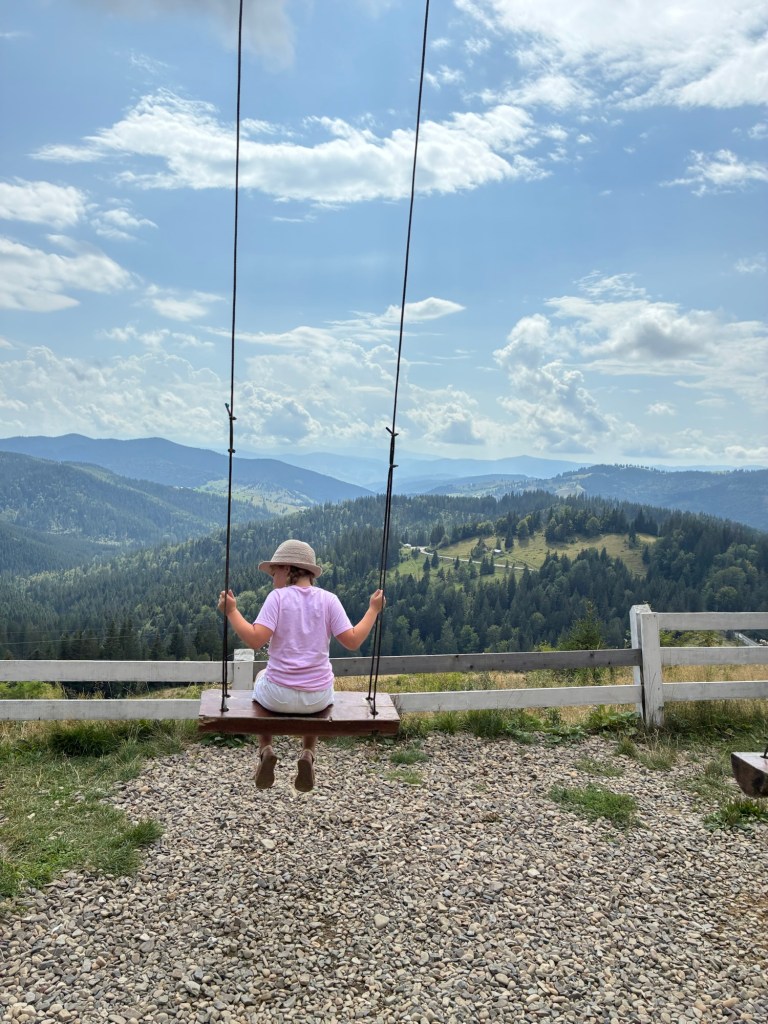
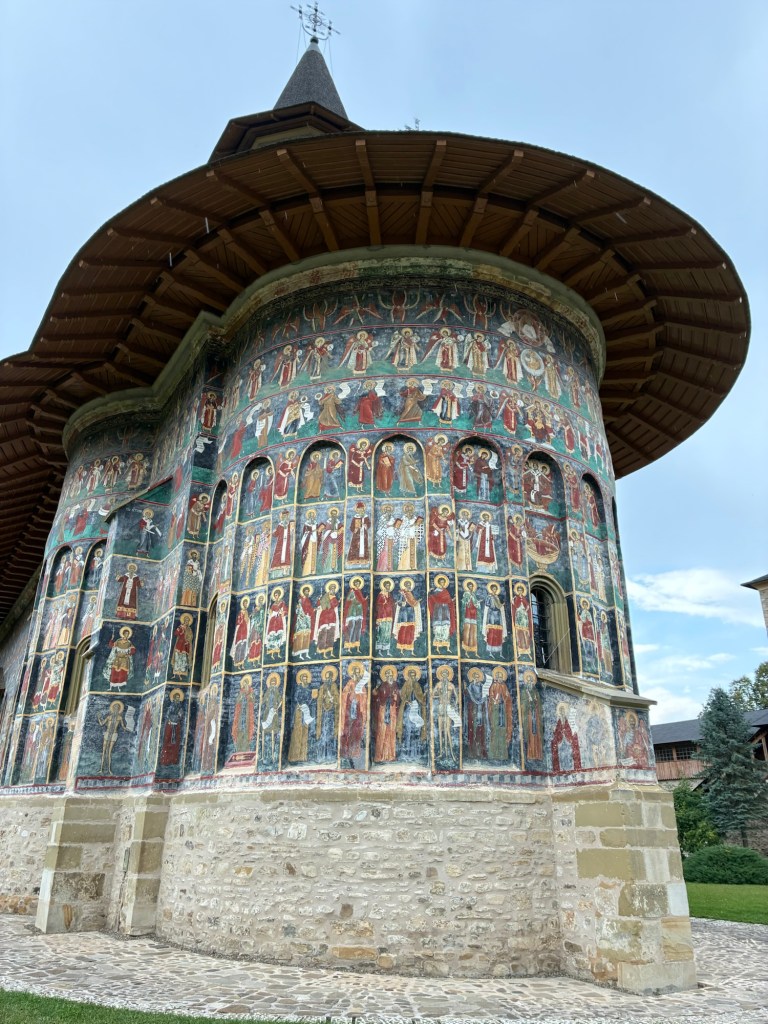
Sucevița Monastery – one of the great painted monasteries of Bucovina and the culmination of the whole tradition. Built at the end of the 16th century, when Moldavia’s famous era of exterior-painted churches was coming to an end. Unlike some of the earlier monasteries, Sucevița looks like a fortified castle: high stone walls, massive corner towers, and the richly painted church protected in the centre.
Sucevița monastery is dedicated to the Resurrection of Christ, and the entire interior and exterior is covered with frescoes from the late 16th century. These weren’t simply decoration. They were effectively a huge illustrated Bible: biblical stories, saints, prophets and theological ideas presented visually to a population that was largely unable to read.
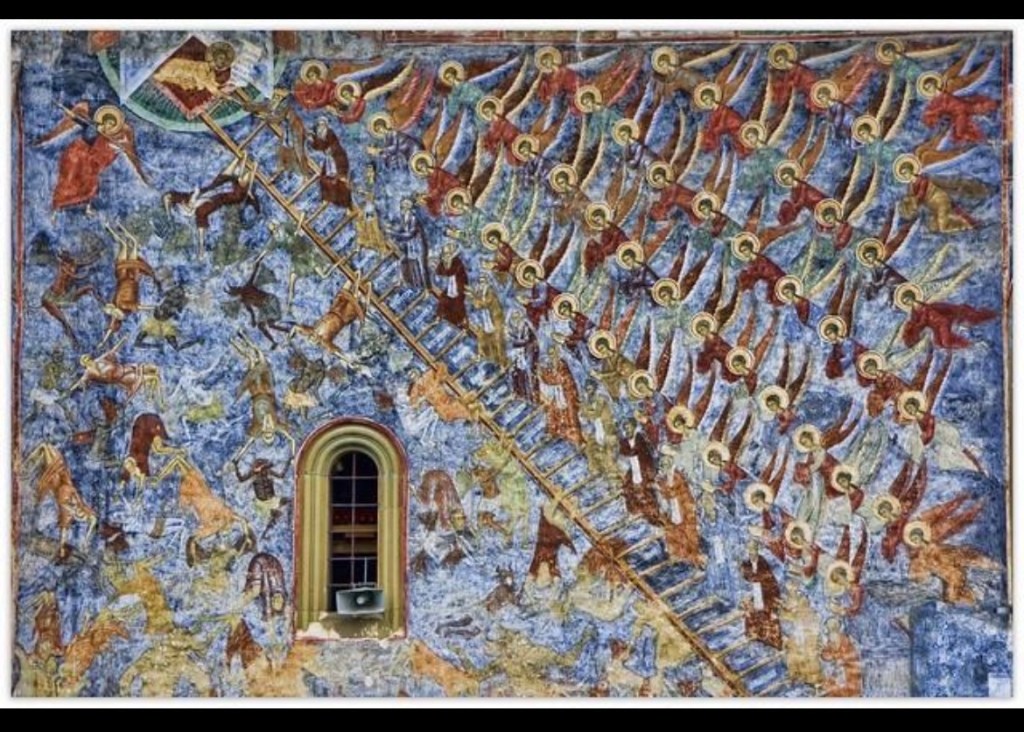
Why does it look like a fortress?
The monastery enclosure is roughly 104 × 100 metres, with walls about 6 metres high and defensive towers at the corners. This wasn’t merely aesthetic. Medieval Moldavia sat in a politically exposed position between powerful neighbours, particularly the Ottoman Empire, Poland-Lithuania and the Habsburg lands. Monasteries could therefore function as protected compounds as well as religious centres.
After a short visit we left Sucevița monastery and joined the Via Transilvanica path towards Putna for a short climb up the hill. Rewarded with beautiful views and sunshine (after the rain!), we got our heart rate up to qualify for the VT Sucevița stamp!
Monday 31st August
Another travel day, probably our longest this trip as we are headed straight for Bucharest! On our way, we stopped for coffee at Habitat Coffee Hub in Gura Humorului and a convenient lunch break at Hanul Ancuței as recommended by our trusted Moldovan friend network.
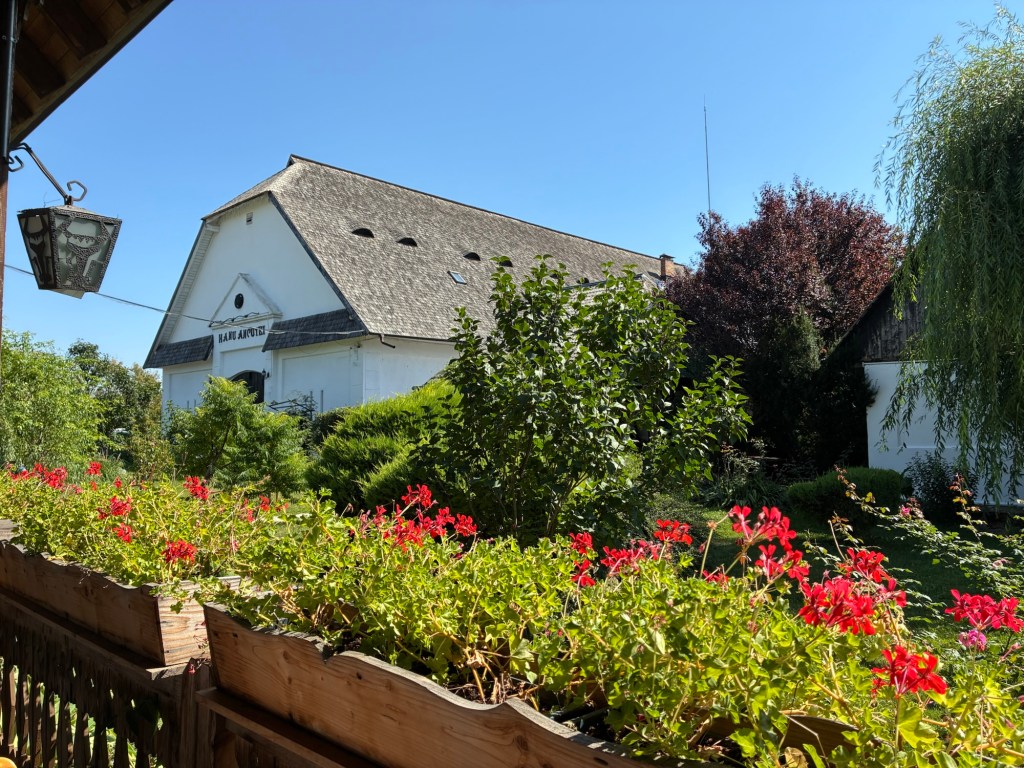
Hanul Ancuței – more than a roadside restaurant: it is one of Moldova’s most famous historic inns, sitting on an old commercial crossroads. An inn has existed on this site since at least the 18th century; 1718 is traditionally given as its foundation date. Its position was strategic: merchants travelling across Moldavia needed somewhere secure to eat, sleep, stable their animals and protect their merchandise.
Hanul Ancuței became immortal because of Mihail Sadoveanu. He actually knew the inn and later transformed it into the setting of Hanu Ancuței (1928), one of the classics of Romanian literature.
The inn wasn’t something he invented: he explained that Hanul Ancuței really existed and recalls how his mother told him about the old people and places of this part of Moldova. The book is a Romanian version of the great storytelling-at-an-inn tradition, comparable to The Canterbury Tales. Travellers gather at Ancuța’s inn, drink wine, eat, listen to musicians and tell stories of love, revenge, adventure, superstition and Moldavian life.
That’s why the place feels culturally important: the inn represents the old oral culture of Moldova, where news, legends and memories travelled with merchants and travellers.
I love the continuity in what we’ve being doing: stopping at Hanu’ Ancuței for lunch while travelling south is exactly what it was built for 300 years ago — a break in a long journey through Moldova before continuing down the great north–south road.

